Is Weed Legal in Washington State in 2026? Pioneer Rules and the No-Home-Grow Catch
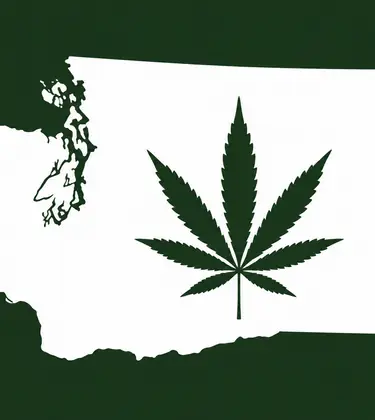
Yes. Weed is legal in Washington for any adult 21 and over. You can walk into a licensed shop, buy up to an ounce, and smoke it at home without breaking a single state law.
Then comes the catch. Washington was one of the first two states in America to legalize recreational cannabis, back in 2012. More than a decade later, it is also one of the last legal states where growing a single plant in your own closet is a felony. Pioneer at the register, hardliner in the garden. Here is how the rules actually work, and what is shifting underneath them.
Is weed legal in Washington state?
Washington voters approved Initiative 502 in November 2012, legalizing cannabis for adults 21 and older and handing regulation to the state. Possession became legal that December, but stores took longer. Licensed retail sales did not open until July 8, 2014, which put Washington and Colorado at the front of the entire country's legal weed experiment.
Legal here means legal for use and possession, not a free-for-all. The age line is hard at 21, the same number Washington borrowed straight from alcohol policy, and minors caught with cannabis still face penalties most other legal states dropped years ago. If you are 21 or over, state law lets you carry:
Up to 1 ounce of usable flower
Up to 7 grams of cannabis concentrate
Up to 16 ounces of cannabis-infused edibles in solid form
Up to 72 ounces of cannabis-infused product in liquid form
The whole system runs through the Washington State Liquor and Cannabis Board, the same agency that regulates alcohol. Buy from a licensed store and you are clear. Buy from a friend's trunk and you are not, regardless of the amount.
Why can't you grow weed at home in Washington?
This is the part that trips people up. In most legal states, legalization arrived bundled with a home grow right. Colorado legalized on the same day as Washington and let residents grow up to six plants from day one. Washington's I-502 left personal cultivation out completely.
The result is blunt. Growing cannabis without a medical authorization is a Class C felony, punishable by up to five years in prison and a $10,000 fine. A single plant carries the same penalty bracket as illegal dealing.
Lawmakers have tried to undo this eleven years running. The 2026 attempt, Senate Bill 6204, got further than any version before it. It would have let adults 21 and over grow up to six plants, capped at fifteen per household, with a $50 ticket for plants visible from the street or smelled from a neighbor's property. The bill cleared the Senate Labor and Commerce Committee, then stalled in the Rules committee before the cutoff deadline and died for the session.
The reasons the ban survives are mostly money and policing. Retailers worry home grows shave into a market already drowning in oversupply, the state leans on cannabis tax revenue, and law enforcement groups testify every year that backyard plants are hard to track. Advocates counter that growing your own barely dents retail sales, since good cannabis is genuinely hard to grow.
That keeps Washington in a shrinking club. Only four of the 24 states with legal recreational cannabis still ban growing it at home. Colorado, Oregon, California, and nearly every other legal state trust adults with a few plants. Washington keeps the felony on the books.
Who can legally grow cannabis at home in Washington?
Medical patients. That is the only legal route to a home grow in the state right now, and it runs on two tiers.
Authorized patients. Any qualifying patient with a written authorization from a Washington healthcare provider can grow up to four plants without joining any registry.
Registered patients. Patients who enter the state's medical cannabis database can grow up to six, and a provider can authorize up to fifteen when medically necessary. Registered patients also get tax exemptions and stronger legal cover.
No single household can top fifteen plants total, no matter how many patients live there. For everyone else, the closet stays off limits until the law changes.
Feeling lost on how to start? Try taking our quiz!
Start a QuizWhat are the dispensary rules in Seattle and across Washington?
Seattle runs one of the densest dispensary scenes in the country, but the rules are identical statewide. Bring a valid government ID proving you are 21 or older. Every customer gets carded at the door, every visit, no exceptions for grey hair.
A few things catch visitors off guard:
No delivery. Unlike California or Oregon, Washington does not allow cannabis delivery. You go to the store, full stop.
No consumption lounges. There is nowhere licensed to consume on site. What you buy, you take elsewhere.
Cash rules. Federal banking restrictions keep many shops cash-only, so hit an ATM before you arrive.
The tax stings. Washington stacks a 37% cannabis excise tax, among the steepest in the country, on top of regular sales tax. Combined, you can pay well over 40% at the register. Registered medical patients are exempt from both.
Most shops also cap each purchase at the state possession limit and close earlier than a liquor store, so check hours before a late run.
The unexamined day is a wasted opportunity. Reflect on what you did, what you learned, and how you can improve.
John Dewey
Where can you legally smoke weed in Washington?
Private property, and almost nowhere else. Public consumption is a civil infraction with a fine up to $100. That covers sidewalks, parks, trails, ski resorts, and your parked car.
Driving is its own trap. Washington sets a per se limit of 5 nanograms of active THC per milliliter of blood. Cross it and you can be charged with a DUI even if you feel completely sober. Edibles linger far longer than people expect, so line up a ride before you dose.
One bright spot for workers: since January 2024, a state law bars most employers from punishing you for off-duty cannabis use. Safety-sensitive roles and federally regulated jobs are still carved out, so a positive test can still cost a trucker or a federal contractor their job.
What does Barney's Farm know about growing in the Pacific Northwest?
Here is where four decades of breeding earns its keep. Barney's Farm has been selecting cannabis genetics in Amsterdam since 1986, chasing landrace lines across the globe and collecting Cannabis Cup wins along the way. The Pacific Northwest hands growers a specific problem: damp air, cool nights, and a long wet autumn that drives mold straight into thick, heavy buds. The fix is resilient genetics, not constant babysitting.
Two cultivars from our catalog suit that climate. Pineapple Chunk is an 80% indica built from Pineapple, Cheese, and Skunk #1. It is hardy, mold and pest resistant, and finishes in 55 to 60 days with a sweet tropical-and-funk flavor that traces straight back to its Skunk #1 roots. In a region where a rainy September can rot a slow plant, that fast, sturdy finish is the whole game.
The other strong pick is Critical Kush, a 100% indica cross of Critical Mass and our own OG Kush. It shrugs off mold and mildew, stays compact at around 100 to 110 cm for a discreet indoor tent, and took first place for hydro at the 2015 Spannabis Champions Cup. Dense, resin-soaked, and built for a deep evening knockout.
Stable, disease-resistant genetics mean less time fighting the weather and more time actually growing. That is what good breeding buys you. One reminder though: in Washington, that grow is only legal if you hold a medical authorization.
What's next for Washington's weed laws?
Two threads are worth tracking.
First, the home grow fight is not finished. SB 6204 advanced further than any home grow bill before it, and advocates already plan to return in 2027. A big part of the argument is equity. Between 2013 and 2019, Black residents were arrested for home growing at five times the rate of white residents, and Hispanic residents at 2.4 times the rate. Supporters say the felony lands hardest on the communities prohibition already hit hardest.
Second, the federal ground moved in 2026. In April, the Justice Department reclassified FDA-approved cannabis products and state-licensed medical marijuana from Schedule I to Schedule III. Recreational cannabis stayed in Schedule I, and a broader hearing on rescheduling all marijuana is set to begin June 29, 2026. None of this legalizes a backyard plant in Washington, but it tells you which way the wind is blowing.
So, is weed legal in Washington? Completely, as long as you are buying it. The state that helped launch legal weed in America still treats a single backyard plant like a crime, and that contradiction is exactly what keeps dragging lawmakers back to the issue year after year. For now, the line is simple: shop legally, consume privately, and leave the cultivation to the dispensary unless you carry a medical card.
Barney's Farm has been developing premium cannabis genetics since the 1980s, with over 40 Cannabis Cup wins. Explore our full seed catalog and find strains bred for every climate and skill level.