Is Weed Legal in Oklahoma in 2026? The Medical Wild West Explained
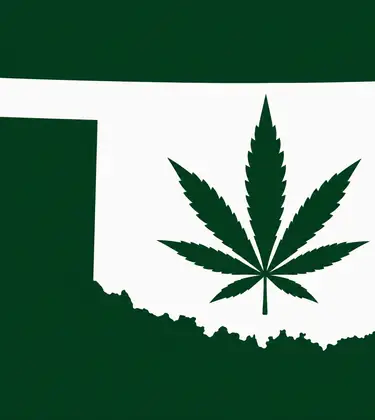
Oklahoma never set out to build the loosest cannabis market in America. It just did. Voters approved a medical program in 2018 that came with no list of qualifying conditions, no cap on business licenses, and application fees cheap enough to put on a credit card. Dispensaries multiplied out of strip malls, gas station lots and old furniture stores. At the peak, a state of four million people had more weed shops than California.
Then the state started clawing it back.
If you are asking whether weed is legal in Oklahoma in 2026, the short answer is yes and no, and the long answer involves a shrinking industry, a hostile legislature, and the DEA showing up with a clipboard. Here is where things actually stand.
Is weed legal in Oklahoma right now?
Medical cannabis is legal. Recreational cannabis is not.
State Question 788 passed in June 2018 and created the Oklahoma Medical Marijuana Authority, better known as OMMA. Five years later voters got their shot at full adult use with State Question 820 and shut it down hard. The measure was rejected by more than 60 percent of voters in a March 2023 special election. Nothing has replaced it on the ballot since.
So the rule is blunt. Card, or nothing. Without an OMMA patient license, holding cannabis in Oklahoma is still a criminal matter, and the penalties climb fast with quantity. With a license you get defined allowances for carrying, storing and growing, which we break down further down this page. Public consumption stays banned statewide either way. Sparking up on a sidewalk in Tulsa is not a grey area.
How hard is it to get an Oklahoma MMJ card?
This is the part that made Oklahoma famous.
Most medical states hand you a list. Chronic pain, epilepsy, PTSD, cancer, glaucoma. Pick one, prove it, wait. Oklahoma never wrote that list. Any licensed Oklahoma physician can recommend cannabis based on their own clinical judgment, using the same standard they would apply to any other medication. No condition gatekeeping. No state board second-guessing your diagnosis.
The application runs online. Adult patient licenses cost $100, drop to $20 for people on Medicaid or Medicare and for veterans with 100 percent disability status, stay valid for two years, and OMMA is required by law to process them within 14 business days. Out-of-state cardholders can pick up a 30-day temporary license and shop legally while they are in the state.
A cheap two-year card with no condition list is exactly why Oklahoma built one of the biggest patient registries in the country. It is also exactly what the legislature has spent the last four years trying to shrink.
How many dispensaries does Oklahoma actually have?
Fewer every month.
OMMA publishes its license counts, and the trend is brutal. As of the May 2026 report, Oklahoma had 1,361 licensed dispensaries, 2,021 growers and 310,850 active patients. Roll the same reports back to March 2023 and the state was running 2,893 dispensaries and close to 7,000 growers. The dispensary count has been cut in half in three years. Grower licenses have collapsed by more than two thirds.
None of this is an accident. Oklahoma stopped issuing new dispensary, grower and processor licenses in August 2022, and lawmakers have extended that moratorium more than once since. Layer on Metrc seed-to-sale tracking, annual inspections and a steady drumbeat of revocations, and the gold rush became a shakeout.
Patients are drifting away too. The registry has been shrinking since 2022. Part of that is tighter renewal enforcement. A bigger part is hemp-derived THC, which anyone can buy at a smoke shop without ever registering with the state.
Feeling lost on how to start? Try taking our quiz!
Start a QuizWhy is the DEA suddenly involved in Oklahoma weed?
This is the part most coverage still has not caught up with.
In April 2026 the Justice Department moved state-licensed medical marijuana from Schedule I to Schedule III. The industry read that as a win. Oklahoma turned it into a compliance problem inside of three weeks.
The Oklahoma Bureau of Narcotics told medical marijuana manufacturers and distributors that they now have to register with the federal Drug Enforcement Administration or risk losing their state permits, with enforcement beginning January 1, 2027. Operators who filed inside the 60-day window following the April 28 Federal Register publication can keep trading while the DEA works through their applications.
Sit with that for a second. A state agency is instructing cannabis businesses to hand federal drug enforcement their ownership structures, supplier lists and security protocols, and threatening their state license if they refuse.
For patients, nothing changes at the counter today. For the industry, it is one more filter. Every operator who cannot or will not file federal paperwork is one more shop that quietly fails to renew.
The unexamined day is a wasted opportunity. Reflect on what you did, what you learned, and how you can improve.
John Dewey
What can you legally carry and grow with an Oklahoma card?
This is where Oklahoma quietly beats most legal states, and almost nobody talks about it.
A valid OMMA patient license lets you carry 3 ounces on your person, keep 8 ounces at your residence, hold an ounce of concentrate, and grow six mature plants plus six seedlings along with everything you harvest from them, provided the grow sits on property you own or have written permission to use and stays invisible from any adjacent street to a person with 20/20 vision.
Six and six. Twelve plants. No commercial license, no Metrc tags, no dispensary markup, no shop closing on you halfway through the year.
In a state where shelves are thinning and half the retail footprint has vanished, that right is worth considerably more in 2026 than it was in 2018. We mapped how Oklahoma's plant count compares to the rest of the country in our guide to home grow laws by state, and covered the employment side of the equation in our piece on getting fired for legal cannabis use.
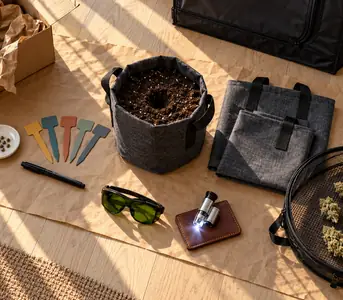
What should Oklahoma growers actually put in the tent?
We have been breeding cannabis since 1986, and Oklahoma is a specific problem to solve.
Summers here run hot and wet. Humidity climbs through July and August and refuses to break. Storm systems roll in off the plains and stall. Anyone running plants outdoors east of I-35 is fighting bud rot before they are fighting for potency, and anyone running an indoor tent through an Oklahoma August is fighting their own room, because a sealed space in that kind of ambient humidity turns into a mold incubator unless the airflow is dialed in properly.
Two things matter when the law caps you at six mature plants: resilience and yield per plant. Lose one to botrytis in week seven and you have just lost 17 percent of your entire legal grow. There is no replacing it.
Pineapple Chunk is what we would put in an Oklahoma tent first. Pineapple Chunk is a Cannabis Cup winner built by crossing our Sweet Pineapple into Cheese and Skunk #1, and we selected it hard for mold and disease resistance across generation after generation. It stays compact indoors at 90 to 110cm, finishes in 55 to 60 days, and still pushes 550 to 650 g/m² at 28 percent THC. That short flowering window is the real weapon. Every week you are not in bloom is a week the humidity cannot reach your buds.
Critical Kush covers the other half of the brief. Critical Kush crosses Critical Mass with our own OG Kush line and delivers exactly the kind of dense, resin-saturated indica that patients in a medical-only state tend to be reaching for anyway. Deep physical relaxation, pain relief, late-night use. It shrugs off mold and mildew, forgives beginner mistakes, and wraps up in 55 to 60 days.
Two practical notes if you are running either of them in Oklahoma. Dense buds in humid air need moving air, so defoliate and keep a fan pushing through the canopy rather than across the tops of the plants. And do not chase an extra week of ripening in September. A Kush cola sitting in still, wet air is a cola you are going to lose.
Stability is the whole point of a breeding program. It means the six plants you are legally allowed to run behave the same way, finish together, and deliver the terpene profile you actually chose them for. That is the difference between working genetics and gambling on bag seed.
So where does Oklahoma stand in 2026?
Legal for patients. Illegal for everyone else. Shrinking on the business side, tightening on the regulatory side, and now getting leaned on from the federal side as well.
The wild west era is finished. What is left is a medical program that remains one of the easiest in America to enter, bolted onto an industry that is being pruned back hard and fast. The patients who come out of this in the best shape are the ones who use the one right the state has never touched.
Six plants. Your own genetics. No shortage, no markup, and nobody closing the doors on you.
Barney’s Farm has been developing premium cannabis genetics since 1986, with more than 40 Cannabis Cup wins. Explore our full cannabis seed catalog and find the genetics that fit how you actually medicate.