Is Weed Legal in Massachusetts in 2026? Current Rules and the Repeal Vote Looming
Yes. Weed is legal in Massachusetts for adults 21 and older, for both recreational and medical use. You can walk into a licensed dispensary, show ID, and buy flower, edibles, or concentrate the same way you would buy a bottle of wine.
Here is the part most people have not caught up with. This November, Massachusetts voters could be asked whether to shut the whole adult-use market down. A repeal question is heading for the ballot, and if it passes, Massachusetts would become the first state in the country to undo legal weed by popular vote. So before we get to that, here is where the law actually stands today.
Is weed legal in Massachusetts right now?
Massachusetts voters legalized recreational cannabis in 2016 through Question 4, which passed with about 54 percent of the vote. Licensed adult-use sales started in late 2018. Medical cannabis has been legal even longer, since voters approved it in 2012.
Today the rules sit among the most relaxed in the country. Adults 21 and up can buy, carry, and use cannabis. Patients with a medical card operate under a separate program with their own limits and tax exemptions. Out-of-state visitors can buy too, as long as they have a valid government photo ID.
What are the Massachusetts possession limits?
This is where the law changed recently, so older guides will steer you wrong. On April 19, 2026, Governor Maura Healey signed a bill that doubled the public possession limit from one ounce to two ounces. Here is what adults 21 and older can legally hold:
In public: up to 2 ounces of flower, or the equivalent in other products (10 grams of THC in concentrate, or 1,000 mg of THC in edibles).
At home: up to 10 ounces. Anything over 2 ounces has to be locked up.
Growing: up to 6 plants per adult, capped at 12 plants per household.
You can also gift cannabis to another adult, as long as no money changes hands and you do not advertise it. Public consumption stays off-limits. No smoking on sidewalks, in parks, or behind the wheel. The same April 2026 law also doubled the equivalency caps, so concentrate and edible limits roughly track the new two-ounce flower allowance. Registered medical patients run on a separate track, with a 60-day supply and no excise tax on their purchases.
What are the rules at a Boston dispensary?
Buying at a dispensary in Boston works the same as anywhere else in the state. Bring a valid government-issued ID that proves you are 21 or older. That is the only hard requirement. You do not need to be a resident, and you do not need a medical card for adult-use products.
A few things worth knowing before you go:
ID every time. Staff check at the door and again at the register. A passport, driver license, or state ID all work.
Cash still rules, mostly. Federal banking rules make card payments patchy, so plenty of shops are cash or debit only. Most have an ATM on site.
You cannot smoke where you buy. Public use is banned, but Massachusetts now allows licensed consumption lounges, the first state in New England to do so.
Delivery is also expanding statewide, so in many areas you can have legal product brought to your door instead of driving to a storefront at all.
Feeling lost on how to start? Try taking our quiz!
Start a QuizSo what is the repeal vote about?
Here is the twist. A group called the Coalition for a Healthy Massachusetts is pushing a ballot question titled “An Act to Restore a Sensible Marijuana Policy.” Despite the friendly name, the campaign is funded almost entirely by Smart Approaches to Marijuana, a national anti-legalization organization. Supporters argue that the state moved too far too fast in 2016, that youth exposure and impaired driving have climbed, and that the regulated market never wiped out the illicit one the way voters were promised.
The measure does not recriminalize personal use. According to the official summary of what it would do, medical cannabis survives untouched and adults could still possess up to an ounce without penalty. What it kills is the legal market: every licensed dispensary, every adult-use grower, and the right to grow your own at home.
For months it was unclear whether the question would even reach voters. That cleared up on June 12, 2026, when the Massachusetts Supreme Judicial Court ruled the measure could stay on the ballot, rejecting a challenge from cannabis businesses. Backers still need to file a final round of about 12,429 signatures by July 8, a step widely expected to succeed, which would lock in a spot on the November 3 ballot.
Voters do not seem sold on the idea. A February 2026 poll from the University of New Hampshire found just 20 percent of likely voters support the repeal, with 63 percent opposed. If it passed anyway, Massachusetts would become the first state ever to reverse cannabis legalization at the ballot box.
This is not a Massachusetts-only fight either. We tracked similar repeal and rollback efforts across the country in our 2026 state-by-state legalization breakdown.
The unexamined day is a wasted opportunity. Reflect on what you did, what you learned, and how you can improve.
John Dewey
What happens if the repeal passes?
If voters approve it in November, the change would not be instant, and it would not turn cannabis users into criminals. Possession of small amounts stays legal. Medical patients keep their access.
What disappears is everything in between. Licensed dispensaries lose the legal basis to sell. The tens of thousands of jobs tied to the industry are suddenly at risk. And the right to grow your own plants at home goes away entirely.
The practical result would be strange. You could legally hold up to an ounce of weed with nowhere legal to buy it and no legal way to grow it. The regulated market that replaced the illicit one would be gone, and the illicit one would be the only one left standing. The state would also walk away from the tax revenue the industry generates, money that currently flows to both the state and individual towns.
Why now is the moment to grow your own
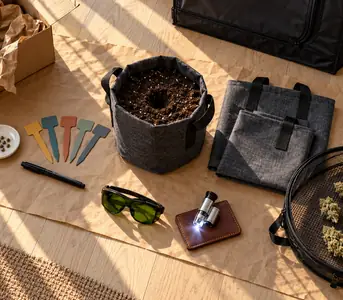
Here is the quiet irony in all of this. Right now, today, Massachusetts law lets every adult grow up to six cannabis plants at home. If the repeal passes, that door closes. For anyone who has thought about growing their own, the window is open, and it may not stay that way.
Growing in New England comes with its own demands. Summers are short, autumns turn damp and cold, and mold is the enemy every outdoor grower learns to respect. The genetics you start with decide how much of that you end up fighting. Four decades of breeding at Barney's Farm has gone into exactly this problem: plants bred to finish strong in real outdoor conditions, where the difference only shows up at harvest.
Two of our strains suit Massachusetts especially well.
Blue Gelato 41 is the resilient pick. It carries Blueberry, Thin Mint Girl Scout Cookies, and Sunset Sherbert in its lineage, lands around 28 percent THC, and shrugs off mold better than most. Grown outdoors it finishes in October, right before New England weather turns, with a sweet citrus profile and heavy resin.
Pineapple Express Auto is the fast one. As an autoflower it does not wait on the light cycle, running from seed to harvest in roughly nine to ten weeks, with flowering wrapped in about 30 days. It stays compact at around a meter tall, which makes it easy to tuck into a small or discreet grow. The tropical pineapple flavor is the bonus.
Six healthy plants, started from stable genetics, can keep a household supplied for a long time. However the November vote lands, knowing how to grow your own is the kind of skill worth having while the law still backs it.
The bottom line for Massachusetts
Weed is legal in Massachusetts in 2026. Adults 21 and older can buy two ounces at a time, grow six plants, and use a maturing legal market that now includes consumption lounges and statewide delivery.
The asterisk is November. The repeal question has cleared the courts and is closing in on the ballot. Polling says it is unlikely to pass, but ballot measures have surprised people before. If you live in Massachusetts and you care about how this goes, the date to circle is November 3.
Until then, the rules above are the ones that count. Keep an eye on the vote, know your limits, and if you have ever wanted to grow your own, you are living in the window where you legally can.
Barney's Farm has been developing premium cannabis genetics since the 1980s, with over 40 Cannabis Cup wins. Explore our full seed catalog and find strains bred for every climate and skill level.