Is Weed Legal in Alaska? Home Grow Rights in the Far North
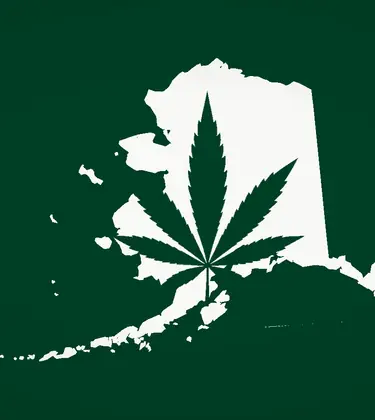
Alaska protected the right to use cannabis at home in 1975. Not decriminalized, not tolerated. Protected by the state's own constitution, forty years before Colorado sold a legal gram.
Then it recriminalized in 1990, legalized medical in 1998, failed twice at the ballot, and finally legalized recreational use in 2014. The result is the strangest legal history of any American state, and a set of home grow rights that are among the most generous in the country.
This guide covers what Alaska allows, what it costs, what changed in 2026, and the one problem with growing at 61 degrees north that nobody writing about Alaska cannabis ever seems to mention.
Legal since 1975, at home first
Cannabis is legal in Alaska for adults 21 and over. You can possess it, buy it from licensed stores, grow it at home in real quantity, and in a handful of towns consume it on licensed premises. Public consumption is illegal, and local communities can vote to ban the industry entirely.
The 1975 case that started everything
In Ravin v. State, the Alaska Supreme Court found that the state constitution's right to privacy protects an adult's possession and use of a small amount of marijuana in the home. No other state had anything like it, and no other state has one now.
The history since has been a decades-long argument with that ruling. The legislature decriminalized in 1982. Voters recriminalized by ballot measure in 1990 with 54.3% support. Medical passed in 1998 with 58.7%. Recreational measures failed in 2000 and 2004 before Measure 2 passed in 2014 with 53.2%, taking effect on February 24, 2015. The first retail store opened on October 29, 2016.
Through all of it, the home stayed the safest place to be a cannabis user in Alaska.
What you can hold and grow
The numbers are set out in state statute and they are generous by national standards. Adults 21 and over may possess one ounce or less in public and grow up to six plants with three or fewer being mature and flowering.
Two provisions in there matter more than the headline numbers.
The first is the household cap. Regardless of how many adults live there, a dwelling tops out at twelve plants with six or fewer mature. Three roommates do not get eighteen.
The second is the one experienced growers care about. Adults may possess marijuana produced by their own plants on the premises where the plants were grown. Your harvest does not count against the one ounce limit at home. Grow three mature plants well and you are legally holding several hundred grams, which would be a serious offence anywhere else in America.
The conditions are strict about visibility. Plants must be kept where they are not subject to public view without binoculars, aircraft or other optical aids, secured against unauthorised access, on property you lawfully possess or with the owner's consent. Violations carry fines up to $750. Plant limits cannot be pooled to form an unlicensed cooperative, and landlords may prohibit cannabis on their property.
Feeling lost on how to start? Try taking our quiz!
Start a QuizThe tax nobody else has
Alaska taxes cannabis in a way no other state does, and it is quietly strangling the industry.
There is no retail excise tax. Instead the state levies a flat $50 per ounce at the cultivation level, before the product ever reaches a store, with lower rates for immature bud and trim. Alaska has no statewide sales tax at all, so this weight-based wholesale charge is the entire state take, with local sales taxes stacking on top.
A weight tax does not care what the flower is worth. When wholesale prices fall, the tax stays at $50, and the effective rate climbs toward the unbearable. Twenty-five cultivators declined to renew their licences in 2025, and the state's annual take from cannabis is around $27.2 million, projected to fall to $23 million under the proposed change.
Legislation to cut the rate has been circulating through 2026, including proposals to drop it to $12 or $12.50 an ounce and replace it with a consumer-paid retail sales tax, which would be Alaska's first statewide sales tax of any kind. Nothing had cleared as of this writing.
The unexamined day is a wasted opportunity. Reflect on what you did, what you learned, and how you can improve.
John Dewey
What changed in 2026
Two developments are worth knowing. A record-sealing bill became law on June 19, 2026 without the governor's signature, after passing the Senate 20-0 and the House 39-1. It lets people convicted of possessing under an ounce while over 21 keep that conviction confidential, provided there were no other charges in the case. The requirement to actively request sealing sunsets on January 1, 2028, after which it should happen automatically.
Anchorage rewrote its municipal cannabis code in April 2026, zeroing out municipal licence fees and creating an onsite consumption endorsement that is edible only, capped at 25 milligrams of THC per person per day.
Edible only, because smoking on site is still banned there. The Assembly voted 7-3 in August 2025 to shelve an ordinance permitting on-site smoking indefinitely, and Anchorage voters rejected a similar 2020 initiative by roughly two to one. Statewide there are five licensed on-site consumption venues: two in Fairbanks, one each in Seward, Soldotna and Ketchikan.
Note also that communities can opt out entirely. Established villages can force a local option election with a petition signed by 35% of registered voters, banning cultivation, manufacturing, testing or retail.
The midnight sun problem
Cannabis is photoperiodic. A conventional plant stays in vegetative growth until nights get long enough, historically around twelve hours of uninterrupted darkness, and only then does it start to flower. That mechanism evolved at temperate latitudes where the seasons behave predictably.
Alaska does not behave predictably. Anchorage sees roughly nineteen hours of daylight around the summer solstice. Fairbanks gets closer to twenty-two, with the remaining hours never reaching true darkness. A photoperiod plant put outside in June will simply keep growing vegetatively, because as far as it can tell summer never ends. It will not begin to flower until nights lengthen meaningfully in August, and by then the first frost is close enough to end the attempt.
That is not a skill problem. It is a physics problem, and no amount of feeding or training fixes it.
There are two real answers. The first is to take light out of the equation entirely by using autoflowering genetics, which begin flowering on age rather than daylight. An autoflower does not care that the sun is still up at eleven at night. Cherry Cola Auto is a good fit for that job, running 70 to 80 days from seed to harvest at around 25% THC and staying between 90 and 130 cm indoors, which suits both a short outdoor window and a spare room.
The second answer is to grow indoors and control the photoperiod yourself, which is what most Alaskan growers do given the heating situation anyway. There the priority becomes finishing fast so you can run more cycles per year against your electricity bill. Shiskaberry is about the quickest photoperiod we produce, a pure indica finishing in 50 to 55 days at 80 to 110 cm, from DJ Short Blueberry crossed into Afghani.
Autoflowering genetics were originally built from ruderalis, a subspecies that adapted to short northern summers by losing its dependence on the light cycle. Breeding that trait into modern high-potency lines took the industry the better part of two decades of backcrossing, and it was mostly done to solve problems in Europe. It turns out to be the answer for Alaska.
What the constitution still protects
Weed is legal in Alaska for adults 21 and up, with home grow rights that are among the best in the country: six plants, three mature, twelve and six per dwelling, and your own harvest does not count against the possession limit on the premises where you grew it.
The state's weight-based wholesale tax is the highest cultivation levy in the country and is pushing growers out of the licensed market. Record sealing became law in June 2026. Anchorage now permits edible-only onsite consumption at 25 milligrams a day, and still bans smoking on licensed premises.
If you are growing outdoors north of about 60 degrees, use autoflowering genetics. A photoperiod plant will not flower for you in an Alaskan June.
Barney's Farm has been developing premium cannabis genetics since the 1980s, with over 40 Cannabis Cup wins. Explore our full seed catalog and find strains bred for every climate and skill level.