How to Make Cannabutter at Home (Step-by-Step With Dosing Math)
Making cannabutter is a rite of passage. Every serious cannabis enthusiast eventually gets to this point: standing in the kitchen, oven preheating, wondering if they're about to create something beautiful or ruin a perfectly good batch of flower. Good news. The process is dead simple once you understand the science. And the science, while real, isn't complicated.
This guide covers everything from decarboxylation to the final strain, including the dosing math that separates a well-made batch from a game of Russian roulette with your Saturday afternoon. Whether you're working with a few grams of top-shelf bud or trimming leftovers from your grow, the method stays the same. Let's get into it.
What You'll Need
Ingredients:
- 7–14 grams of dried cannabis flower (an eighth to a half ounce)
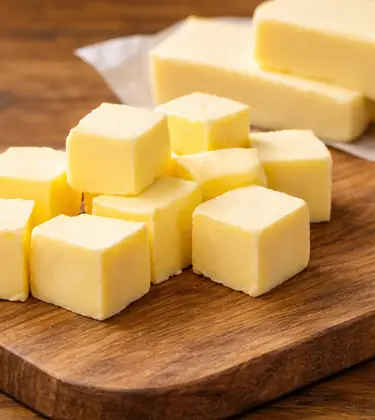
- 1 cup (225 g) unsalted butter
- 1 cup water
Equipment:
- Baking sheet and parchment paper
- Oven thermometer (seriously, get one)
- Saucepan or slow cooker
- Cheesecloth or fine mesh strainer
- Glass jar or airtight container for storage
- Kitchen scale (digital, accurate to 0.1 g)
The water serves a purpose. It regulates temperature during infusion and pulls out water-soluble plant compounds you don't want in your butter. After chilling, the butter solidifies on top and the water drains off. Use it.
Step 1: Decarboxylation (The Step You Cannot Skip)
Raw cannabis flower contains THCA, not THC. THCA is the acidic precursor to THC, and it won't get you high. The chemical process that converts THCA into active THC is called decarboxylation, and it requires heat. When you light a joint, combustion handles this instantly. With edibles, you need to do it yourself before infusion.
A 2016 study published in Cannabis and Cannabinoid Research examined the decarboxylation rates of THCA at various temperatures. The researchers found that THCA decarboxylates significantly faster than CBDA, and that the process follows first-order kinetics. Translation: time and temperature both matter, but getting them wrong in either direction costs you potency.
Here's how to decarb:
- Preheat your oven to 240°F (115°C). Use an oven thermometer. Most home ovens fluctuate by 10–20 degrees, which is enough to burn off terpenes or leave cannabinoids partially unconverted.
- Break your flower into pea-sized pieces. Don't grind it into powder. Fine particles pass through strainers and make your butter taste like a lawnmower bag.
- Spread the cannabis in a single layer on a parchment-lined baking sheet.
- Bake for 30–40 minutes, stirring once halfway through.
- The flower should look lightly golden and smell toasted. If it's turning dark brown, your oven is too hot.
Step 2: The Infusion
Now comes the actual marriage of cannabis and fat. THC is fat-soluble, which is why butter works so well as a vehicle. The goal here is gentle heat over time.
Stovetop method:
- Combine 1 cup of butter and 1 cup of water in a saucepan over low heat.
- Once the butter melts, add your decarboxylated cannabis. Stir to combine.
- Keep the mixture at a bare simmer. You want to see small bubbles, not a rolling boil. Aim for 160–180°F (70–82°C). A kitchen thermometer is your friend.
- Simmer for 2–3 hours, stirring occasionally. Don't crank the heat to speed things up. Higher temperatures destroy cannabinoids and pull chlorophyll into the butter, which tastes bitter and looks swamp-green.
Slow cooker method:
Same deal, lower effort. Combine butter, water, and decarbed cannabis in a slow cooker set to low. Cook for 4–6 hours. Stir every hour. The slow cooker maintains a steadier temperature than most stovetops, which makes it slightly more forgiving.
Testing at cannabis-focused analytical labs has shown that 80–90% of available cannabinoids infuse into butter within the first 45–60 minutes. Longer infusions pull more plant matter and chlorophyll without meaningfully increasing potency. If you're after clean flavour, two hours is the sweet spot.
Feeling lost on how to start? Try taking our quiz!
Start a QuizStep 3: Strain and Store
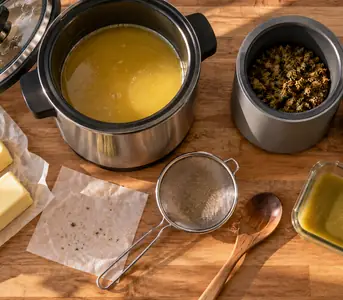
Line a strainer or funnel with cheesecloth and set it over a glass jar. Pour the mixture through slowly. Let gravity do the work. Do not squeeze the cheesecloth. Wringing it out forces fine plant material and chlorophyll into your butter.
Refrigerate the jar for at least 4 hours, ideally overnight. The butter will solidify into a firm layer on top, with the water sitting underneath. Lift the butter out, pat it dry with a paper towel, and discard the water.
Stored in an airtight container, cannabutter keeps for about two weeks in the fridge and up to six months in the freezer. Wrap portions individually if you're freezing it, so you don't have to thaw the whole batch every time you want to make a grilled cheese that sends you to space.
The unexamined day is a wasted opportunity. Reflect on what you did, what you learned, and how you can improve.
John Dewey
The Dosing Math (This Is the Part That Matters Most)
This is where most people go wrong. They eyeball amounts, skip the calculation, and end up either underwhelmed or calling their mum at 3am convinced they can hear colours. A few minutes of basic arithmetic prevents all of this.
The formula:
Total THC (mg) = grams of cannabis × THC% × 1,000 × 0.88 × infusion efficiency
Here's what each variable means:
- Grams of cannabis: Weigh it. Don't guess.
- THC%: Check the label or packaging. If you don't have lab data, assume 15% as a conservative baseline.
- × 1,000: Converts grams to milligrams.
- × 0.88: Accounts for the roughly 12% mass lost during decarboxylation (when the carboxyl group detaches as CO₂).
- Infusion efficiency: Typically 0.75–0.80 (75–80%). Not all THC transfers into the fat.
Example calculation:
You're using 7 grams of flower tested at 20% THC.
7 × 0.20 × 1,000 = 1,400 mg total THCA 1,400 × 0.88 = 1,232 mg available THC after decarb 1,232 × 0.80 = 986 mg THC in your finished butter
One cup of butter is 48 teaspoons. So:
986 ÷ 48 = roughly 20.5 mg THC per teaspoon
If your brownie recipe uses 2 teaspoons of butter per serving, each brownie contains approximately 41 mg THC. That's a hefty dose. Most legal recreational edibles cap at 10 mg per serving for good reason.
Dosing guidelines by experience:
- First-timers: 2.5–5 mg
- Occasional users: 5–15 mg
- Experienced users: 15–30 mg
- Veteran tolerance: 30–50+ mg
Knowing these numbers is the difference between a pleasant evening and a panicked trip to the emergency room. A study from the University of Colorado School of Medicine reviewed nearly 10,000 cannabis-related ER visits and found that edibles were responsible for a disproportionate share of those visits relative to their market share. The researchers concluded that slower absorption rates lead people to consume more before feeling anything, which then hits all at once.
Why Edibles Hit Different
There's a biological reason edibles feel stronger and last longer than smoked flower. When you eat cannabis, THC travels through your digestive system to the liver, where enzymes convert it into 11-hydroxy-THC. This metabolite crosses the blood-brain barrier more efficiently than regular THC and produces a more intense psychoactive effect.
When you smoke, THC bypasses the liver and goes straight from lungs to brain. Fast onset, shorter duration. With edibles, the onset takes 45 minutes to 2 hours, but the effects can last 6–8 hours. As CNN reported on the Colorado findings, edible-related ER visits were more commonly associated with psychiatric symptoms like acute anxiety and panic, while inhaled cannabis visits tended to involve nausea.
This isn't a warning to avoid edibles. It's a reason to respect the dosing math. Start low, wait at least two hours before taking more, and know what you're working with before you bake it into a tray of brownies.
Picking the Right Strain
Strain selection changes the character of your cannabutter. High-THC strains produce potent butter, obviously, but cannabinoid and terpene profiles shape the overall experience.
At Barney's Farm, we breed strains with specific qualities that translate well to edible preparation. A strain like Runtz brings a balanced cannabinoid profile with a sweet, dessert-like terpene set that complements baked goods without overpowering them. For something on the relaxation end, a classic indica-leaning variety like Purple Punch delivers a terpene profile heavy in myrcene and caryophyllene, which pairs well with rich chocolate or savoury dishes.
If you're growing your own and planning to cook with it, keep a few things in mind. Trim and shake work fine for cannabutter. You don't need to sacrifice your best buds. Smaller flowers and sugar leaves carry plenty of trichomes, especially from heavily resinous genetics. Save the premium colas for the grinder.
Common Mistakes
Skipping decarb. This is the single most common mistake. Without decarboxylation, your butter will be weak or completely inactive. Raw THCA doesn't bind effectively to cannabinoid receptors in the same way THC does.
Grinding too fine. Powder passes through cheesecloth and strainers. The result is gritty butter with a harsh, vegetal taste. Break your flower by hand or use a coarse grind.
Too much heat during infusion. Boiling your butter doesn't make it stronger. It destroys THC and produces off-flavours. Keep it below 200°F.
Not using water. The water buffer prevents scorching and draws out chlorophyll and water-soluble tannins. After refrigeration, it separates cleanly from the butter. Skip it and you risk burnt, bitter results.
Guessing the dose. Run the numbers. Every time. The formula takes two minutes. The alternative is a wildly inconsistent product where one cookie floors you and the next does nothing.
Using salted butter. Unsalted gives you a cleaner, more neutral base that works across recipes. Salted butter can produce unpredictable flavour when combined with cannabis terpenes.
Final Thoughts
Cannabutter is one of the simplest and most versatile cannabis preparations you can make at home. The whole process takes about three hours of mostly passive time, and the result is a cooking ingredient that opens the door to virtually any recipe in your kitchen. Spread it on toast. Fold it into pasta. Drop it into a pan of brownies. The only limit is the recipe book.
But the real skill isn't in the cooking. It's in the math. Know your flower's potency, run the dosing calculation, and label everything clearly. Do that, and every batch you make will be consistent, predictable, and dialled to exactly where you want it. That's how professionals approach it. That's how you should too.
Barney's Farm has been developing premium cannabis genetics since the 1980s, with over 40 Cannabis Cup wins. Explore our full seed catalog and find strains bred for every climate and skill level.