How Long Does Cannabis-Induced Anxiety Last?
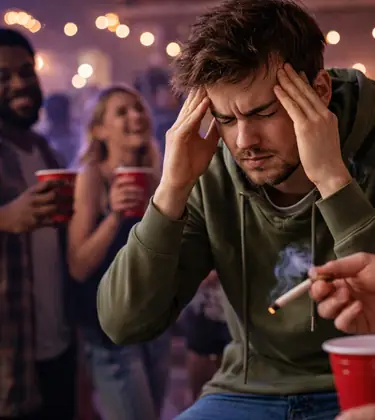
You took one hit too many. Or maybe you tried an edible for the first time and now your heart's doing double-time, your palms are sweating, and you're Googling "am I dying" from your couch. Relax. You're not dying. But you are dealing with cannabis-induced anxiety, and right now, the only question that matters is: how long does this last?
The short answer: it depends on how you consumed it, how much THC was involved, and your own biology. The longer answer is what this article is for.
How Long Does Cannabis-Induced Anxiety Last When You Smoke or Vape?
When you inhale cannabis, THC hits your bloodstream fast. The onset is almost immediate, and the peak effects roll in within about 15 to 30 minutes. If anxiety is going to show up, this is when it arrives.
For most people, the worst of it lasts somewhere between 30 minutes and two hours. By the three-hour mark, the wave has usually passed. A community-based study across seven emergency departments found that cannabis-induced anxiety symptoms lasted an average of 6.1 hours, ranging from 2.3 to 12.5 hours. That said, those were patients who showed up at the ER, so they were dealing with more severe reactions than the average person riding out a rough session on the couch.
Panic attacks triggered by cannabis are their own beast. They peak hard and fast, usually within 10 to 20 minutes, then taper. The panic fades, but residual unease or a general "off" feeling can linger for a few more hours.
How Long Does Edible Anxiety Last?
Edibles are a different game entirely. When you eat cannabis, THC passes through your stomach and liver before reaching your brain. Your liver converts THC into 11-hydroxy-THC, a metabolite that crosses the blood-brain barrier more efficiently and hits harder than regular THC.
This is why edibles catch people off guard. Onset can take anywhere from 30 minutes to two full hours. And because the high is slower to build, it's also slower to leave. Anxiety from edibles can last four to eight hours, with residual effects sometimes persisting up to 24 hours.
The classic edible mistake is taking more because you "don't feel anything yet." An hour later, you feel everything at once. If this is you right now: the THC will metabolize. Your body is processing it. You just have to wait it out.
What Makes Cannabis Anxiety Worse or Last Longer?
Not everyone who smokes or eats cannabis gets anxious. And not every anxious episode plays out the same way. Several factors determine the cannabis anxiety duration and intensity you experience.
THC content. This is the big one. Higher THC means more stimulation of the brain's fear and stress circuits. Research consistently shows a dose-dependent relationship: low doses of THC can actually reduce tension, while high doses crank up anxiety, paranoia, and negative mood. The potency of today's cannabis products has increased dramatically over the past two decades, which means it's easier than ever to accidentally take too much.
Your tolerance and experience. First-time users and people who consume infrequently are significantly more likely to experience anxiety. If your endocannabinoid system isn't used to THC, even a moderate dose can feel overwhelming.
Pre-existing anxiety. If you're already dealing with an anxiety disorder, cannabis can amplify what's already there. A meta-analysis of longitudinal studies found that cannabis use was associated with a 25% increase in odds of developing anxiety conditions over time. The research can't confirm a direct cause-and-effect link yet, but the pattern is clear enough to take seriously.
Set and setting. Using cannabis in an unfamiliar place, around people you're not comfortable with, or while you're already stressed is a recipe for a bad time. Your environment shapes your experience as much as the strain does.
Mixing substances. Alcohol and cannabis together can amplify impairment and anxiety. If you combined the two, that could be why the anxiety hit harder than expected.
Feeling lost on how to start? Try taking our quiz!
Start a QuizWhy Does Weed Give Me Anxiety After Years of Smoking?
This is one of the most common questions people ask, and it makes sense. You've been smoking for years with no issues. Then one day, out of nowhere, the high feels different. Racing heart. Spinning thoughts. Paranoia.
Your brain adapts to regular THC exposure over time. The endocannabinoid system, which regulates stress, mood, and fear response, recalibrates based on how much THC you're feeding it. What once felt calming can start producing the opposite effect as receptor sensitivity shifts. Add in life stress, poor sleep, or higher-potency products than you're used to, and the switch can flip seemingly overnight.
A published case report described a 32-year-old man with no psychiatric history who developed recurring panic attacks after 10 years of daily cannabis use. His cardiac workup came back clean. The cause was psychogenic, tied directly to long-term THC exposure. This isn't a rare anomaly. It's a pattern clinicians are seeing more and more.
The unexamined day is a wasted opportunity. Reflect on what you did, what you learned, and how you can improve.
John Dewey
What to Do When Cannabis Anxiety Hits
First rule: you are going to be fine. Cannabis-induced anxiety is temporary. It passes as your body metabolizes the THC. Here's how to speed up the process of feeling normal again.
Breathe deliberately. Slow, deep breaths. In through your nose for four counts, hold for four, out through your mouth for six. This isn't some generic wellness advice. Controlled breathing activates your parasympathetic nervous system and directly counteracts the fight-or-flight response that THC just triggered.
Ground yourself. Name five things you can see, four you can touch, three you can hear, two you can smell, one you can taste. It sounds simple because it is. The point is to pull your brain out of the anxiety loop and reconnect it with physical reality.
Eat something. Cannabis on an empty stomach intensifies the high. A light meal or snack can help take the edge off. Citrus is worth reaching for. Lemons contain the terpene limonene, which may help ease the effects of THC.
Try black pepper. This one sounds like stoner folklore, but there's actual science behind it. Black pepper contains beta-caryophyllene, a terpene that interacts with CB2 cannabinoid receptors and can produce a calming effect. Chew a few peppercorns or just take a sniff.
Change your environment. Move to a different room. Step outside for fresh air. Put on a familiar show or album. Sometimes, just changing the input your brain is receiving is enough to break the cycle.
How to Avoid Cannabis Anxiety in the First Place
At Barney's Farm, we've spent over 30 years breeding cannabis genetics. In that time, we've watched the conversation around THC, CBD, and terpene profiles evolve from underground lore into legitimate science. And one thing we've seen consistently is that anxiety reactions almost always come down to a mismatch between the consumer and the product.
The mantra is simple: start low, go slow. If you're trying a new strain or a new consumption method, begin with the smallest effective dose and give it time to work before adding more. With edibles, that means waiting at least two hours before even thinking about a second dose.
Terpenes play a role too. Myrcene, linalool, and beta-caryophyllene are all associated with relaxation and anxiety reduction. Knowing what's in your cannabis and how those compounds interact with your body is the single best defense against a bad experience.
Can Cannabis Cause Long-Term Anxiety?
Acute cannabis anxiety is one thing. It's unpleasant, but it resolves. The more serious question is whether regular cannabis use can lead to a lasting anxiety disorder.
The research is still evolving, but there are signals worth paying attention to. A large Canadian population study published in The Lancet found that people who visited the emergency department due to cannabis use were nearly four times more likely to later seek care for an anxiety disorder compared to the general population. Within three years of an initial cannabis-related ER visit, 12.3% of those individuals had a follow-up visit for anxiety.
That doesn't mean cannabis directly causes anxiety disorders in everyone who uses it. Genetics, frequency of use, the potency of the products consumed, and pre-existing mental health conditions all play into the equation. But if you're someone who consistently feels anxious after consuming cannabis, your body is telling you something. Listen to it. Adjust your dosage, switch to lower-THC options, or take a break entirely.
The THC Anxiety Timeline: A Quick Reference
Smoked or vaped cannabis: Anxiety onset within 15 to 30 minutes of use. Peak intensity at 30 to 60 minutes. Symptoms typically resolve within one to three hours. Residual unease may linger for a few hours longer.
Edibles: Anxiety onset between 30 minutes and two hours after consumption. Peak intensity at two to four hours. Symptoms can last four to eight hours. Residual effects possible for up to 24 hours.
Panic attacks: Rapid onset, peaking within 10 to 20 minutes. Usually subside within 30 minutes. Lingering anxiety or worry about another attack can persist for hours or days.
When to Seek Medical Help for Marijuana Anxiety Symptoms
Most cannabis-induced anxiety will pass on its own without medical intervention. But there are situations where it's smart to get professional help. If you experience chest pain, severe difficulty breathing, confusion that doesn't clear up, or symptoms that persist well beyond 12 hours, call a doctor or head to urgent care.
If cannabis consistently triggers anxiety or panic attacks for you, that's worth a conversation with a healthcare provider. There's no shame in it. You're not weak, and you're not doing cannabis "wrong." Your neurochemistry just responds differently, and understanding that is how you make smarter choices going forward.
Cannabis is supposed to enhance your life, not wreck your night. Knowing your limits, choosing the right genetics, and respecting the plant is how you keep the experience where it belongs: enjoyable. And if anxiety does sneak in, remember that it's temporary, it's manageable, and next time, you'll know exactly what to do differently.
Barney's Farm has been developing premium cannabis genetics since the 1980s, with over 40 Cannabis Cup wins. Explore our full seed catalog and find strains bred for every climate and skill level.