
Do Pure Landrace Strains Still Exist?
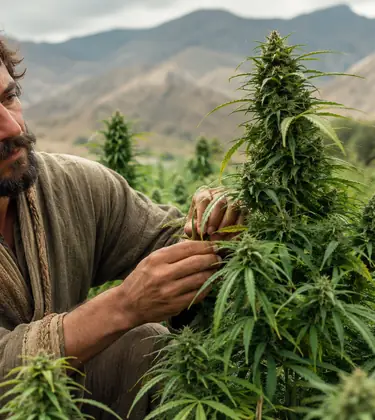
Ask a room full of growers whether pure landrace strains still exist and you will start an argument that lasts all night. Some swear the real thing died the day someone crossed it with Skunk. Others claim they know a guy who knows a guy sitting on untouched Afghani seed from 1979. Both of them are a little bit right, and both of them are missing the bigger picture.
So let's cut through the smoke. Do landrace strains still exist? Yes. Are most of the "landraces" sold online actually pure? No. And the truth of what happened to these plants is stranger and more interesting than either side of the argument usually admits.
What a landrace actually is
A landrace is cannabis that grew in one place for so long that the plant and the environment basically raised each other. No breeder with a spreadsheet. No crossing program. Just seeds going in the ground, generation after generation, in an isolated pocket of the world, adapting to that exact altitude, soil, day length, and pest load. The Hindu Kush gave us stocky, resin-drenched indicas built to survive brutal mountain cold. Equatorial regions like Thailand, Colombia, and South Africa produced tall, wispy, marathon-flowering sativas that could handle relentless sun.
These are the original cannabis strains. Every OG, every Cookie cut, every fruity modern hybrid you have ever smoked traces back to a handful of these regional populations. Names like Durban Poison, Acapulco Gold, Panama Red, Afghani, and Malana charas were not marketing. They were geography.
The key word is isolation. A landrace stays a landrace only as long as outside genetics stay out. The moment foreign pollen shows up, the clock starts on that pure line. And over the last fifty years, outside pollen has shown up almost everywhere.
The uncomfortable science
Here is where it gets humbling. In 2021, researchers published the largest whole-genome study of cannabis ever attempted, sequencing dozens of new genomes to map where the plant came from. They found that cannabis was domesticated more than 12,000 years ago in what is now northwest China, near the borders of Kazakhstan and Kyrgyzstan. Every plant alive today, from ditch weed to your favorite dispensary flower, descends from that ancient founding population.
But the part that stings for landrace purists is this. The pure wild ancestors of cannabis are probably extinct. Gone. What scientists found in the field were feral plants closely related to those ancestors, not the untouched originals themselves. If you want the primary source, the full research sits in the journal Science Advances.
So if we are talking about the truly wild, pre-human version of cannabis, that ship sailed thousands of years before anyone rolled a joint. But wild ancestors and landraces are two different things. A landrace is still a human-tended plant. It is cannabis that people kept growing in one region for centuries. Those did not go extinct in the Stone Age. Many of them made it into living memory, and some are hanging on right now.
So do pure landraces still exist, or not?
Short answer: real landrace populations still exist, but the pool is shrinking fast, and most of what gets labeled "landrace" in a shop is at least partly hybridized.
Two forces did the damage. The first was the global weed trade itself. As demand exploded, farmers in traditional growing regions stopped carefully selecting their best plants and simply grew everything, then imported high-yield commercial seed to keep up. Once that happened, the old human selection systems that kept regional varieties distinct broke down and commercial seed supplanted many landraces.
The second force was prohibition. The War on Drugs made it too dangerous for traditional family farmers to keep doing things the slow, careful way. Eradication campaigns torched entire valleys of heritage genetics. Growers who survived often switched to fast, discreet hybrids. When a farming culture disappears, the plants that culture maintained usually go with it. That is the quiet tragedy here. You cannot lose the farmers and keep the landrace.
Are landraces extinct, then? Not extinct. Endangered is the honest word. Pure lines still turn up in remote parts of Morocco's Rif, the Hindu Kush, rural South Africa, parts of India, Mexico, and Central Africa. But every year that number gets smaller, and every year more so-called landrace seed is really a hybrid wearing a famous name.
Feeling lost on how to start? Try taking our quiz!
Start a QuizWhat we've learned chasing these plants
This is where we stop quoting other people and tell you what we actually know from doing this work.
Barney's Farm has spent decades tracking down and working with landrace genetics, and the reality on the ground is not romantic. Finding an authentic regional line is only step one. Growing it out is where most people quit. A true equatorial sativa can flower for four or five months, stretch to twice the height you planned for, and reward all that patience with a modest yield of airy flower. Plenty of pure landraces make terrible commercial crops. That is exactly why breeders started crossing them in the first place. They were not trying to erase these plants. They were trying to make them survivable for a normal grower with a normal tent.
That is also why the "100% pure landrace" seed you see for cheap online should raise an eyebrow. Preserving a real landrace means keeping a large, genetically diverse population alive over many generations without letting outside pollen sneak in. That takes land, money, isolation, and years. It is genuinely hard, and doing it right is a craft. When someone treats it like a quick product, the genetics usually tell on themselves in the grow room.
The plants worth protecting are the ones where the heritage is honest and the line has been stabilized carefully enough to actually plant. That is the sweet spot: real regional DNA, made growable, without pretending the wild plant and the modern seed are the same thing.
The unexamined day is a wasted opportunity. Reflect on what you did, what you learned, and how you can improve.
John Dewey
Two landrace-rooted strains you can actually grow
If you want a taste of this history without booking a flight to the Rif Valley, two strains in our catalog carry genuine landrace heritage and, unlike a lot of ancient pure lines, they actually behave in a modern garden.
Durban Poison is about as close to a legendary landrace as you can buy off a shelf. It comes from the South African coast around Durban and is one of the few near-pure landrace sativas that made it into Western cultivation and stuck. Our version is an F1 stabilization of authentic African genetics, 100% sativa, roughly 27% THC, with that unmistakable sweet anise and licorice character. It brings the clear, up, creative head high those old equatorial sativas were famous for, and it finishes in 56 to 65 days instead of holding your tent hostage until Christmas.
Acapulco Gold is the Mexican legend, a Central American landrace sativa that built half the reputation of West Coast weed culture before most modern strains existed. Ours keeps the genuine Acapulco lineage, runs around 70% sativa, and pushes THC up near 26% with a warm citrus, coffee, and pine profile. It is a direct handshake with the Mexican landraces that shaped everything that came after, tuned to yield like something you would actually want to harvest.
Neither of these is a museum piece. They are the practical way to grow a piece of cannabis history in your own space.
Landrace preservation, and why it matters to you
There is a real reason to care beyond nostalgia. Landraces are the genetic library the entire cannabis world borrows from. Every time breeders want new flavors, unusual cannabinoid ratios, mold resistance, or drought tolerance, they reach back into that library. Modern hybrids are increasingly built from the same narrow set of parents, which means the whole crop gets less diverse over time. Landraces are the backup drive. Lose them and you lose options nobody has even thought of yet.
Landrace preservation today is mostly the work of dedicated seed collectors, a handful of preservation-focused projects, and breeders who take heritage genetics seriously enough to keep them alive properly. If you grow, you can be part of it. Pop some regional seeds, keep a diverse population instead of one clone, save seed from your best plants, and label honestly. That is literally how landraces were maintained for thousands of years before any of us showed up.
So, do pure landrace strains still exist? The wild ancestor is long gone, most of the "pure" seed online is hybridized, and the traditional growing cultures that guarded these plants are under real pressure. But authentic landrace genetics are still out there, still growable, and still worth protecting. The originals shaped everything in your jar. The least we can do is make sure they get to stick around.
Barney’s Farm has been developing premium cannabis genetics since 1986, with more than 40 Cannabis Cup wins. Explore our full cannabis seed catalog and find the genetics that fit how you actually medicate.