CBD for Dogs and Cats: What Vets Actually Say
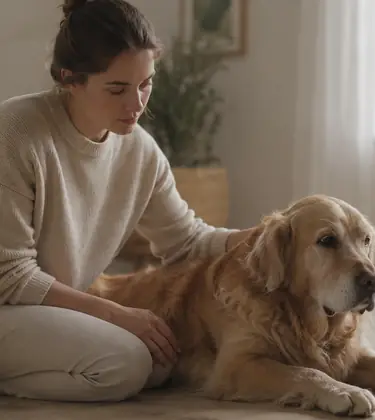
Owners in these trials report that their dogs move better. Blinded veterinarians agree with them. Then the gait analysis machine measures the same dogs and finds nothing.
That gap is the honest state of pet CBD research, and it is more interesting than either the marketing or the dismissal.
This guide covers what the trials found, the liver enzyme finding nobody advertises, why cats are a different animal entirely, and the genuine emergency that sends pets to the vet.
Weak evidence, real side effects
The best evidence is for canine arthritis and epilepsy, and even there it is weak and inconsistent. More than half of dogs on CBD show rising liver enzymes. No CBD product is FDA-approved for animals. And the real danger in this subject is not CBD at all.
What the arthritis trials found
The study that started it randomized dogs with osteoarthritis to CBD oil at 2 mg/kg twice daily against placebo, in a crossover design. Owner and veterinary scores both improved significantly, and it has been cited ever since.
Then people pooled the studies. A 2023 systematic review found the combined effect on pain severity did not reach statistical significance, with a mean difference of −0.60, 95% CI; −1.51 to 0.31, and rated all five trials as having a high risk of bias. Its conclusion was that CBD may reduce pain scores, but the evidence is very uncertain, and high-quality trials are needed.
The sharpest observation comes from a 2025 appraisal in Veterinary Evidence, and it explains the whole pattern: CBD showed extra pain relief in trials based on subjective assessments, but the only study that evaluated pain and activity using objective measurements did not show significant improvements between treatment groups.
A 2024 Colorado State trial of 42 dogs at 5 mg/kg reproduced exactly that split. Owner scores and blinded vet assessments improved. Objective gait measures did not.
Dose may matter. One trial found significant improvement at 50 mg a day and nothing at 20. But an owner watching a beloved old dog is not a neutral instrument, and that is precisely what these trials keep measuring.
Epilepsy, told properly
The seizure data has the same shape: a real signal that does not clear the bar that matters clinically. Colorado State's 2019 trial found a median 33 percent reduction in seizure frequency against placebo. The line that rarely travels with that figure is the next one: the proportion of dogs considered responders, meaning a 50 percent or greater decrease, was similar between groups. Two dogs in each arm hit it.
A larger follow-up in 51 dogs found a 24.1 percent decrease in seizure days against a 5.8 percent increase on placebo, and again no significant difference in responders. The low dose was abandoned for futility partway through.
One trial did clear the bar. A Cornell study of a CBD and CBDA mix found six of fourteen dogs responded against zero on placebo. So, something is happening, at higher doses, in some dogs, on some measures. That is worth knowing and worth studying. It is not the same as a treatment.
Feeling lost on how to start? Try taking our quiz!
Start a QuizThe finding nobody advertises
Here is the consistent result across this entire literature, and it belongs in any conversation about long-term use. Alkaline phosphatase rises. In the original arthritis trial, nine of sixteen dogs showed increases. A six-month safety study found eleven of twenty dogs on CBD showed alkaline phosphatase above the clinical reference range against none of the twenty on placebo, while every other liver measure stayed normal and all values returned to baseline after a four-week washout.
Pooled across arthritis trials the split runs 61 percent against 4 percent on placebo. In the epilepsy dogs the rise averaged around 400 units per liter, with one dog reaching 1,450.
No trial has documented actual liver damage, and no liver biopsies were done. So the honest reading is a consistent, dose-related, reversible enzyme signal of unknown significance.
One combination deserves flagging. Arthritic dogs are usually on NSAIDs, and a 2024 trial found ALT elevation only in the patients receiving CBD and an NSAID together. If your dog is on both, bloodwork is not optional.
The unexamined day is a wasted opportunity. Reflect on what you did, what you learned, and how you can improve.
John Dewey
Cats are not small dogs
Almost everything above is canine research, and it does not transfer. On an identical 2 mg/kg dose, cats reach roughly one seventh the blood concentration dogs do. Feeding changes it enormously, with one study finding close to an eleven-fold increase in bioavailability in fed cats against fasted.
Tolerability is the bigger issue. In a 2025 arthritis trial in cats, 7/12 (58%) cats discontinued participation because of vomiting and/or diarrhoea, and two more refused to take it at all. Twenty-six cats enrolled; fourteen finished.
A well-designed stress study in 40 cats found no effect on cortisol and no behavioral differences at all. And a formal 2024 review of CBD for feline osteoarthritis concluded there was no peer-reviewed evidence meeting its inclusion criteria. Cats also object to the delivery itself, with licking and head-shaking recorded hundreds of times during dosing in one trial.
What the regulators and the profession say
The federal position is unambiguous. FDA states that it has not approved cannabis for any use in animals, and the agency cannot ensure the safety or effectiveness of these products, and it sent warning letters to four pet CBD companies in April 2025 over disease claims, including one telling owners CBD could replace phenobarbital.
The veterinary profession is more sympathetic and equally cautious. The American Veterinary Medical Association supports research and FDA approval, while noting that the available scientific evidence for use in animals is limited, and that lab analyses indicate a substantial portion of products on the market are labeled inaccurately for both identity and amount of active ingredient.
That mislabeling is measurable. A peer-reviewed analysis found only 10 of 27 pet CBD products fell within 10 percent of their label claim.
Legally, no US veterinarian can prescribe cannabis, since it remains federally Schedule I. California protects vets from discipline for discussing or recommending it, after a documented physical examination. Nevada goes further and permits recommending and administering hemp products under 0.3 percent THC. Most states have neither protection, which is why some vets change the subject.
The actual emergency
Everything above is a debate about efficacy. This part is not. The ASPCA's poison control center reported nearly 11 percent more marijuana ingestion calls than the previous year and a nearly 300 percent rise across five years, putting recreational drugs on its top toxins list for the first time. Pet Poison Helpline reports a 448 percent rise over six years.
Edibles are the vehicle. They smell like food, they are made with butter that concentrates THC in fat, and a dog does not stop at one.
The clinical picture is distinctive: lethargy, unsteadiness, dilated pupils, a slow heart rate, low body temperature and urinary incontinence, appearing within minutes if inhaled or one to four hours after eating, and lasting up to three days.
Keep the proportion right, because panic helps nobody. The Merck Veterinary Manual notes mild signs from around 0.3 to 0.5 mg/kg, and that death following ingestion of marijuana or delta-9-THC would be extremely rare, with the probable lethal dose enormous. The fatal cases on record involved concentrated edibles.
There is no antidote. Treatment is supportive care, and it works. Call a vet, say exactly what was eaten, and do not lie about it. Nobody is reporting you, and the honest answer shortens the visit.
Being able to say exactly what was eaten is easier when you grew it. If you know the jar held White Runtz at 29% THC, Gelato crossed with Original Z, you can tell a vet the potency and the quantity in one sentence. A half-eaten gummy of unknown origin is a much worse conversation.
Where a seed company fits, precisely
Nowhere near your dog, and squarely in the storage cupboard. We do not sell pet products and would not. What we can say is that everything in the section above happens in homes where cannabis is stored casually, and that a home grower has more control over this than anyone buying edibles. Flower in a sealed jar on a high shelf is not a hazard. Butter in a fridge and gummies in a bag are.
If you grow, the drying room gets a closed door, the trim gets a lidded bin, and nothing infused ever shares a counter with a dog's reach. That is the whole safety protocol, and it costs nothing.
The most common cannabis accident in a household has four legs and no idea what it just ate, and two habits prevent nearly all of them:
- Height, not doors. Dogs open cupboards. They do not climb. Anything infused goes above head height, and the fridge is not a safe place for cannabutter.
- Grow it, do not bake it. Flower in a sealed jar is far less interesting to a dog than anything made with butter. Frosted Zinn x 3 Bears OG Auto is a simple one to start with, 70 to 75 days from seed at 90 to 120 cm and 24% THC, earthy herbal spice over sweet tropical fruit.
What to tell your vet
Canine arthritis trials show benefit on owner and vet scores and nothing on objective gait measures, and a systematic review found the pooled effect not statistically significant with all trials at high risk of bias. Epilepsy trials show a real reduction in seizure frequency but repeatedly fail the 50 percent responder threshold.
Between 55 and 61 percent of dogs on CBD show elevated alkaline phosphatase against roughly 4 percent on placebo, reversible and without documented liver damage, but worth monitoring, especially alongside NSAIDs. Cats absorb CBD very differently, and a 2025 feline arthritis trial lost 58 percent of participants to vomiting and diarrhea.
No CBD product is FDA-approved for animals, only 10 of 27 pet products tested fell within 10 percent of their label claim, and no US vet can prescribe cannabis. The genuine risk is THC toxicosis from edibles, with poison control calls up nearly 300 percent in five years.
Barney's Farm has been developing premium cannabis genetics since the 1980s, with over 40 Cannabis Cup wins. Explore our full seed catalog and find strains bred for every climate and skill level.