Cannabis Topicals: Will They Get You High? (And When to Actually Use Them)
Walk into any dispensary in 2026 and the topicals shelf has more real estate than it did last year. Lotions, balms, salves, lubes, bath bombs, transdermal patches with potency numbers that look like flower test results. Every one of them gets the same question at checkout: am I going to feel anything off this stuff?
The honest answer is more interesting than yes or no. Here is what cannabis topicals actually do, when they pull their weight, and when you are better off rolling something instead.
Do cannabis topicals get you high?
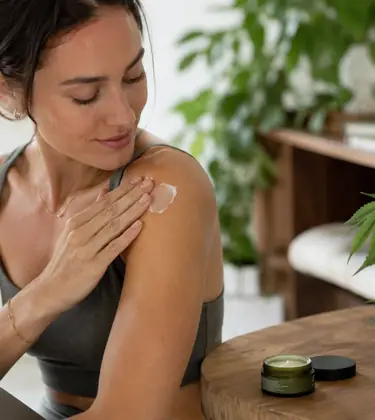
For almost every product on the shelf, no. Your skin is built to keep things out. The outermost layer, the stratum corneum, blocks most molecules from reaching your bloodstream. THC is a fat-loving, water-hating compound that does not pass through skin easily without help. When you rub a cannabis cream into your shoulder, the cannabinoids interact with receptors in the skin and the local muscle tissue, and that is mostly where they stop. They do not ride up to your brain.
Animal research backs this up. A 2016 paper in the European Journal of Pain found that transdermal CBD gel reduced joint swelling and pain behaviors in arthritic rats without altering exploratory behavior, the standard test for whether something is reaching the central nervous system. Translation: real local relief, no head change.
The big exception is a true transdermal patch, and it gets its own section below.
How does a THC lotion or weed cream actually work?
Cannabinoid receptors live throughout your skin, your muscle tissue, and the nerves running through both. Your body even produces its own cannabinoids that bind to those receptors as part of normal pain signaling and inflammation control. When you apply a topical, the THC and CBD in the formula bind to those local receptors and dampen pain signals and inflammatory activity in that exact spot.
A 2022 review of transdermal cannabinoid delivery laid out the basic problem: THC and CBD are highly lipophilic, meaning they want to stick to fats and resist crossing the watery layers of skin needed to reach blood vessels. That is why a regular balm gives you local action without systemic effects. Most of the cannabinoid load stays in the area you rubbed it on.
This is the entire point of a topical. Targeted relief, no head change, no second-guessing what you can do for the rest of the afternoon.
What is a transdermal THC patch and why is it different?
A transdermal patch is engineered to do the opposite of what a regular cream does. The whole point of the format is to get cannabinoids past the skin barrier and into the bloodstream over many hours, using permeation enhancers and a sticky carrier matrix.
In a 2022 single-arm study published in Advances in Therapy, researchers applied a 100 mg CBD plus 100 mg THC transdermal system to volunteers and tracked their blood every few minutes for 12 hours. They found measurable concentrations of both cannabinoids circulating in the bloodstream, with assessments of psychoactive effects taken at every blood draw. That is real systemic absorption. A regular lotion does not do that.
The practical takeaway is that a THC patch can give you a mild, drawn-out body effect that some users compare to a low-dose edible spread across half a day. Most balms and lotions cannot.
If you have a drug test on the calendar, this distinction matters. Plain topicals usually do not deliver enough THC to your bloodstream to register. Patches might. Read the format on the label, not just the cannabinoid count.
Feeling lost on how to start? Try taking our quiz!
Start a QuizWhen are cannabis topicals actually worth using?
Topicals earn their place when the problem is local. Sore shoulder from yesterday's deadlifts. A stiff knee that has been bugging you for years. A specific spot in your lower back you keep going back to with your thumbs. Inflamed skin. Cramps.
Patient research is starting to back this up. At the 2023 American College of Rheumatology Annual Meeting, researchers presented a US study on rheumatic disease patients and found that people who used topical cannabis products were significantly more likely to report effective pain relief than those using non-topical formats. That tracks with what dispensary patients have been saying for years.
The terpenes matter too. A 2022 study in the International Journal of Molecular Sciences found that topical myrcene, the same monoterpene that gives many indica strains their dank, mango-fuel scent, reduced chronic joint pain and inflammation in arthritic rats through a cannabinoid receptor mechanism. Whole-plant topicals built from real cannabis extract carry these terpenes along with the cannabinoids. CBD isolate alone leaves them on the table.
The unexamined day is a wasted opportunity. Reflect on what you did, what you learned, and how you can improve.
John Dewey
What topicals will not do
Topicals are not a flower replacement. A balm rubbed on your knee is not going to make a stressful Tuesday afternoon disappear, and it will not do the work of a joint after dinner. If what you actually want is the high, you want a different format.
Topicals also will not solve every skin problem you have. Some marketing makes them sound like a cure for eczema, psoriasis, acne, signs of aging, and probably your relationship with your stepdad. That is salesperson talk. Localized inflammation, soreness, and cramping are the lane where cannabis topicals consistently deliver. Beyond that, claims start outpacing the evidence.
If you are chasing the kind of body-heavy effect that hits your whole system at once, the answer is still indica flower. Critical Kush is the kind of strain people reach for when topicals are not enough. It is an indica-dominant cross of Critical Mass and OG Kush, bred for that signature heavy-stone profile, and we have been refining it in Amsterdam for years. The cream gets the spot. The flower gets the whole nervous system. Different tools, different jobs.
Use them together if it makes sense. Topical on the sore spot, smoke for everything the topical cannot reach.
How to read a topical label like you'd read a strain test
The total cannabinoid content per container should be listed clearly on the label, in milligrams. Anything less than 100 mg of active cannabinoid in a typical jar is probably a placebo with extra steps. A serious topical lands somewhere in the 250 mg to 1000 mg range per container, depending on size and intended use.
Lean toward full-spectrum or broad-spectrum extracts over isolate-only formulations. The terpene profile matters in a topical the same way it matters in a flower. A cream made from real cannabis extract carries beta-caryophyllene, myrcene, and other terpenes that contribute to the anti-inflammatory effect. CBD isolate is fine, but it is playing with one tool out of the box.
Check for third-party lab testing on the specific batch. Reputable cannabis brands print a QR code that takes you to a current certificate of analysis. If they do not, walk.
Skip products that promise to cure anything. The FDA has not approved any cannabis topical to treat a disease, and the brands making bold medical claims tend to be the same ones cutting corners on the rest.
For growers who want to make their own infusion at home, the math is the same. You need indica genetics with a high-myrcene, resin-heavy profile. Pineapple Chunk is one of our denser, stickier indica-dominant lines, with a resin coating that translates well into oils and salves if you have the patience to make your own. The terpene structure is what does the work in a topical, so start with a strain that has the right one.
The bottom line on cannabis topicals
A regular cannabis topical does not get you high. The endocannabinoid receptors in your skin and muscle catch most of the action, and the formula is built to keep it that way. The exception is a transdermal patch, which is engineered specifically to push THC into your bloodstream and can produce a mild, slow body effect over many hours.
Use cannabis topicals for what they are good at. Sore muscles. Joint pain. Tense spots that respond to pressure. Cramping. Skin you keep noticing. They are not a substitute for flower, edibles, or vapes when what you actually want is to be high.
Read the label. Check the lab test. Treat the format like a tool, and pick the right one for the job.
Barney's Farm has been developing premium cannabis genetics since the 1980s, with over 40 Cannabis Cup wins. Explore our full cannabis seed catalog and find strains bred for every climate and skill level.