How to Make a Cannabis Salve at Home
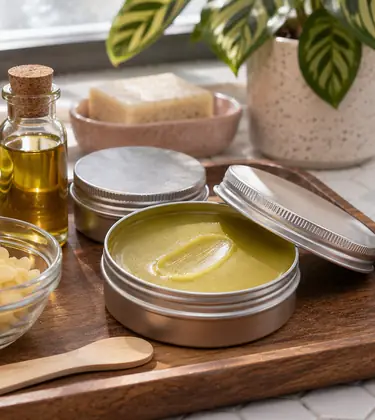
A cannabis salve is infused oil set with beeswax into a soft rub that melts on contact with skin. People rub it into sore knees, tired feet and dry, cracked hands, and since it stays on the skin, a weed salve works nothing like an edible or a joint.
Learning how to make cannabis salve takes one afternoon and very little gear: a double boiler, a square of cheesecloth and a few small tins. The steps below cover the oil, the wax, the dosing math and the habits that keep a batch fresh for months.
Key takeaways
- A salve is decarbed cannabis infused into oil, then firmed with beeswax and poured into tins.
- Skin carries cannabinoid receptors such as CB1 and CB2, a 2019 review in Molecules notes.
- About 1 ounce of beeswax per cup of oil gives a soft salve that spreads easily.
- With 3.5 grams of 20% flower, each teaspoon of salve holds up to about 11 mg of THC.
Salve, balm or lotion
Shop shelves use the three names loosely, but the recipes differ. A salve is oil and wax with no water, soft enough to scoop with a finger. A balm uses more wax, or a harder fat such as cocoa butter, so it holds its shape in a stick or a pocket tin. A lotion blends oil with water, which makes it lighter, though it then needs an emulsifier to hold together and a preservative to keep mold and bacteria out.
That missing water makes salve the easiest topical to make at home. Microbes need water to grow, so a clean, water-free batch keeps for months without preservatives. Most cannabis balm DIY recipes simply add a little more wax to the same base, so one method covers both.
Cannabinoids and the skin
Skin does more than hold a salve in place. The body's own cannabinoids, the CB1 and CB2 receptors they act on and the enzymes that make and break them down were shown to be expressed in several tissues, including the skin, a 2019 review in Molecules explains. That signaling helps keep the skin barrier working and renewing itself, the authors write, and when it is disrupted it has been linked to atopic dermatitis, psoriasis, acne and itch.
The science explains the interest, but it does not prove that a homemade balm treats anything. Cannabis is attracting increasing interest in cosmetics and dermatology, a 2021 review in Cosmetics notes, yet its authors conclude that the safety of its cannabinoids for regular use has not been demonstrated, apart from CBD. THC also passes through intact skin poorly, and that barrier settles most questions about whether cannabis topicals get you high: a plain salve mostly stays local, while transdermal patches are built to carry THC into the bloodstream.
Feeling lost on how to start? Try taking our quiz!
Start a QuizPicking flower for the oil
Any flower works once decarbed, and so do trim, small buds and kief saved from a harvest, since nobody sees the texture once the oil is strained. Strength and smell matter more than looks. A potent flower means less plant matter for the same strength, and a pungent one carries its aroma into the finished tin, especially in a batch with no essential oils. Blue Cheese, an Original Cheese and Blueberry cross at 26% THC, builds heavy, sticky colas in 60 to 65 days of flowering, and its creamy, sweet blueberry notes soften the savory edge of its cheese aroma. Anyone who wants a CBD salve can follow the same steps with CBD-rich hemp flower.
The unexamined day is a wasted opportunity. Reflect on what you did, what you learned, and how you can improve.
John Dewey
Oils, wax and extras
Three ingredients decide how a salve feels and how long it lasts, and each one can be swapped to suit the batch.
Carrier oil
Cannabinoids dissolve in fat, so the oil does the extracting. Coconut oil is the most common choice, since it infuses well, has little smell when refined and stays firm below about 76°F (24°C). Olive oil gives a softer, greener salve with a fruity note. Sweet almond and jojoba oil feel lighter and sink in faster, though they cost more, and almond oil is best skipped around nut allergies. Whatever the choice, use fresh oil, since a stale bottle makes the whole batch smell rancid within weeks.
Beeswax
Beeswax turns oil into salve. About 1 ounce (28 grams) of beeswax pellets for each cup of oil sets into a soft salve that spreads easily, while a little more wax makes a firmer balm for a stick or a pocket tin. Pellets melt faster and weigh out more easily than a block. For a vegan version, candelilla wax works at roughly half the amount, since it sets harder.
Optional extras
Extras change the scent and feel more than the strength. Shea or cocoa butter makes a richer salve, and a little vitamin E oil helps the batch resist going rancid. Lavender, peppermint or tea tree essential oil masks the grassy smell. Keep it to about 6 to 12 drops per ounce of salve, roughly 1% to 2% of the batch, since stronger blends irritate skin more often.
Making the salve, step by step
A basic THC salve recipe takes four to five hours, most of it hands-off. These amounts make about 8 ounces of salve, enough for four 2-ounce tins:
- Decarb 3.5 grams of coarsely ground flower at about 250°F (121°C) for 30 to 40 minutes, until it turns light golden brown.
- Combine the flower with 1 cup of coconut or olive oil in a double boiler or a slow cooker set to low.
- Keep the oil between about 160°F and 200°F (71°C and 93°C) for two to three hours, stirring now and then.
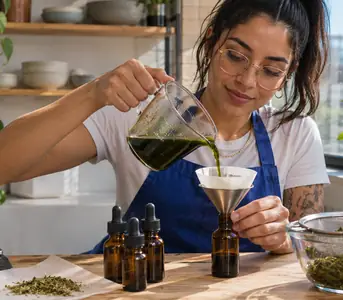
- Strain it through a double layer of cheesecloth into a measuring cup, squeezing the cloth gently to recover the oil.
- Put the warm oil back in the double boiler and stir in 1 ounce (28 grams) of beeswax pellets until they melt.
- Add any essential oils or vitamin E off the heat, so the scent does not cook away.
- Pour the salve into clean, dry tins, let it set at room temperature for about an hour, then cap them.
Low heat matters, since THC breaks down and the oil can scorch on a high burner. A dedicated pot or an old heatproof glass bowl spares good cookware, since beeswax is hard to wash off. A drop of salve on a cold spoon shows the final texture before pouring, and a little more wax or oil fixes it.
Strength of each tin
A salve is not dosed like an edible, though its strength still belongs on the label. Working it out takes one line of math: multiply the flower's weight by its THCA percentage and by 0.877, the share of weight left after decarboxylation, then divide by the volume of finished salve. For 3.5 grams of 20% flower, that is about 614 mg of THC spread through roughly 265 mL of oil and wax, or up to about 11 mg per teaspoon, and closer to 8 or 9 mg if a quarter of the THC stays in the strained flower.
Stronger flower raises the ceiling. Bubba Kush, an Afghan Kush landrace and OG Kush cross at 29% THC, would push the same recipe to about 16 mg per teaspoon at most, and its earthy, spicy hash aroma carries into the oil. It flowers in 56 to 63 days and leans 70% indica.
Those numbers matter most if someone eats the salve by mistake. A single tablespoon of the 20% batch holds about 25 to 35 mg, several times a typical starting edible dose for an adult, so store salve like any edible, out of reach of children and pets. The ASPCA lists marijuana as toxic to dogs, cats and horses, with signs from vomiting and poor coordination to low body temperature.
Patch test and storage
Beeswax, plant oils and essential oils can all irritate sensitive skin, so the American Academy of Dermatology suggests testing a new product on the underside of the arm twice daily for seven to 10 days before regular use. A few more habits keep a batch safe and fresh:
- Test a small dab on the inner forearm and wait 24 hours before wider use.
- Skip broken skin, open wounds and the area around the eyes.
- Store the tins in a cool, dark cupboard, where a coconut oil salve stays firm.
- Expect a clean batch to last about a year, a little longer with vitamin E.
- Label each tin with the date, the strain and the THC per teaspoon.
A tin that smells sour or like old crayons has gone rancid and belongs in the trash, along with any salve that grows spots on the surface.
From flower to tin
A cannabis salve is decarbed flower infused into oil and set with beeswax, a simple batch that takes an afternoon and fills several tins. Gentle heat protects the THC, a patch test protects the skin, and a clear label protects everyone else in the house. Research on cannabinoids and skin is promising but still young, so treat a homemade salve as a comfort for tired hands and muscles, and keep expectations modest.
Barney's Farm has been developing premium cannabis genetics since the 1980s, with over 40 Cannabis Cup wins. Explore our full seed catalog and find strains bred for every climate and skill level.