Lab Shopping: How Cannabis Potency Numbers Got Inflated
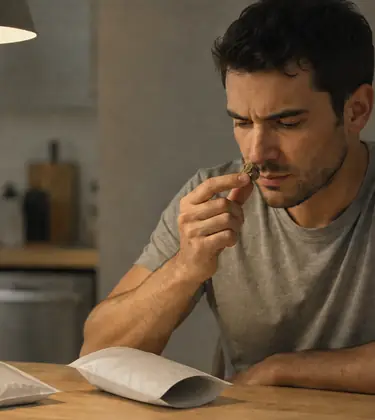
Researchers bought 23 samples of flower from ten Colorado dispensaries, took them to an independent lab, and tested what was actually in them.
Eighteen came back weaker than the lowest number printed on the label.
The number on the jar is the single most influential piece of information in legal cannabis. It sets the price, it decides what a buyer puts on the shelf, and it is the first thing most customers look at. It is also, across large parts of the industry, wrong in one direction.
This guide covers what independent testing has found, how the mechanism works, what regulators have done about it, and why the number was never measuring what you thought it was.
The lab works for the seller
Flower potency is systematically overstated. Concentrates are mostly fine. The pressure comes from retail buyers who will not stock flower below a certain THC number, and the pressure is relieved by choosing which laboratory does the testing. That practice has a name inside the industry, and it is lab shopping.
What independent testing found
The Colorado study is the blunt one. Published in PLOS ONE in 2023, it covered 12 strains bought from ten dispensaries and found that eighteen of 23 samples, or 78.26 percent, had a lower observed THC percentage by dry weight than the lowest value reported on the label. Overall the observed THC was 23.1 percent lower than the lowest reported value and 35.6 percent lower than the highest.
A much larger study followed in 2025, covering 277 products bought from 52 recreational dispensaries across 19 Colorado counties. It used a ±15 percent tolerance and found that 96.0 percent of concentrate products landed within that band against 56.7 percent of flower products. Across all the flower tested, 30.3 percent was over-labeled and 12.9 percent under-labeled, so the misses ran high more than twice as often as they ran low.
Those two findings together are more useful than either alone. Concentrates test accurately, which means laboratories can measure cannabinoids properly when there is nothing to gain from measuring them wrong. The problem lives in flower, which is exactly where the price premium lives.
How lab shopping works
Testing laboratories are private businesses competing for the same customers, and their customers are the producers whose products they grade.
A grower with a batch can send samples to more than one lab. Whichever result comes back highest goes on the label, and the lab that produced it gets the next order. Nobody has to falsify anything for this to work. A lab that runs slightly generous wins more business than one that runs strictly, and over a few years that selection pressure reshapes an entire state's numbers.
The effect shows up in the data. Research using Washington State traceability records covering hundreds of thousands of tests found median THC for the same product category ranging from 17.7 percent to 23.2 percent between the lowest-reporting and highest-reporting labs in that one market. Separate statistical work found results bunching just above the commercially important 20 percent line in Washington and Nevada, concentrated at particular laboratories and nearly absent at others.
Same plants. Same state. Different labs.
Feeling lost on how to start? Try taking our quiz!
Start a QuizThe regulators have started removing licenses
Enforcement arrived late and is now moving quickly.
Washington shut down the Centralia laboratory Praxis in 2020 after finding it had falsified testing data to provide high THC results for more than 1,200 samples, and the state noted that the lab's owner tried to destroy evidence during the investigation.
California revoked four laboratory licenses in nine months across 2023 and 2024, most of them over potency inflation. In one case the state reported that flower a lab had graded at 24 percent THC came back at 16 percent when regulators tested the same batch. In another, the state alleged inflation as high as 32 percent.
Michigan permanently revoked the licenses of Viridis Laboratories in August 2025 and barred its founders from the state's cannabis industry for life, after finding the lab had not followed approved testing procedures. The same operation had been at the center of a recall covering $229 million of product four years earlier.
Massachusetts began auditing THC labels in May 2026 against a compliance band of 75 to 125 percent of the labeled figure, meaning a product labeled 15 percent has to test between 11.25 and 18.75 to pass.
And California's regulator is mid-rulemaking on the problem this summer, in language that names it outright, describing proposed track and trace changes as safeguards against abuses of the system used to engage in lab shopping.
The unexamined day is a wasted opportunity. Reflect on what you did, what you learned, and how you can improve.
John Dewey
The part that is entirely legal
Enforcement targets fraud. Most inflation does not require any. In more than half of US cannabis markets, laboratory staff collect the sample themselves. In the rest, the producer chooses which material goes in the jar. ProPublica reported this year that 26 states and the District of Columbia require lab personnel to collect samples so manufacturers cannot cherry-pick products for testing, and that Colorado, which does not, found two dozen cases of companies violating testing rules in 2024 alone. An industry analysis cited in the same piece put half of the state's recent final enforcement actions on self-sampling and testing issues, and a Colorado regulator described the standard penalty there as a $15,000 slap on the wrist.
Underneath that sits a fact about the plant itself. Research published in 2025 measuring total THC across greenhouse-grown batches found variation of 4.7 to 6.1 percentage points of actual content between the top and the bottom of the same plants, and concluded that no single value truly represents a batch.
So a grower who sends the fattest top colas from the best plants is not lying. They are reporting a real measurement of real cannabis they really grew. The number is just not the number that describes the eighth you eventually buy.
Why the number is worth so much
Agricultural economists analyzed roughly 170 million retail cannabis prices across about 7,500 stores in 30 states and found that on an eighth of an ounce, a one percentage point increase in THC raised the price by about 78 cents. They also found that in concentrates, higher THC potency showed no association with higher prices at all.
Then there is the shelf. Industry buyers have described flower testing below 20 percent as frequently unable to get retail placement at all, with a further premium above 25 percent. That is not a scientific threshold. It is a round number that became a commercial cliff, and the statistical bunching sits exactly on top of it.
THC percentage does not predict how high you get
The uncomfortable finding is that the whole exercise measures the wrong thing. Researchers at the University of Colorado Boulder studied 121 regular users, comparing flower against concentrates. Concentrate users showed blood THC roughly double that of flower users, spiking to 1,016 against 455 in the minutes after use. Their self-reported intoxication was remarkably similar. So were their measures of balance and cognitive impairment, which came out about 11 percent worse for everyone.
Twice the THC in the blood, the same reported high. Whatever the label number is doing, predicting your experience is not it.
What a number on a seed page means
We publish THC figures on every strain we sell, so we should say plainly what they are and are not.
A seed catalog figure is a genetic ceiling. It describes what a line has produced when grown well by people who know it, and it comes from breeding trials, not from a compliance test on the package in your hand. Two growers running the same seed will not get the same number, because light, feeding, harvest timing and cure all move it. Ours is a statement about potential. A dispensary label is a claim about one specific batch, which is a much stronger claim and a much easier one to shade.
The more useful thing we can tell you is that our catalog's percentages are a poor guide to which plant you will enjoy. We breed for terpene expression and effect character as deliberately as we breed for potency, and the plants people come back for are frequently not the strongest ones.
Strawberry Cheesecake Auto sits at 23% THC, which is nine points below the top of our range, and it is one of the most distinctive things we make: Strawberry Pie crossed with Afghan OG and our Super Auto line, 75 to 80 days from seed, actual cheesecake and strawberry on the palate, relaxing and mood-stabilizing. Original Z OG Auto is 24%, a 50/50 hybrid from Original Z and OG Kush finishing in 70 to 75 days, berry and grape and sour candy, alert and calm at the same time.
Four decades of breeding has taught us that people remember flavor and they remember how a plant made them feel. Almost nobody remembers a percentage.
What the number is worth
Independent testing has repeatedly found flower labels overstated, with one Colorado study finding 78 percent of samples below their lowest label claim and a larger one finding only 57 percent of flower within a ±15 percent tolerance. Concentrates test far more accurately.
The mechanism is competitive. Labs that report generously win business, and states have revoked licenses in Washington, California and Michigan over inflated or unreliable results. Half of US markets still let producers pick their own samples, which lifts numbers without breaking any rule.
Every extra point of THC is worth real money at retail, and below 20 percent flower struggles to get shelf space. Meanwhile controlled research found double the blood THC producing the same reported high, which is the clearest sign the label was never measuring your experience.
Barney's Farm has been developing premium cannabis genetics since the 1980s, with over 40 Cannabis Cup wins. Explore our full seed catalog and find strains bred for every climate and skill level.