Cannabis for Eczema and Psoriasis: Topicals vs. the Evidence
Eczema and psoriasis are two of the most common long-term skin conditions in the US, and both come with itch, flares and a shelf of creams that rarely clear the skin for long. CBD balms and THC lotions now sit on dispensary and drugstore shelves with promises to calm all of it, so questions about weed and eczema have moved from online forums to the checkout counter.
The research is real but small. Lab work, a handful of short trials and one recent meta-analysis show where cannabinoids help, where they fall short and why the label on the tin deserves a close look.
Key takeaways
- About 31.6 million Americans have some form of eczema, and more than 8 million have psoriasis.
- A 2025 meta-analysis of 11 randomized trials found that cannabinoids eased itch modestly but did not improve dryness, redness or eczema scores.
- The AAD lists smoking among psoriasis triggers, along with stress and skin injuries such as scratches.
- Only 24% of hemp-derived topicals with a stated CBD amount were accurately labeled in a 2022 study, and THC turned up in 35% of all products tested.
Eczema and psoriasis, side by side
Both conditions involve an immune system that overreacts in the skin, but they look and behave differently. The National Eczema Association estimates that around 31.6 million people in the US, roughly 10% of the population, have some form of eczema, including about 16.5 million adults and 9.6 million children under 18 with atopic dermatitis, the most common type. It calls itch the most burdensome symptom, followed by skin redness and sleep loss. Both conditions tend to come and go in flares, and both have proven prescription treatments, from steroid creams to newer biologic drugs given by injection.
More than 8 million Americans have psoriasis, according to the National Psoriasis Foundation, and an estimated 30% of people with psoriasis also develop psoriatic arthritis, so for many of them, questions about cannabis for joint pain come up as well. The two conditions compare like this:
| What to compare | Eczema, all types | Psoriasis, all types |
|---|---|---|
| People affected in the US | About 31.6 million | More than 8 million |
| Worldwide | 10% to 20% of children and 2% to 10% of adults | About 125 million people, or 2% to 3% of the population |
| How it usually looks | Dry, itchy, inflamed patches | Raised, scaly patches called plaques |
| Linked problems | Sleep loss in 67% of children with atopic dermatitis | Psoriatic arthritis in about 30% |
| Cannabinoid evidence so far | A modest itch benefit in pooled trials | One small ointment study with better severity scores |
| What to compare | People affected in the US | Worldwide | How it usually looks | Linked problems | Cannabinoid evidence so far |
|---|---|---|---|---|---|
| Eczema, all types | About 31.6 million | 10% to 20% of children and 2% to 10% of adults | Dry, itchy, inflamed patches | Sleep loss in 67% of children with atopic dermatitis | A modest itch benefit in pooled trials |
| Psoriasis, all types | More than 8 million | About 125 million people, or 2% to 3% of the population | Raised, scaly patches called plaques | Psoriatic arthritis in about 30% | One small ointment study with better severity scores |
Evidence from skin studies
Skin carries its own cannabinoid receptors, CB1 and CB2, and CB2 sits largely on immune cells, which is why researchers expected cannabinoids to calm inflamed skin. Most of what is known about THC and skin inflammation still comes from mice and cell cultures. In one mouse study, THC applied to the skin cut the build-up of inflammatory immune cells in allergic contact dermatitis, though a 2017 dermatology review noted that no rigorous studies had yet confirmed efficacy or safety in humans.
Human trials have arrived since then, but they are small. A 2025 systematic review and meta-analysis in Frontiers in Pharmacology, which combines the results of earlier trials, covered 3,359 participants from eleven randomized controlled trials and found a modest but significant drop in itch, the most consistent benefit so far, with no significant effect on dryness, redness or quality of life and no clear change in eczema severity scores. The authors rated most of the studies as low quality and concluded that cannabinoids should not yet be recommended as standalone treatments for skin conditions.
The most detailed recent look at cannabis for eczema followed a group of nine patients with atopic dermatitis in Poland who applied an ointment with 30% CBD and 5% CBG every day for eight weeks. CBG, or cannabigerol, is a minor cannabinoid. Their skin hydration and oil levels improved and less water escaped through the skin, but the study had no comparison group. CBD for psoriasis rests on even less, since the review found a single clinical study, a 2019 trial of a CBD-enriched ointment that reported better psoriasis severity scores by day 90. The main studies line up like this:
| Study and year | Who took part | What was tested | What changed |
|---|---|---|---|
| 2025 meta-analysis | 3,359 people in 11 randomized trials | Cannabinoid treatments for skin conditions | A modest drop in itch, no clear change in dryness, redness or eczema scores |
| 2025 Polish ointment study | 9 adults with atopic dermatitis | Ointment with 30% CBD and 5% CBG for 8 weeks | Better hydration, oil and water-loss readings, no comparison group |
| 2019 ointment study | Patients with psoriasis and other skin problems | CBD-enriched ointment | Better psoriasis severity scores by day 90 |
| 2017 review of lab work | Mice and skin cells | THC and other cannabinoids on inflamed skin | Less inflammation in animals, no rigorous human data yet |
| Study and year | 2025 meta-analysis | 2025 Polish ointment study | 2019 ointment study | 2017 review of lab work |
|---|---|---|---|---|
| Who took part | 3,359 people in 11 randomized trials | 9 adults with atopic dermatitis | Patients with psoriasis and other skin problems | Mice and skin cells |
| What was tested | Cannabinoid treatments for skin conditions | Ointment with 30% CBD and 5% CBG for 8 weeks | CBD-enriched ointment | THC and other cannabinoids on inflamed skin |
| What changed | A modest drop in itch, no clear change in dryness, redness or eczema scores | Better hydration, oil and water-loss readings, no comparison group | Better psoriasis severity scores by day 90 | Less inflammation in animals, no rigorous human data yet |
Feeling lost on how to start? Try taking our quiz!
Start a QuizSmoke, stress and flares
Weed and psoriasis can clash through smoke alone. The AAD lists smoking among psoriasis triggers, saying that if you smoke or spend time with people who smoke, this could be the cause of an unexpected flare. The advice does not single out cannabis, but a vaporizer or an edible takes smoke out of the picture for anyone who wants to rule it out.
Stress is another common trigger, and so is skin injury, with flare-ups that can follow a cut, scrape, sunburn or scratch about 10 to 14 days later. Cold temperatures and bug bites can set off psoriasis as well, the AAD notes. Skin injury matters for eczema, too, since scratching an itch damages the same skin you are trying to calm.
The unexamined day is a wasted opportunity. Reflect on what you did, what you learned, and how you can improve.
John Dewey
Making a topical at home
Home growers often turn trim or spare flower into an infused oil or balm, which at least gives full control over what goes into it. The method mirrors cooking with cannabis, with flower heated gently to activate it, steeped in a carrier oil such as coconut or olive oil, strained and then thickened with beeswax. A homemade balm is unlikely to make you high, but its strength is a guess without lab testing, and fragrances or essential oils can irritate skin that is already inflamed. Resin-heavy strains make the infusion more efficient:
- Frozen Bananas F1, a Cookies and Cream and Banana Punch cross at 25% THC, flowers in 56 to 62 days and pairs creamy banana and vanilla notes with resin that suits bubble hash, rosin and dry sift.
- MAC 1 F1, an Alien Cookies and Miracle 15 cross at 27% THC with an even indica-sativa split, flowers in 63 to 70 days, smells of citrus, vanilla and earthy pine and produces exceptional hash when processed.
Whatever you make, test it before it goes anywhere near a flare. The AAD's general advice for new skin products applies:
- Choose a small, clear patch of skin away from any flare.
- Apply a little of the balm there twice a day for 7 to 10 days.
- Watch for redness, itching, burning or swelling.
- Stop at the first reaction and show the product to your dermatologist.
- Keep it off broken, cracked or weeping skin even after a clean test.
Reading a CBD topical label
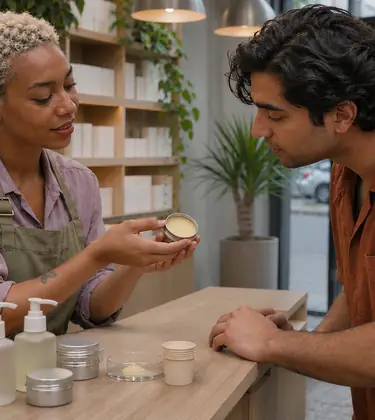
Store-bought topicals bring a different problem. When researchers from Johns Hopkins and RTI International bought 105 hemp-derived topicals online and in national retail stores, only 24% of the 89 products that listed a CBD amount were accurately labeled, 18% held less CBD than advertised and 58% held more, they reported in JAMA Network Open in 2022. A product with less CBD than promised wastes your money, and one with more gives a stronger dose than you planned. THC was detected in 37 of 105 products, although all stayed under 0.3%, and 4 products labeled THC-free contained it. About 28% made therapeutic claims, including claims about easing pain, yet no CBD product has FDA approval for eczema or psoriasis, so a cure claim is a warning sign. Before buying, look for:
- Certificate of analysis, or lab report, from an independent lab, matched to the batch number
- Total CBD in milligrams for the whole container
- Clear THC statement backed by that lab report
- Short, fragrance-free ingredient list
- No promise to cure or treat eczema or psoriasis
Calm skin and honest labels
Weed and eczema, like weed and psoriasis, show more promise in the lab than proof in the clinic so far. Pooled trials point to a modest itch benefit, CBD for psoriasis rests on one small study, smoke can feed psoriasis flares and many store-bought topicals miss their own labels. Stick with the treatment plan from your dermatologist, patch-test anything new and use cannabis balms alongside proven care, never instead of it.
Barney's Farm has been developing premium cannabis genetics since the 1980s, with over 40 Cannabis Cup wins. Explore our full seed catalog and find strains bred for every climate and skill level.