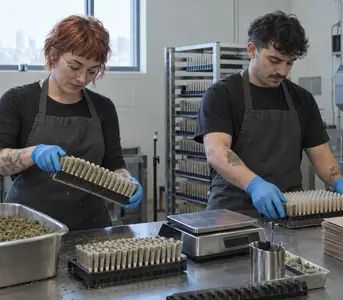
Why Growers Rent Their Lights: Cannabis Equipment Leasing
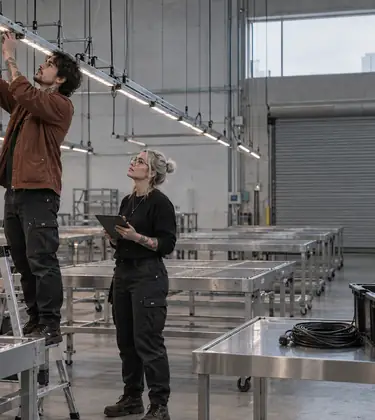
Walk into a licensed grow and look up. The LED bars over the canopy, the dehumidifiers, the chillers, the rolling benches and quite often the building itself may belong to somebody the grower has never met. The plants are theirs. Almost nothing else is.
Cannabis equipment leasing is not a fringe arrangement in this industry. It is closer to the default, and the reasons it became the default come out of American banking law, not horticulture.
Banks mostly will not take the call
Start with the thing that is not available. A conventional equipment loan from a commercial bank is the cheapest way to buy a machine, and it is largely closed to this industry. The federal financial regulator that tracks it counted 816 banks and credit unions serving cannabis businesses as of the fourth quarter of fiscal 2024, the most recent figure published. Set that against roughly 9,000 depository institutions nationally and the picture is clear enough. Most banks in America have decided the compliance burden is not worth the deposits.
Rescheduling did not change the banking picture. The April 2026 order moved FDA-approved cannabis products and state-licensed medical cannabis to Schedule III and left everything else, adult-use included, where it was. Banks still answer to the Bank Secrecy Act, still file cannabis-specific suspicious activity reports, and are still waiting for regulators to tell them what the new arrangement means for them. So a grower who needs half a million dollars of lighting has three doors:
- Pay cash, which very few operators at that scale can do without starving the rest of the build.
- Borrow from a specialist cannabis lender, at specialist cannabis prices.
- Never own the equipment at all, and rent it from whoever will buy it for them.
What the money costs
Specialist lenders exist and they publish their numbers, which makes this one of the few corners of cannabis finance where the price is not a rumour. Advanced Flower Capital, a listed cannabis lender, reported a weighted average yield on income producing debt investments of 13.2% as of 30 June 2026, across a portfolio of about $290 million. Chicago Atlantic, its nearest listed peer, reported a gross unlevered weighted average yield to maturity of 15.8 percent on a larger book in the same quarter. Those are lender yields, so the borrower pays that and then some in fees. A cannabis equipment loan is available at those numbers to anyone who wants one, which is a different thing from being affordable.
Mid-teens money changes what a grower can sensibly buy. At those rates the question stops being whether a piece of equipment is good and becomes how fast it pays for itself, which is why cycle length turns into a financial number as much as an agronomic one. A plant like Moby Dick Auto, which runs 65 to 70 days from seed to harvest, turns the same capital over five times a year where a long-flowering photoperiod might manage three. Nobody bought an autoflower for its balance sheet effects, but at 15 percent the effect is there.
The tax rule that quietly rewards renting
Grow equipment finance stops being a general business subject at this point and becomes a cannabis one. Section 280E of the tax code states that no deduction or credit shall be allowed for any amount paid or incurred during the taxable year in carrying on any trade or business that consists of trafficking in Schedule I or II controlled substances. Written in 1982 to stop a cocaine dealer deducting his expenses, it has spent forty years landing on licensed cannabis companies instead.
What survives 280E is the cost of goods sold. A retailer's costs are mostly disallowed. A cultivator's are mostly not, because for a producer, cost of goods sold is broad enough to absorb the rent on the cultivation space and the depreciation on production equipment. That asymmetry is the reason a cannabis accountant spends so much time deciding which side of a wall a cost sits on. Two further wrinkles matter for anyone weighing a lease against a purchase:
- The April 2026 rescheduling took state-licensed medical operators out of 280E. Adult-use operators remain on Schedule I and remain fully subject to it, so the rule now bites unevenly across a single industry and sometimes across a single company.
- A Tax Court decision in 2022 held that accelerated depreciation is unavailable to a business caught by 280E, which removes much of the tax advantage of buying gear outright.
The conclusion people draw from this, that leasing beats buying under 280E, is assembled from several rules, and no single source states it. It is a reasonable reading. It is not a substitute for asking an accountant who does this for a living, and any grower making a six-figure decision on it should get that in writing.
Feeling lost on how to start? Try taking our quiz!
Start a QuizLights are the line item that moves
Growers lease grow lights for the same reasons airlines lease aircraft. The asset is expensive, it is replaced on a cycle, it is worth more to a specialist owner than to the operator, and somebody else will help pay for it. Utility rebate programmes for horticultural lighting have quietly become a real subsidy. A rebate-tracking firm counted over 175 horticulture lighting rebate programs in North America as of November 2025, covering 55 percent of the US, with prescriptive incentives averaging $136 per fixture. On a room carrying two hundred bars that is real money, and it lands whether the fixture is owned or leased, which tilts the maths further towards not owning.
The energy case behind those rebates is the same one that makes lighting the second largest load in most facilities, after climate control. We have written about where the power in an indoor grow actually goes, and lights plus the air conditioning cleaning up after them dominate everything else.
What decides whether the fixture pays is what grows under it. London Pound Cake is listed at 650 grams per square metre indoors on a 55 to 65 day flower, and a number like that is the denominator for every rented watt above it. A lease payment is fixed. Yield is not.
The unexamined day is a wasted opportunity. Reflect on what you did, what you learned, and how you can improve.
John Dewey
If the grower fails, the lessor has a problem
The rates make more sense once you look at what the lender is actually holding. A March 2026 analysis of distressed cannabis sale-leasebacks put it plainly: cannabis equipment is often highly specialized, meaning its residual value outside the cannabis industry can be minimal. If the operator stops paying, the financing company is left with machinery that is hard to redeploy or resell.
It gets worse than that for the lessor. Cannabis businesses cannot use federal bankruptcy, so a failure goes through a state receivership instead, and in most states a receiver cannot simply take over a licensed operation without regulatory approval. Repossessing a chiller is straightforward. Repossessing a grow is not.
The grower pays for that risk in the lease rate. That is the honest explanation for mid-teens pricing. A lender is putting a price on an asset it cannot easily sell, inside a business it cannot easily seize, and the borrower carries that.
How this looks from the seed side
We sell the one input in this whole chain that is not financed, which gives us an odd vantage point on the rest of it. A packet of seed is the cheapest line in a grow budget and the one with the most leverage over everything else. It sets the cycle length that decides how many harvests service the lease. It sets the yield that the rented watts are divided into. It sets whether the plant finishes in the height the rented room allows. Growers doing the arithmetic properly work backwards from those constraints to the genetics instead of picking a plant and hoping the facility suits it.
The home grower's version of this is worth stating, too, because most people reading this are not financing a warehouse. A tent, a fixture and a bag of medium is a capital cost of a few hundred dollars, paid once, owned outright, with no covenant and no lender. The shortest route around cannabis capital equipment finance is to need very little capital equipment.
Rented capacity, owned genetics
The reason so much cannabis equipment is leased rather than bought comes down to three things stacked on top of each other. Ordinary bank credit is unavailable to most of the industry, the specialist credit that replaced it costs mid-teens, and the tax code treats a grower who rents differently from a grower who owns.
None of that is about horticulture, and all of it shapes how weed is grown in America. The rooms get built to suit the lease, the cycles get chosen to service the payment, and the equipment on the ceiling belongs to a fund. What the grower owns outright, at the end of all of it, is the decision about what goes in the pot. Barney's Farm has been developing premium cannabis genetics since the 1980s, with over 40 Cannabis Cup wins. Explore our full seed catalog and find strains bred for every climate and skill level.