Cannabis and PTSD: What Veterans and Researchers Are Finding
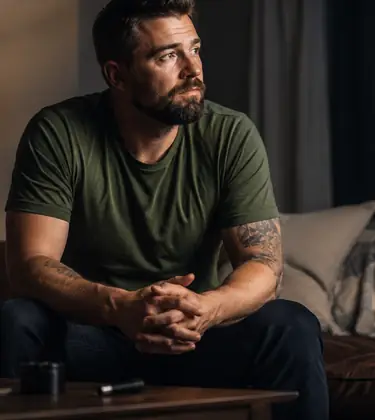
About 7 percent of American adults will deal with PTSD at some point in their lives. For veterans, the rate runs higher depending on era and deployment. The standard menu has been the same for decades: SSRIs, exposure therapy, prazosin for nightmares, sometimes a benzo if a doctor is feeling generous. Plenty of vets say none of it touches the worst nights. So they grow their own answer.
Cannabis has become the most-discussed alternative in the veteran community, and the research community has finally been allowed to catch up. Here is what the science actually shows in 2026, where federal policy stands, and what to consider if you are looking at it for the first time.
What PTSD actually does to a nervous system
PTSD is not just being upset about a bad memory. It is a stuck threat response. The amygdala stays cranked up, the prefrontal cortex (the part of the brain that says “you are safe now”) goes quiet, and the body runs on adrenaline whether the trigger is a slamming car door or 3 a.m. silence. Sleep collapses. Hypervigilance becomes the resting state. Nightmares replay things you spent the day trying not to think about.
The endocannabinoid system, the same network THC and CBD plug into, is one of the body’s main brakes on that fear response. People with chronic PTSD tend to show lower levels of anandamide, the body’s own cannabinoid. That part is measurable in brain scans. So when a veteran says weed quiets the noise, there is a clear biological reason it might.
This is why the conversation around cannabis and trauma keeps refusing to die, even after a few headline-grabbing trials came back ambiguous. The receptor system targeted by THC and CBD is the same one a traumatized brain has trouble regulating on its own. Whether plant cannabinoids are the right way to compensate for that, in what dose, in what ratio, and for how long, is a different question. But the basic premise that cannabis is interacting with something real in PTSD biology is no longer in serious dispute.
What the actual research shows
The first FDA-cleared trial of smoked cannabis in veterans with PTSD finished in 2019. Across 76 veterans cycling through high-THC, high-CBD, balanced THC/CBD, and placebo flower, the trial found no preparation beat placebo on PTSD symptom reduction in the first phase. That headline result surprised a lot of advocates.
The picture is more layered than the headline. Veterans were capped at 1.8 grams a day and had to use federally grown flower, which most participants reported was weaker and harsher than what they could buy at any state dispensary. A larger follow-up trial, MJP2, has received FDA approval to enroll over 300 veterans using market-strength cannabis with self-titrated dosing, the way people actually consume.
Outside the placebo-controlled world, observational data tells a different story. Survey after survey of veterans who use cannabis for PTSD reports significant self-reported drops in nightmare frequency, sleep latency, and daytime hyperarousal. That is not the same as proof of efficacy. Self-report is wishful, expectation effects are real, and people who keep using a drug are people for whom it works. But the consistency of the reports is hard to ignore.
The VA itself takes a cautious line. The VA/DoD Clinical Practice Guideline for PTSD currently recommends against cannabis as a treatment, citing limited high-quality evidence and increased risk of cannabis use disorder among veterans with co-occurring PTSD. That position predates most of the new research now in the pipeline.
Why veterans keep using it anyway
The pharmacology that civilian researchers find inconclusive often looks different from the inside.
Low-dose THC, somewhere in the 2.5 to 7.5 milligram range rather than a one-gram joint, blunts the startle reflex and softens the emotional intensity of recall. CBD at doses above roughly 25 milligrams has its own anxiolytic profile and seems to dampen the fear-extinction loop. Mid-range indicas with a 1:1 or 2:1 THC:CBD ratio show up most often when veterans describe what actually works for them.
Then there is sleep. Whatever the long-term debate looks like, cannabis suppresses REM at meaningful doses. Less REM means fewer dreams, which for a vet who wakes up every night reliving a deployment is the difference between a livable week and a destroyed one. The trade-off is that REM rebound after stopping can be brutal, which is one reason cannabis works better as a tool than as a permanent baseline.
Feeling lost on how to start? Try taking our quiz!
Start a QuizWhere federal policy stands in 2026
A lot has changed in the last six months and there is plenty of bad information floating around about it.
In December 2025, President Trump signed an executive order directing federal agencies to expedite marijuana rescheduling and expand VA-funded cannabis research. On April 23, 2026, the Department of Justice followed up by moving FDA-approved cannabis products and state-licensed medical marijuana from Schedule I to Schedule III. All other cannabis remains Schedule I, and a separate DEA hearing on broader rescheduling is scheduled for June 29, 2026.
For most veterans, the practical reality is mostly the same. VA Directive 1315 still bars VA doctors from prescribing or formally recommending cannabis. Vets in legal states still pay out of pocket. The shift matters more for research than for dispensing. With medical cannabis no longer Schedule I, Wayne State University and other research centers have launched larger-scale clinical trials with veterans using THC concentrations that match what is on real dispensary shelves. That kind of study was nearly impossible to run for the last fifty years.
The unexamined day is a wasted opportunity. Reflect on what you did, what you learned, and how you can improve.
John Dewey
The honest catch
Cannabis is not a clean answer for everyone with PTSD, and any honest cannabis company will say so.
Heavy daily use, especially of high-THC products with no CBD ballast, can intensify anxiety and paranoia in some users. Cannabis use disorder runs higher in veterans with PTSD than in the general population, partly self-medication and partly a feedback loop. Tolerance climbs fast on flower north of 25 percent THC, and tolerance is its own problem. Vets who treat their nightmares with weed every night for years sometimes find that quitting unleashes a worse stretch than what they started with.
The smarter approach most experienced users land on is intentional and intermittent. A specific dose for a specific symptom on a specific night. Not a pre-set baseline you ride for years.
That also means knowing when cannabis is the wrong call. If you have a personal or family history of psychosis, schizophrenia, or bipolar disorder, the calculus changes. If you are already on a stack of psychiatric medications, you owe yourself a real conversation with a prescriber, not a Reddit thread, about how cannabis interacts with what you are taking. PTSD is the kind of condition where doing the homework actually pays off.
Three decades of breeding for the right genetics
Long before clinical trials caught up to what veterans were saying in coffee shops, cannabis breeders were already selecting for the traits that come up in the research now. Higher CBD lines. Balanced THC:CBD ratios. Terpene profiles heavy in myrcene and linalool for sedation, and beta-caryophyllene for its CB2 activity.
Barney’s Farm has spent more than three decades dialing in indicas that target exactly the cluster of issues a PTSD nervous system runs into at night. Bubba Kush carries a genuine Afghani landrace lineage and a sweet, earthy profile with coffee undertones that experienced consumers reach for when they want one of the most soothing indicas on the shelf. Critical Kush, our cross of Critical Mass and OG Kush, was bred specifically for that body-melting, mind-quieting effect that medical patients and chronic insomniacs have given us feedback on for years.
We will not claim either one treats PTSD. No serious breeder would. What we will say is that thirty years of feedback from medical patients, veterans, and people who simply cannot sleep has shaped which genetics we keep refining and which we let go. The science is finally getting room to confirm or correct what users have been telling us all along.
The takeaway
Veterans are not waiting for permission. They have been using cannabis for PTSD symptoms for decades, often with real benefit, sometimes in ways that create new problems. The research community is finally allowed to study what they are actually doing with the products they actually use. The next two years of trial data will probably say more about cannabis and PTSD than the last fifty combined.
If you are a vet looking at this for the first time, talk to your VA doctor (you will not lose your benefits for being honest about it), start at a low dose, lean on balanced THC:CBD products before you reach for the highest-test flower on the shelf, and treat it like a tool. Not a finish line.
Barney's Farm has been developing premium cannabis genetics since the 1980s, with over 40 Cannabis Cup wins. Explore our full cannabis seed catalog and find strains bred for every climate and skill level.