Cannabis and Menopause: A Guide for Women
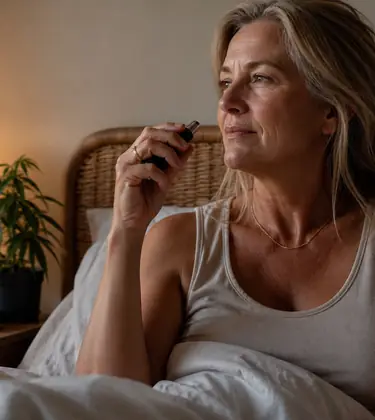
Menopause does not arrive politely. One night you are sleeping fine, the next you are wide awake at 3 a.m. with the sheets soaked through, your patience gone, and the thermostat running its own program. Hormone therapy works for plenty of women. For others it is contraindicated, ineffective, or simply not what they want. So a growing number of women are reaching for something with a much longer history of human use: cannabis.
This guide breaks down what is actually known, what is still under research, and how to think about weed if you are in perimenopause, menopause, or postmenopause and considering it.
What menopause actually does to your body
Menopause is the marker you hit after twelve straight months without a period. The average age in the US is 52, but the slow build called perimenopause often kicks in years earlier, somewhere in the mid-forties. The menopausal transition can last between two and eight years, and the symptoms run wider than most people expect: hot flashes, night sweats, broken sleep, joint pain, mood swings, brain fog, anxiety, and shifts in libido.
Underneath all of that sits a steep drop in estrogen and progesterone. Estrogen reaches far past the reproductive system. It shapes how your brain handles serotonin, how your bones hold their density, how your blood vessels dilate, and how deeply you sleep. When it falls, every one of those systems feels it. The economic cost is real too: a recent estimate put US workdays lost to menopause symptoms at $1.8 billion a year.
Why cannabis ended up in this conversation
The interest is real and it is documented. A 2022 survey of perimenopausal and postmenopausal women published in Menopause: The Journal of The Menopause Society found that 86% of respondents currently used cannabis, and 79% used it specifically to manage menopause symptoms. When the survey ran, hot flashes, sleep problems, and low libido were among the symptoms women most often said cannabis was helping.
A few things pushed midlife women toward the plant at once. Legalization across most of the country made it easy to walk into a dispensary. Hormone therapy carries contraindications and side effects not every woman wants to deal with. And the menopause conversation has gotten louder online, so women in their forties and fifties are comparing notes the way previous generations never could.
How the endocannabinoid system fits in
Your body makes its own cannabinoids. They run through a network called the endocannabinoid system, or ECS, which helps regulate mood, sleep, body temperature, appetite, and pain. Estrogen feeds into the ECS directly. As estrogen drops during menopause, that system gets noisier and less efficient.
This is one reason researchers are paying attention. Adding plant cannabinoids (THC, CBD, and others) gives the body another lever to pull when its internal version is sputtering. The same mechanism is also why women in midlife often report cannabis hits them differently than it did in their twenties. The receptors are still there. The hormonal landscape they sit in has changed.
Feeling lost on how to start? Try taking our quiz!
Start a QuizSleep, anxiety, and the 3 a.m. wake-up
The strongest signal in the research is sleep. In the 2022 Menopause study, 67% of cannabis-using participants used it for sleep disturbance and 46% used it for mood and anxiety. Perimenopausal women reported more frequent hot flashes and worse anxiety than their postmenopausal peers, and they leaned on cannabis more often to handle it.
A few patterns women describe consistently:
The 3 a.m. wake-up. This is the hour the perimenopausal brain loves. Low to moderate THC tends to shorten the time it takes to fall back asleep. Indica-leaning flower or a small evening edible is the most common approach.
Anxiety that shows up uninvited. Hormone shifts can spike anxiety in women who have never been anxious in their lives. CBD-dominant or balanced THC:CBD products tend to be gentler than heavy-hitting THC flower.
Mood that turns on a dime. Cannabis is no treatment for clinical depression. But many women report that low, regular doses smooth out the hormonal whiplash without zonking them out.
The unexamined day is a wasted opportunity. Reflect on what you did, what you learned, and how you can improve.
John Dewey
Hot flashes, night sweats, and the THC question
This one is messier. In the same survey, hot flashes did not improve as much as sleep and mood. The Menopause Society has so far declined to endorse cannabinoids for vasomotor symptoms because long-term safety and efficacy data are still missing.
Plenty of women still report relief, particularly when cannabis improves the sleep around the night sweats rather than the temperature surge itself. Anandamide, one of the body's own endocannabinoids, helps regulate temperature, and some THC effects mirror it. The biological mechanism is plausible. The clinical proof has not landed yet. Be honest with yourself about which one is improving: the symptom, or your sleep through the symptom.
CBD vs THC, and why the ratio matters in midlife
Here is what 30-plus years of breeding cannabis has taught us, with no link required.
THC is the intoxicating cannabinoid. It tends to help with sleep onset and acute anxiety, and it can backfire if the dose is wrong. CBD is non-intoxicating. It does not get you high, it tends to calm rather than sedate, and it interacts with how the liver processes some other medications. Most modern strains are THC-dominant, and that is fine for plenty of users, but it is worth knowing what you are taking.
Three things tend to be true for women in midlife:
THC tolerance often drops. The body that handled a fat joint at 28 may want a quarter of that at 48. Liver enzymes, body composition, and hormones all shift.
CBD-forward or balanced ratios feel more functional during the day. Save the heavier THC for evening, if you use it at all.
Onset and duration matter. Inhaled cannabis hits in minutes and fades in two hours. Edibles hit in 60 to 90 minutes and can last six to eight. Overshooting an edible is the most common mistake.
Choosing a strain when your body is changing
No strain is built for menopause. What women describe as helpful tends to come from a few familiar profiles.
For night sweats and a brain that will not turn off, classic indica genetics still earn their reputation. Northern Lights is the textbook example: pure indica, deeply sedating, short flowering window for anyone growing at home, and a forgiving profile for users coming back to cannabis after years away. The earthy, sweet-citrus terpene profile is part of why it has stayed on shelves for four decades.
When the issue is more racing thoughts before bed than full insomnia, something with a richer terpene profile and a slightly slower lift is often a better fit. Purple Punch, a Larry OG and Granddaddy Purple cross, leans heavily indica without flattening you. The dessert-leaning terpene profile (limonene, myrcene, caryophyllene) plays well with the kind of evening wind-down menopausal women tend to describe.
Two notes worth holding onto: the cultivar matters less than the dose, and the legal market in your state will shape format more than anything else. Work with what is available where you live, and start low.
Practical notes if you are new to this or coming back
Start at a quarter of what you think you need. If you have not consumed in 10 or 20 years, the market has changed. Flower is stronger. Edibles are denser. Tolerance is not where you left it.
Track everything for two weeks. Symptom, time of day, format, dose, what helped, what did not. You will find your sweet spot faster than guessing.
Talk to your doctor about interactions. CBD in particular affects how the liver processes some blood pressure, cholesterol, and antidepressant medications. This is real, and worth the conversation.
Keep what is working. If hormone therapy is doing its job for you, keep it. Cannabis can sit alongside it as an addition. The decision belongs to you and your doctor, not to the internet.
The short version
Cannabis is no cure for menopause. The peer-reviewed evidence so far suggests it can meaningfully help with sleep, anxiety, and mood for some women, while the case for hot flashes is still open. Plenty of women are using it anyway and reporting real relief, and the research community is racing to catch up to what dispensary numbers have been showing for years.
If you are in perimenopause or menopause and curious, talk to your doctor, start small, and pay close attention to how your body responds. Your body has changed every decade of your life. This decade is no different. The plant has been here the whole time.
Barney's Farm has been developing premium cannabis genetics since the 1980s, with over 40 Cannabis Cup wins. Explore our full cannabis seed catalog and find strains bred for every climate and skill level.