Cannabis and Country Music: From Outlaw Nashville to Today
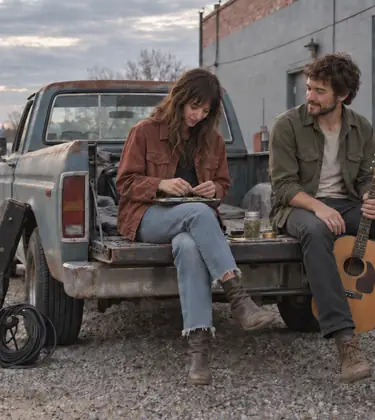
In 1969 a country song about not smoking marijuana in Muskogee went to number one. Forty-six years later, the man who sang it released a duet called "It's All Going to Pot" as a single, on 4/20.
Both records were Merle Haggard. That distance, and how quietly the industry travelled it, is the actual story.
What the outlaw era was, and what it was not
Outlaw country was a 1970s movement led by Willie Nelson and Waylon Jennings, a reaction against the polished Nashville Sound of the previous decade. Johnny Cash, Kris Kristofferson, David Allan Coe, Johnny Paycheck and Jerry Jeff Walker are usually counted in it. Its commercial peak was 1976, when the compilation Wanted! The Outlaws became the first country album certified platinum.
The outlaw country marijuana legend is older than most of the evidence for it. NPR put the problem plainly in 2018, describing figures immortalized as leathery, long-haired stoners and speed freaks who operated entirely outside the law of the country music establishment, and noting that the reality of how those musicians and conservative executives actually dealt with each other was considerably more complicated.
The historian Tyler Mahan Coe, quoted in the same piece, is sharper. He describes the popular image of guns and drugs and craziness, then adds that it was not any more so than the entire history of country music, and that there was simply a window when the image embraced and inflated that side of these personalities.
Two details from that reporting stick. Pot was ordinary in Nashville's publishing houses, where writers smoked, listened to test pressings and hit records came out of it. And the most famous drug bust of the era, Waylon Jennings in a Nashville studio in August 1977, was cocaine, and the charges collapsed.
Willie Nelson cannabis history, from the record
Nelson is the documented case, and the documentation is unusually complete.
- In 1994 he was arrested near Waco after pulling over to sleep on Interstate 35 with a hand-rolled cigarette and rolling papers in the car. In March 1995 a judge ruled there was insufficient evidence to justify the search and dismissed the charge.
- In 2006 state police inspecting his tour bus in Breaux Bridge, Louisiana seized about a pound and a half of marijuana. Nelson and four of his entourage were cited, and all five claimed ownership.
- In November 2010 six ounces were found on the bus at the Sierra Blanca checkpoint in Texas. He pleaded no contest in 2011 to a reduced paraphernalia charge and paid a $500 fine.
Then the story everyone repeats. The Hudspeth County judge was reported to have ordered him to sing "Blue Eyes Crying in the Rain" in court. The judge herself described that as a joke that got out of hand. It is quoted as fact constantly and it did not happen.
On the record, in Rolling Stone, Nelson described himself as the canary in the mine, if people are wondering what happens if you smoke that shit a long time. In the same piece he said he would not be alive otherwise, and that he would not have lived 85 years had he kept drinking and smoking as he did at 30 and 40.
He is also the only country artist with a documented cannabis business. Willie's Reserve was announced on 20 April 2015, initially for Colorado and Washington. A hemp wellness line followed in 2018, and a hemp-derived THC drinks brand raised $15 million in early 2026. We looked specifically for other country artists with cannabis or hemp brands and found none reported anywhere we would cite.
One correction worth carrying, because it went around the world. In December 2019 headlines said Nelson had quit weed. He said he had stopped smoking, for his lungs. His spokeswoman clarified afterwards that he had not given up cannabis.
Country songs about weed, and the ones that are not
Country music weed songs go back further than casual listeners assume, and they start before the outlaw era ended. "Wildwood Weed" reached number seven on the Hot 100 in July 1974. "One Toke Over the Line" hit number ten in 1971, folk rock but central to what followed. Then the modern run: "Roll Me Up and Smoke Me When I Die" in 2012, featuring Snoop Dogg and Kris Kristofferson; "Smoke a Little Smoke" in 2010, which Eric Church's label urged him not to release over its cannabis references; "It's All Going to Pot" in 2015; and "Follow Your Arrow" in 2013.
And the misreadings. "Rocky Mountain High" was banned by numerous radio stations until John Denver publicly explained that the line about everybody being high described what he felt watching a meteor shower from a campsite. "Mary Jane's Last Dance" is assumed to be a weed song; Mike Campbell has said it was originally called "Indiana Girl".
"Okie from Muskogee" is the interesting one. It came out of a tour bus, when somebody spotted a road sign and said he bet they did not smoke marijuana in Muskogee. Haggard later called it a character study and said he sings it now with a different attitude. He also said the joke lasted about three seconds before they realized the importance of it, which is a more honest account than either camp usually quotes.
Feeling lost on how to start? Try taking our quiz!
Start a QuizThe airplay problem
Country radio's resistance is measurable, and one song measures it precisely. "Follow Your Arrow" contains the line "roll up a joint, or don't". At the 2013 CMA Awards, ABC bleeped the word joint on the live broadcast while leaving an earlier reference to crack alone. Kacey Musgraves noted the inconsistency publicly at the time.
The following year the same organization gave the song Song of the Year. And the chart record shows what radio did with it: the single peaked at number 43 on Billboard's Country Airplay chart while reaching number 10 on Hot Country Songs, which counts streaming and sales alongside airplay. Listeners bought it. Programmers would not play it. The industry gave it an award.
That gap is the whole history of cannabis in country music in one data point, and it is why the genre's relationship with the plant looks contradictory from outside. The songs were always there. The distribution was the part that resisted.
There is a plant with a similar biography. Trainwreck came out of Northern California in the 1970s, spread by hand through exactly the informal networks that operated while the formal ones stayed shut, and became a fixture long before anything about it was legal or documented.
The unexamined day is a wasted opportunity. Reflect on what you did, what you learned, and how you can improve.
John Dewey
Nashville today, which is stranger than the 1970s
The Nashville cannabis story since 2016 is short: the city tried, and the state stopped it. Tennessee has not legalized. Possession of small amounts remains a criminal misdemeanor, and the 2015 medical law covers a narrow list of conditions with no provision for legal sale.
Nashville tried. The Metro Council decriminalized possession of half an ounce in September 2016, reducing the penalty to a $50 fine or community service. Seven months later the state repealed it and barred any Tennessee city from doing the same again.
What grew instead was hemp. Tennessee recorded more than $245 million in hemp sales between December 2023 and November 2024, with the industry claiming a far larger total across more than a thousand licensed retailers. Then the state closed it. A 2025 law banned THCA products above the hemp threshold, and from 1 July 2026 most of Tennessee's most popular hemp-derived cannabis products became illegal to sell as the state's Alcoholic Beverage Commission took full regulatory control. Industry estimates put THCA at about 75 percent of hemp sales.
Read that agency name again. The body that licenses whiskey now regulates THC in Tennessee, and the products it permits may only be sold in venues restricted to 21 and over, which includes liquor stores and bars with a liquor-by-the-drink license.
In Nashville, a honky-tonk with a liquor license is a legal channel for a THC drink while possessing a joint outside is still a misdemeanor. The outlaw era never produced anything that odd.
What a seed company hears in all this
Forty years of breeding gives you a particular sympathy for a genre that spent decades being told what it was allowed to say out loud.
Country music and cannabis genetics moved the same way through the same years. Both circulated informally because the formal channels were closed, both got their reputations from a handful of visible figures while the actual work happened in rooms nobody wrote about, and both ended up with famous names attached to things whose origins nobody documented at the time.
That is why documentation is the thing worth paying for now. Apple Fritter, a Sour Apple and Animal Cookies cross with a dense, sweet, bakery-leaning profile, comes with parents you can name and a cannabinoid range you can check. Fifty years ago it would have been a cut passed between people with a story attached and nothing else.
The songs survived on tape. The genetics survived on trust. Only one of those was a reliable medium.
Where it stands
The outlaw era was less of a drug carnival than the merchandise suggests, and the marijuana in it was more ordinary than outlaw. What was genuinely rebellious was saying so on a record, which is why the interesting history is not who smoked but who got played.
Nashville's own state has now banned most of what its hemp shops sold, handed the rest to the liquor board, and left marijuana a misdemeanor. Willie Nelson, at 93, still has the only cannabis brand in country music. Some things move slowly.
Barney's Farm has been developing premium cannabis genetics since the 1980s, with over 40 Cannabis Cup wins. Explore our full seed catalog and find strains bred for every climate and skill level.