Can You Overdose on Weed? The Science and The Risks
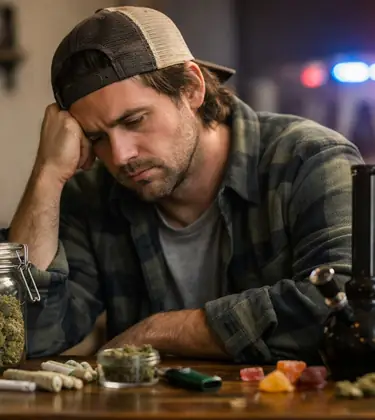
Can you overdose on weed? This question gets typed into search engines millions of times a year, and the answers people find are all over the place. One side says cannabis is completely harmless. The other side lumps it in with hard drugs. Both are wrong, and the real answer lives in the science.
Here's what we're going to cover: whether THC can actually kill you, what the lethal dose data says, the indirect risks that do cause real harm, why ER visits keep climbing, how synthetic cannabinoids changed the danger equation entirely, and what responsible consumption looks like when you're dealing with modern high-potency flower.
Can Weed Kill You? What the Lethal Dose Data Says
Every substance has a number called the LD50: the dose that kills half the test subjects in a lab setting. For THC, animal studies put the LD50 somewhere between 666 and 1,260 mg per kilogram of body weight. For a 175-pound person, the lowest estimate means roughly 53 grams of pure THC consumed all at once. A standard dispensary gummy contains 5 to 10 mg. You'd need to eat thousands in a single sitting. A 2020 DEA fact sheet stated that no deaths from marijuana overdose have been reported.
Compare that safety margin to other substances people use regularly. Caffeine's LD50 sits around 192 mg/kg. Alcohol can kill at blood concentrations of just 0.4%. Acetaminophen (Tylenol) causes fatal liver damage at doses not far above the recommended maximum. THC has one of the widest gaps between an active dose and a lethal dose of any psychoactive compound on the planet.
The reason is brain architecture. The brainstem regions controlling respiration and cardiac rhythm have very few CB1 cannabinoid receptors. Opioids kill because they suppress breathing. Alcohol kills because it shuts down the central nervous system. THC physically cannot do either of those things because it has almost no receptors to bind to in the areas that keep you alive. That's the biological reality, and it's why a fatal THC-only overdose remains essentially undocumented in medical literature.
The Risks That Actually Do Kill People
Saying "weed can't kill you" is a useful shorthand, but it's incomplete. A peer-reviewed study examining cannabis-related deaths in England from 1998 to 2020 concluded that the risk of death from direct cannabis toxicity is negligible. But it also found cannabis involvement in fatalities from road traffic collisions, where impaired judgment and slower reaction times played clear roles. The same study noted cardiac events in people with pre-existing heart conditions.
Driving under the influence. THC impairs reaction time, spatial awareness, and decision-making. Driving high is illegal in every US state, and for good reason. The danger here isn't the THC itself. The danger is a two-ton vehicle operated by someone whose cognitive processing speed just dropped off a cliff.
Cardiac vulnerability. THC increases heart rate and can temporarily raise blood pressure. For a healthy 25-year-old, this is nothing. For someone with an undiagnosed heart condition or a history of arrhythmia, it's a genuine risk factor. If you have any cardiac history, talk to your doctor before using cannabis. Full stop.
Polydrug use. Mixing cannabis with alcohol increases THC absorption and amplifies impairment beyond what either substance produces alone. Combining cannabis with sedatives, opioids, or other depressants compounds the risks further. Most cannabis-associated deaths on record involve another substance in the mix.
Why Cannabis ER Visits Keep Climbing
If cannabis is so safe, why are more people ending up in emergency rooms? A CDC-backed study tracking ER data from 2006 to 2018 found that cannabis-associated emergency visits rose by an average of 12% every year, climbing from about 12 visits per 100,000 people to nearly 55 per 100,000 over that period. A separate CDC analysis showed cannabis-involved ER visits among people under 25 continued rising through the pandemic years of 2019 to 2022, with especially sharp increases among children under 10 due to accidental ingestion of edibles.
Several factors are driving this trend simultaneously. Product potency has skyrocketed. Average THC content in flower has roughly tripled over the past two decades, and concentrates regularly exceed 70% THC. Edibles remain a major culprit because their delayed onset leads to double-dosing. Legalization has expanded access, which means more first-time users encountering high-potency products without the experience to manage them. And wider acceptance means people are more willing to go to the ER when they feel bad, rather than toughing it out at home and staying quiet about it.
None of these ER visits typically involve a life-threatening overdose. The vast majority are anxiety, panic attacks, rapid heart rate, and nausea. Staff provide fluids, reassurance, monitoring, and time. But the trend is real, and it reflects a market where potency has outpaced consumer education.
Feeling lost on how to start? Try taking our quiz!
Start a QuizSynthetic Cannabinoids: The Actual Overdose Danger
When people do die from "weed," it's often not weed at all. Synthetic cannabinoids, sold under street names like K2, Spice, and Black Mamba, are lab-made chemicals sprayed onto dried plant material and marketed as a cannabis alternative. They bind to the same CB1 receptors as THC, but with dramatically higher potency and none of the safety profile that natural cannabis has built over thousands of years of human use.
A systematic review of synthetic cannabinoid toxicity published in Brain Sciences found that some synthetic compounds bind to CB1 receptors up to 82 times more strongly than THC. Fourteen of the studies reviewed reported deaths. Common symptoms included seizures, tachycardia, psychosis, and kidney failure. These are outcomes that natural cannabis simply does not produce at any realistic dose.
Making it worse, synthetic cannabinoid batches are wildly inconsistent. Two packets with the same branding can contain completely different chemicals at completely different concentrations. Some batches have been found laced with fentanyl and other synthetic opioids. In 2018, over 150 people were hospitalized in Illinois after using K2 that contained rat poison compounds. Standard drug tests don't even detect most synthetic cannabinoids, making clinical treatment harder.
This is the clearest argument for legal, regulated, lab-tested cannabis. When people can't access real cannabis, some turn to synthetic garbage that can actually kill them. The plant isn't the problem. The prohibition-era alternatives are.
The unexamined day is a wasted opportunity. Reflect on what you did, what you learned, and how you can improve.
John Dewey
Too Much THC Symptoms vs. a Medical Emergency
Knowing the difference between an uncomfortable high and a genuine emergency can save you a lot of panic. Too much THC symptoms include rapid heartbeat, nausea, sweating, anxiety, paranoia, dizziness, and feeling disconnected from reality. These are unpleasant but temporary. Your endocannabinoid system is overstimulated, and it needs time to recalibrate. Most episodes resolve within a few hours.
Call for medical help if you or someone with you experiences severe chest pain that doesn't let up, difficulty breathing, uncontrollable vomiting, seizures, or psychotic symptoms like sustained hallucinations or total disconnection from reality. Also call immediately if a child has consumed cannabis in any form. Kids metabolize THC differently, and symptoms in a small body can escalate fast. Nobody is going to be arrested for eating too many gummies, and ER staff deal with cannabis overconsumption regularly.
What Responsible Consumption Actually Looks Like
At Barney's Farm, we've been developing cannabis genetics since 1986. Over 40 Cannabis Cup wins across three decades of breeding. We've watched THC percentages climb from single digits in the early days to strains pushing past 30% today. That potency increase is a testament to how far breeding science has come, but it also means consumers need more information than ever to make smart choices.
THC percentage is only one part of the equation. Two strains at 25% THC can feel completely different depending on their terpene profiles. A strain heavy in myrcene will lock you into the couch. One loaded with limonene will have you cleaning the house with a grin on your face. That's why every Barney's Farm strain ships with detailed cannabinoid and terpene data. You shouldn't have to guess what your flower is going to do to you.
A consumer choosing a high-THC powerhouse like Gorilla Z needs to know that going in and dose accordingly, especially if they're used to mellower strains. A newer consumer might be better served by something with balanced THC and CBD ratios, where CBD's interaction with CB1 receptors helps keep the experience smooth and manageable. The point is: an informed consumer is a safe consumer, and the best prevention against overconsumption is knowing exactly what you're working with before you light up.
Buy from sources that test their products. Read the labels. Treat a new strain like an unfamiliar road. And if edibles are your thing, the rule hasn't changed in decades: start at 5 mg, wait two full hours, and then decide. The best session is the one where you feel exactly as high as you want to be. That takes knowledge, patience, and flower you can trust.
So, can you overdose on weed? You can consume more THC than your body wants, and the experience will be rough. But a fatal overdose from natural cannabis alone remains essentially unheard of in medical literature. The real dangers are impaired driving, pre-existing cardiac conditions, mixing substances, and synthetic cannabinoid products that share nothing with actual cannabis except the name. Respect the plant, know your dose, understand your genetics, and cannabis will do what it's done for thousands of years: work with your body, not against it.
Barney's Farm has been developing premium cannabis genetics since the 1980s, with over 40 Cannabis Cup wins. Explore our full seed catalog and find strains bred for every climate and skill level.