Can Weed Help You Quit Drinking? Everything You Need to Know
Something is shifting in American drinking habits. Only 54% of U.S. adults say they drink alcohol, a record low in the nearly 90 years Gallup has been tracking the question. Young adults are leading the exit, and plenty of them aren’t walking away empty-handed. They’re reaching for cannabis instead.
The “California sober” crowd has been talking about this swap for years. Now there’s actual clinical data on whether weed can help you drink less, or quit entirely. Here’s what the science says, what strain selection actually matters for, and what to watch out for before you toss the last bottle.
What “California sober” actually means
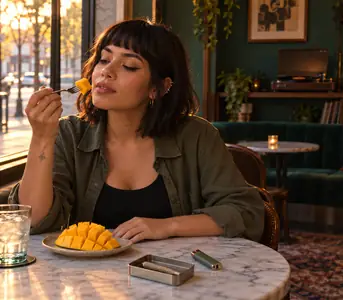
California sober means cutting out alcohol (and usually hard drugs) while keeping cannabis in the rotation. Some people are strict about it. Others have a glass of wine on birthdays and call it close enough. The term went mainstream in 2021 when Demi Lovato used it on a song and in a documentary, and it’s been building ever since, pushed along by health influencers, sober-curious bars, and a generation that’s increasingly done with hangovers.
The broader shift around alcohol is real. Gallup’s 2025 Consumption Habits survey shows three straight years of decline in the U.S. drinking rate, with the steepest drops among women and adults under 35. Americans aren’t just drinking less often. They’re drinking less when they do drink.
What the Brown University study found
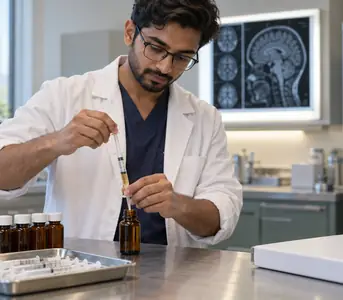
Until recently, the “cannabis helps you drink less” claim rested on surveys and self-reported stories. That changed in November 2025, when researchers at Brown University published the first randomized, placebo-controlled trial testing whether cannabis directly changes alcohol consumption. They built a fake bar inside a lab, brought in 157 heavy drinkers who also use cannabis, and ran them through three smoking sessions over three days.
People who smoked 3.1% THC cannabis drank about 19% less than when they smoked placebo, and at 7.2% THC they drank 27% less. The higher dose also delayed the first drink by nearly half, cut the urge to drink, and kept cravings down through the two-hour window. The study ran in the American Journal of Psychiatry and gave the California sober idea its first piece of cause-and-effect evidence.
Lead researcher Jane Metrik was careful about what to take from it. Short-term reduction in a lab isn’t a long-term treatment plan. But the signal is strong enough to stop dismissing the substitution effect as wishful thinking.
Why cannabis takes the edge off drinking
Alcohol and cannabis both hit reward and relaxation circuits in the brain, but through different systems. When heavy drinkers stop, they usually crash into anxiety, restlessness, and insomnia, the same feelings that originally pushed them toward a glass. Cannabis, especially indica-dominant flower, covers a lot of that territory without the next-morning damage.
Historical case work lines up with this. A review published in Alcohol and Alcoholism found evidence for cannabis meeting several criteria as a substitute for alcohol, including being safer in overdose and carrying lower risk of physical dependence. Patient reports in that literature often describe the same pattern: cannabis softening the cravings and the sleepless nights that drive relapse.
For most casual drinkers, the swap is simpler. The “drink to unwind” ritual gets replaced with a joint on the porch or a gummy before bed. The behavior stays. The ethanol doesn’t.
Feeling lost on how to start? Try taking our quiz!
Start a QuizHow bad is alcohol really
Bad enough to pay attention. Excessive alcohol use is behind roughly 178,000 deaths in the United States every year and shortens those lives by an average of 24 years, according to the CDC. That’s liver disease, crashes, cancers, poisonings, and the slow grind of decades of heavy drinking.
Cannabis doesn’t carry that body count. It has real risks worth naming. The comparison isn’t close.
The unexamined day is a wasted opportunity. Reflect on what you did, what you learned, and how you can improve.
John Dewey
Strain selection is doing more work than you think
Three decades of breeding at Barney’s Farm taught us that not every strain is built for this job, and the difference matters more than people expect. Swapping alcohol for cannabis works better when the plant actually fits the slot the drink used to fill. Pick the wrong strain for the wrong hour and you’ll end up thinking cannabis “doesn’t work” for you, when really you grabbed a screwdriver to hammer a nail.
For the “beer after work” slot, Blue Gelato 41 holds the spot well. It’s a balanced hybrid carrying limonene and caryophyllene up front, so it reads as sociable and uplifted rather than couch-locked. You can have a conversation, cook dinner, and still feel the day release its grip. It covers the role of the post-shift beer without the fuzz the next morning.
For the nightcap slot, the one a lot of people struggle to replace, Purple Punch is the tool. Myrcene-heavy, grape and vanilla on the nose, with a physical wind-down that actually lets you sleep. This matters because alcohol quietly ruins sleep quality even when it knocks you out, and a good indica in that slot is often the difference between waking up rested and waking up resentful.
THC percentage is not the whole story. Terpenes, phenotype expression, and the balance of the plant do more work than a number on a jar. A 28% THC sativa at 11 p.m. is a mistake no matter how loud the label is. Match the strain to the moment.
The risks nobody likes talking about
Cannabis can become its own habit. Daily heavy use brings a list of downsides: tolerance that creeps up fast, cognitive fog that stacks over time, and in rare cases a gastrointestinal syndrome that puts people in the ER. Swapping alcohol dependence for cannabis dependence is a real outcome, not a theoretical one.
The Brown study also flagged a minority of participants who drank more after cannabis, not less. Individual response varies. Using cannabis while still drinking heavily can stack the effects of both, which is the opposite of the goal.
If you’re dealing with severe alcohol dependence, quitting cold turkey can be medically dangerous. Alcohol withdrawal can cause seizures and, in serious cases, delirium tremens. That conversation belongs with a doctor, not a cannabis blog. No flower in any catalog substitutes for medical detox.
What the first couple of weeks usually look like
Anyone who’s actually traded a nightly drinking habit for cannabis will tell you the first two weeks are the interesting part. Sleep gets weirder before it gets better. Heavy drinkers often fall asleep fast on alcohol but wake up at 3 a.m. when it metabolizes, and that pattern doesn’t reset overnight. Dreams come back loud in the first week off alcohol, which tends to spook people who aren’t warned about it.
Appetite shifts too. Alcohol suppresses it at the time and trashes it the next day. Cannabis goes the other way. A lot of people find themselves eating actual meals in the evening for the first time in years, which is a minor miracle for a liver that’s been working overtime.
Mood tends to wobble for seven to ten days. That’s normal. Ethanol leaves the brain a little raw on its way out, and the right strain picked for the right hour, plus some boring fundamentals like water and sunlight, smooths most of it. If low mood sticks around past the two-week mark, that’s a signal to talk to someone, not to drink through it.
A sane way to try the switch
A few things most people who’ve actually made the swap will tell you.
Replace the ritual, not just the substance. If the reason you crack a beer at 6 p.m. is to bookend the workday, have something ready to take that exact slot. A pre-rolled joint, a dry vape hit, a 5 mg gummy. Something that slides into the shape the drink used to hold.
Start low on edibles. People coming from daily drinking tend to over-shoot because they’re used to the steady build of alcohol. Cannabis edibles land harder and take an hour or two to show up. Start at 2 to 5 mg and give it time before adding anything.
Track the first month. Nothing clinical, just a note in your phone: what you used, when, how it went, how you slept. The feedback loop is the whole game. You’ll spot patterns in a week that would take months to notice otherwise.
Keep days off. One reason cannabis stays a useful substitute for some people and becomes a new problem for others is whether it stays situational. Tolerance breaks, even one or two days a week off, keep it in the “tool” category instead of the “habit” one.
The bottom line
The data finally caught up with what a lot of people have been quietly doing for years. Cannabis can lower the urge to drink, shrink how much you drink when you do, and take over some of the rituals alcohol used to own. It’s not a cure for alcohol use disorder, and it’s not risk-free. For a growing slice of Americans who want out of drinking culture without white-knuckling total abstinence, it’s working.
Pick your strain for the moment. Keep your doses honest. Pay attention to how the switch actually lands for you. That’s the playbook.
Barney's Farm has been developing premium cannabis genetics since the 1980s, with over 40 Cannabis Cup wins. Explore our full cannabis seed catalog and find strains bred for every climate and skill level.