Why Home Extraction Labs Explode: The BHO Fire Problem
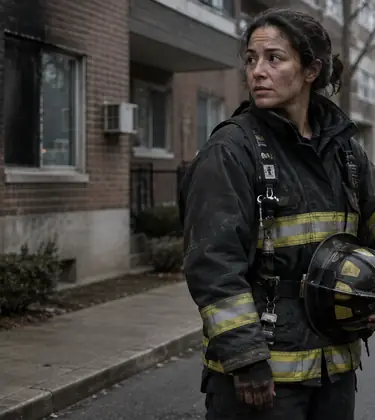
Burn surgeons in legal states can identify these patients before reading the chart. Young, male, burns on the hands, face and forearms, and a story about making concentrate in a kitchen.
The physics behind that pattern is simple enough to explain in a paragraph, and it is the reason this is the one part of home cannabis production we will never encourage.
This guide covers what the burn data shows, why butane behaves the way it does indoors, what the law says even where cannabis is legal, and what licensed facilities are required to do that no home can replicate.
Why a kitchen cannot do this safely
Butane is heavier than air, so it pools instead of dispersing, and it becomes explosive at under two percent concentration. That means an ordinary room fills invisibly from the floor up and passes through an explosive band on the way. The ignition source is usually something nobody thinks of as one.
What the burn centers see
The clinical record on this is unusually clear, because burn units keep good data and these injuries are distinctive.
A California burn center reviewed seven years of admissions and identified 101 patients as having BHO-related burn injury, averaging 26.8 percent total body surface area burned, 12 ventilator days and 27 days in hospital. Three patients died. Ninety-three percent were male.
UC Davis reported the same pattern from its own unit: these cases came to represent 8 to 10 percent of severe burn admissions, with individual injuries as large as 96 percent of total body surface, and cases rising from one in 2007 to 33 in 2014.
Colorado's burn center recorded roughly thirty cases across the same era, none at all before the state liberalized, with a median hospital stay of ten days and most patients requiring skin grafts.
Burn medicine has a rough rule that patients stay about one day per percent of body surface burned. At 27 percent, that is a month in hospital, on top of grafts, rehabilitation and permanent scarring.
The physics, in one paragraph
Everything above follows from two numbers on a safety data sheet. Butane's relative gas density is 2.11 against air, so it sinks and spreads along the floor instead of rising and dissipating. Its lower explosive limit is 1.6 percent, and the upper limit 8.4 percent, so a room only has to reach a tiny concentration before the air itself becomes a hazard.
The federal hazard database describes the consequence directly: vapors from liquefied gas are initially heavier than air, spread along the ground, and may travel to a source of ignition and flash back.
That is the mechanism nearly every case report describes. The gas crosses the floor, finds a water heater pilot light, a refrigerator compressor kicking on, a light switch, or static from a sleeve, and the flame travels back to the source.
The energy required is negligible. The DEA's own description is that because the vapors linger and release explosive gas clouds, a mere spark of static electricity can ignite an entire room.
For scale, the concentration NIOSH considers immediately dangerous to life is one tenth of the explosive limit. The air is hazardous long before it is explosive, and neither state is visible.
Feeling lost on how to start? Try taking our quiz!
Start a QuizIt is a felony in legal states
This surprises people, and it should not. Colorado, which legalized in 2012, makes it unlawful for any person who is not licensed pursuant to article 10 of title 44 to knowingly manufacture marijuana concentrate using an inherently hazardous substance, defines that as anything with a flash point at or below 100 degrees Fahrenheit including butane, and makes it a level 2 drug felony, which Colorado's sentencing statute prices at four to eight years in prison. The same statute reaches anyone who owns or controls premises and knowingly allows it, which puts landlords and roommates in the same sentence.
Washington's statute names the gas explicitly, stating that nothing in the chapter permits anyone other than a licensed processor to use butane or other explosive gases to extract or separate resin from cannabis, and routing the act to the manufacturing felony. It permits cooking oil, butter and other nonexplosive home cooking substances for personal use.
California carved the same hole in Proposition 64. Oregon created a dedicated offense, arson incident to manufacture of a cannabinoid extract, a Class A felony that applies even on your own property where the fire recklessly places another person in danger, with a specific clause for injuring a firefighter.
Notice what the legal line actually tracks. It is flash point, not cannabis.
The unexamined day is a wasted opportunity. Reflect on what you did, what you learned, and how you can improve.
John Dewey
What it does to a building
The individual injury is only part of it, because these happen in apartments. A 2013 explosion in Bellevue, Washington caused $2 million in property damage, according to the federal prosecutors who charged it. A former mayor of the city suffered a broken pelvis and later died of complications. Other residents shattered bones jumping from upper-floor balconies. The person responsible received nine years in federal prison.
A New Year's Day 2014 blast in Kirkland displaced the north wall of an apartment building by six to eight inches, disconnected the roof from the wall, threw debris twenty-five feet and got parts of the building condemned.
In Portland, three children including an infant were inside a residence when a shed attached to it exploded.
This is not a 2014 problem that legalization solved. In August 2024, a suspected extraction lab explosion in Douglas County, Oregon destroyed a 1,500 square foot building entirely.
What a licensed facility must do
The regulatory gap between a licensed processor and a kitchen is the clearest argument in this whole subject. Washington requires that solvents be at least 99 percent pure and used in a professional grade closed loop extraction system designed to recover the solvents, work in an environment with proper ventilation, controlling all sources of ignition where a flammable atmosphere is or may be present. The system must be commercially manufactured with a permanent serial number, certified by a licensed engineer as safe for its intended use, and approved by the local fire code official.
Los Angeles County requires gas detection that alarms when flammable gas exceeds a quarter of the lower flammable limit, plus hazardous exhaust hoods and a registered design professional's signature on the plans.
Electrical equipment in these rooms must be rated for hazardous locations, because ordinary switches and motors are ignition sources by definition.
Count what a kitchen has of that list. No closed loop, no recovery, no gas detection, no classified wiring, no engineer, no fire official. The regulations exist because the failure mode is known.
Where the plant points
Here is the part a seed company can say with a clear conscience. Every regulation above applies to solvents. The same Washington rule permits processors to use heat, screens, presses, steam distillation, ice water and other methods without employing solvents or gases, with none of the closed-loop, engineering or fire-approval conditions attached, for one reason: there is no flammable gas to contain.
Solventless concentrate is made from trichomes, agitation, temperature and pressure. It cannot explode, because nothing in it is explosive. It also depends far more on genetics than solvent extraction does, since a solvent strips resin from any material while water and pressure only give back what the plant already made.
That makes resin production a breeding target instead of a chemistry problem, and wash quality turns out to be cultivar-specific: two plants with identical THC numbers can return very different yields of full-melt, because head size and stalk fragility differ. Two places to start:
- Tangerine Dream is a Cannabis Cup winner built on G13, Afghan and Neville's A5 Haze, a 60% sativa at 27% THC, 60 to 65 days at 90 to 110 cm, intense citrus and berries, and heavy enough in trichome production that washing it makes more sense than smoking it.
- Gas Pack puts five resin-heavy classics in one feminized pack, Insane OG, Hindu Kush, Blue Dream, White Widow XXL and Skunk #1, which is cheaper than buying five separate packs to find out which one washes best in your room.
Everything dangerous in this article is an attempt to get the resin out faster than the plant will give it. Ice water takes longer and cannot detonate.
The physics does not negotiate
Butane hash oil explosions put burn units full of young men with a mean of 26.8 percent of their body surface burned, 27 days in hospital and, in one California series of 101 patients, three deaths. At one center they reached 8 to 10 percent of all severe burn cases.
The physics is fixed. Butane is 2.11 times as dense as air so it pools at floor level, becomes explosive at 1.6 percent concentration, and its vapor travels to a remote ignition source and flashes back. Static electricity is enough.
Home extraction with butane is a felony in legal states, carrying four to eight years in Colorado and reaching landlords who knowingly allow it. Licensed facilities need closed-loop recovery, engineer certification, fire-official approval and gas detection alarming at a quarter of the explosive limit. Solventless methods carry none of those requirements, because nothing in them can explode.
Barney's Farm has been developing premium cannabis genetics since the 1980s, with over 40 Cannabis Cup wins. Explore our full seed catalog and find strains bred for every climate and skill level.