Does Weed Make Your Pupils Dilate?
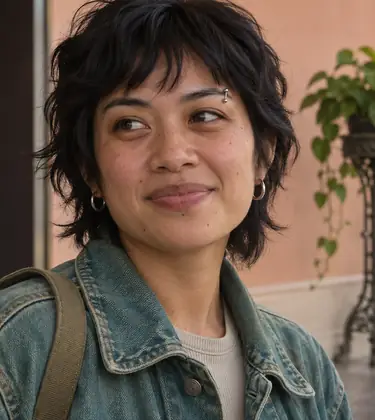
In a dim booth, your pupils look huge. Ten minutes later, under the bathroom lights, they look ordinary again. So does weed make your pupils big? Lighting alone can explain that change.
THC can change how your pupils react to light. Researchers have even measured smaller pupils after THC. A glance in the mirror gives you just one instant of a moving picture.
Key Takeaways
- Cannabis does not reliably make pupils look larger.
- Room lighting can change the size of both pupils within the time it takes to move between rooms.
- Redness affects the whites of the eyes and can appear without an obvious change in the pupils.
- Controlled studies can detect changes in the light reflex that a selfie will miss.
- Pupil size cannot establish recent cannabis use or fitness to drive.
- Suddenly unequal pupils with pain, vision changes, or a recent injury need emergency care.
What You Are Looking at in the Mirror
The black circle in the middle is the pupil, an opening that lets light enter the eye. The iris is the colored part of the eye. Its muscles adjust the size of that opening. Step into a dark auditorium and the pupils generally open wider. Walk back into the bright lobby and they narrow. Both of those responses can happen on a perfectly ordinary afternoon.
Redness is easier to spot from across a table. Small blood vessels on the surface can stand out against the white of the eye while the pupil stays about the same size. That is part of why eyes can look red after weed. Someone saying “your eyes look different” could have noticed the whites, the lids, or the dark centers. Those are quite different observations.
Three Things That Can Change an Eye Photo
Think about a close-up taken in a hallway and another taken on a sunny sidewalk. Before you credit THC for a difference, work out which part of the eye changed and what was happening around the camera.
| What looks different | Where to look | What else could explain it |
|---|---|---|
| More black in the center | The pupil inside the colored iris | Dimmer surroundings can make the opening wider. |
| Pink or red streaks | The white of the eye | More visible surface vessels can change its color. |
| One pupil looks larger | The two eyes side by side | Uneven lighting can mislead. A new, persistent difference needs medical assessment. |
| What looks different | More black in the center | Pink or red streaks | One pupil looks larger |
|---|---|---|---|
| Where to look | The pupil inside the colored iris | The white of the eye | The two eyes side by side |
| What else could explain it | Dimmer surroundings can make the opening wider. | More visible surface vessels can change its color. | Uneven lighting can mislead. A new, persistent difference needs medical assessment. |
Two phones can also render the same eye differently. A dark iris and pupil may blend together in a low-contrast shot. On a better-lit image you can see the boundary again. Enlarging the first photo makes its pixels bigger without revealing where the edge actually was. A pair of pictures taken hours apart rarely settles a bet about what cannabis did.
What Controlled THC Studies Found
When scientists study THC and pupil size, they can use the same light for everyone, measure each eye first, and record exactly how much THC each person received. They generally need several readings to describe a single response.
- Measure where the pupil starts under a known level of light.
- Record how far it narrows when a light turns on.
- Follow it as it starts to open again. A photograph taken only at this point misses the first two measurements.
A 2025 placebo-controlled trial studied people who did not regularly use cannabis. Researchers administered a measured dose of THC intravenously and used a device to record the eye's response. The team recorded a decrease in pupil size and a weaker pupillary light reflex after THC administration. In other words, the pupil narrowed less when the light came on. A smaller starting pupil and a smaller movement during the test can coexist.
Imagine a pupil that starts out narrower and then moves only a little when the light appears. Compare it with one that starts wider and closes more. Asking which one moved farther is different from asking which one started bigger. That distinction explains how a headline about a weaker light reflex can get retold as a claim about enormous pupils.
But does weed dilate your pupils after a gummy or a joint? The intravenous trial cannot answer that for every product, dose, or person. It offers a good reason to question the claim that weed always does it. No one in that experiment was taking a dispensary gummy after dinner, and the researchers had baseline measurements that you and your bathroom mirror do not.
Feeling lost on how to start? Try taking our quiz!
Start a QuizWhy Researchers Are Testing Eye Trackers
The emerging idea in cannabis testing is to record motion. One study compared adults who had recently smoked cannabis with a group that had not. A device tracked how far the pupil narrowed and how it opened again after light exposure. Smoking was associated with less constriction in the analysis. The groups still overlapped. Even with equipment and a statistical model, the researchers could distinguish recent use only imperfectly.
What Each Kind of Measurement Can Answer
Headlines about “a cannabis eye test” can leave out what the test was designed to find. A method that spots a difference between groups still needs separate evidence before anyone can use it to judge an individual driver.
| Method | What it records | What it can tell you |
|---|---|---|
| Single photograph | Appearance at one moment | Shows how an eye looked in that light. |
| Controlled THC trial | Size before and after THC or placebo | Estimates the drug’s effect under those conditions. |
| Light-response recording after smoking | A series of measurements as the pupil moves | Can detect group differences that do not identify every individual. |
| Method | Single photograph | Controlled THC trial | Light-response recording after smoking |
|---|---|---|---|
| What it records | Appearance at one moment | Size before and after THC or placebo | A series of measurements as the pupil moves |
| What it can tell you | Shows how an eye looked in that light. | Estimates the drug’s effect under those conditions. | Can detect group differences that do not identify every individual. |
Knowing the strain will not settle the question either. Blue Cheese is known for berry and aged-cheese aromas, while Purple Punch pairs Larry OG with Granddaddy Purple. Neither detail tells you how widely a particular person's pupils will open. The studies measured how a person’s eyes reacted to light. A name on a pouch gives you no such reading.
The unexamined day is a wasted opportunity. Reflect on what you did, what you learned, and how you can improve.
John Dewey
What Your Eyes Can Tell Someone Else
If you have ever wondered what happens to your pupils when you are high, it is tempting to ask a friend to look. They may see red eyes or pupils that look big for the room. They cannot establish from that observation whether you used cannabis, how much THC you had, or when its effects have passed. Normal-looking eyes give just as little assurance about driving.
Cannabis can affect the skills required for safe driving, including responding to a hazard and coordinating movement. A driver may look a passenger straight in the eye and still react too slowly when someone steps off the curb. If you have used cannabis and might be impaired, leave the keys with someone sober or arrange another ride.
If the question comes up among friends, a direct conversation gets you past the guessing game quickly.
- Ask how the person feels and whether they need a ride.
- Say what you actually noticed, such as a sudden change in vision, instead of guessing what they took.
- If someone reports a new difference between the eyes, take the symptom seriously even if you know they used cannabis.
When One Pupil Looks Bigger Than the Other
People often ask about pupil changes after weed because both eyes look different in a new light. One pupil suddenly looking much larger than the other is a separate concern. The medical term for unequal pupil size is anisocoria. Some healthy people have had a small difference for years. A change that just appeared deserves prompt medical assessment.
Seek emergency care if unequal pupils appear after an eye or head injury, or if the difference comes with a headache, double or blurred vision, a drooping eyelid, or eye pain. Tell the clinician when you first noticed it, which symptoms came with it, and whether you used any eye drops or medicines. Skip the home flashlight experiment. It could cost time without answering what caused the change.
An old photo can help a clinician understand whether a difference was present before today. It is most useful when the face is straight on, the room is evenly lit, and both eyes are visible. There is no reason to go hunting through your camera roll before seeking care for a sudden change with warning signs.
What the Mirror Can Tell You
A photo can show red eyes or big pupils. It cannot tell you how much THC someone used or whether they can drive. If one pupil suddenly looks bigger than the other, take that change seriously, especially after a head injury or alongside pain or double vision.
Barney's Farm has been developing premium cannabis genetics since the 1980s, with over 40 Cannabis Cup wins. Explore our full seed catalog and find strains bred for every climate and skill level.