Haze: The Santa Cruz Sativa That Took 14 Weeks and Changed American Growing
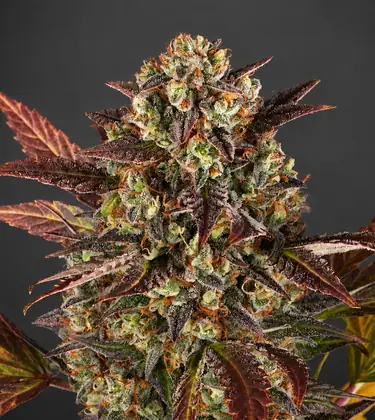
Every account of Haze starts the same way. Two brothers in Santa Cruz, sometime around 1969, crossing imported landraces from Colombia, Mexico, Thailand and India over several seasons.
Nobody can name them. There is no document, no interview, no court record and no contemporaneous report that identifies who they were. And the single most credible published account of Haze's genetics does not mention brothers, or Santa Cruz, at all.
This guide covers what is actually documented, where the folklore comes from, why Haze disappeared commercially, and what modern genetics says about the word sativa.
What is genuinely documented
The most authoritative published account comes from Robert Connell Clarke, the botanist who co-authored the University of California Press book on cannabis ethnobotany, writing in 2006.
His description of the breeding is specific and worth quoting properly. Original Haze, he writes, is a pure sativa stabilized hybrid arising from crossing all of the best females with a male of a different imported sativa variety each year. Starting from Colombian and Mexican hybrids, a South Indian male was used the second year and a Thai male the third.
Read that carefully, because most retellings get it wrong. This was a sequential program, one new father per season, not a single four-way cross. Clarke adds that depending on which year the seeds were collected, they resembled Colombian, South Indian or Thai plants.
There was never one Original Haze. There were several, and which one you got depended on the harvest.
Clarke locates it only as a late-maturing variety from Central California. No Santa Cruz. No brothers. He also gives the only hard economic figure available: even in the 1970s it sold for as much as $200 an ounce.
Where the story comes from
The Haze Brothers version, with the initials, the Corralitos address and the 1969 date, traces to forum posts made around 2008 by David Watson, the breeder known as Sam the Skunkman, who had a direct interest in the account.
That does not make it false. It does mean the canonical origin story and the canonical genetics description come from two different sources, and the one with better credentials contains none of the origin details.
There is also a dispute at the heart of it. Watson said Neville Schoenmakers received Haze seeds from him. Schoenmakers said they came from a New York collector holding original stock. Both men are now dead and neither account can be checked.
The fourteen-week flowering time has the same problem. It appears on seed company and content sites and nowhere else. Clarke gives no week count at all, saying only that Haze was almost always grown in greenhouses, allowing it to finish in December or January. A 2025 trade piece puts it at up to sixteen weeks indoors while openly admitting its own sourcing is informal.
Treat twelve to sixteen weeks as reputation rather than measurement.
What is verifiable
The moment Haze becomes documentable is the moment it reaches Europe and enters competition records.
Watson left Santa Cruz for Amsterdam in 1985, a month after being arrested there for growing cannabis, and founded Cultivator's Choice the following year. Schoenmakers had established The Seed Bank in 1984 and sold it to Sensi Seeds in 1991. Watson and Clarke later formed HortaPharm, whose genetic library was acquired by GW Pharmaceuticals in 1998, which is the only link in this whole chain with a corporate paper trail.
The Cannabis Cup records are real and dated. The Seed Bank swept all four categories in 1989 with Haze in two of the winners. Green House took the 1998 overall Cup with Super Silver Haze, a combination of Skunk, Northern Lights and Haze, having won the hydro category in 1997 and repeating in 1999. Amnesia Haze took first place in 2004 and the Sativa Cup in 2012.
So we can say precisely when Haze descendants won trophies. We cannot say who made the plant.
Feeling lost on how to start? Try taking our quiz!
Start a QuizWhy fourteen weeks killed it
The commercial explanation is arithmetic, and the numbers are published. Research modeling indoor cannabis production puts a modern operation at an average of 6.2 harvests a year, with stage durations of 22 days for clone, 50 vegetative, 57 flowering and 14 for cure. Flowering is the longest stage, and the paper describes it as creating a bottleneck.
Now put a fourteen-week Haze into that model. Ninety-eight days of flowering against a 57-day baseline lengthens the bottleneck by roughly seventy percent and drops a grower from about six harvests a year to about four.
Haze did not lose on quality. It lost on a spreadsheet. Enforcement pushed the same direction. California's aerial eradication program began in 1983, and growers responded by selecting for plants that matured faster and could be moved quickly, then increasingly by moving indoors, where short broad Afghan genetics suited limited ceiling height far better than a plant that wants to be three meters tall and finish in January.
The unexamined day is a wasted opportunity. Reflect on what you did, what you learned, and how you can improve.
John Dewey
Why equatorial plants flower forever
The biology is genuinely interesting and explains why this was never a defect. Cannabis flowering is triggered by day length, and the critical threshold varies by where a population evolved. Research on photoperiod response found that cultivars adapted to northern latitudes tend to have a short life cycle and flower faster within their limited growing seasons, whereas cultivars adapted closer to the equator tend to flower later. A difference of as little as fifteen minutes of daylight can change floral initiation.
Near the equator, day length barely moves across the year. There is no sharp seasonal signal, so equatorial plants evolved to ripen slowly on a weak cue with no deadline. Move that plant to a high latitude and it will vegetate until frost kills it.
The indoor twelve-twelve light flip is a crude, abrupt version of a signal these plants never evolved to read. Haze taking fourteen weeks is not stubbornness. It is a tropical plant doing exactly what a tropical plant does.
The word on the label does not mean what you think
Here is the genomics, and it is blunt. A 2021 study analyzed over a hundred cannabis samples for terpene and cannabinoid content and genotyped them at more than 100,000 markers. The finding: sativa and indica labeled samples were genetically indistinct on a genome-wide scale. What the labels actually tracked was variation in a small number of terpenes, with myrcene alone explaining 21 percent of it.
Sativa is a smell, not an ancestry. An earlier study of 81 samples at 14,031 markers found only a weak correlation between genetic structure and reported ancestry, and produced one devastating example: Jamaican Lambs Bread, reported as 100 percent sativa, was nearly identical to a reported 100 percent indica strain from Afghanistan.
We also went looking for Haze in the scientific literature and could not find it. The 2021 genomics paper does not contain the word. For arguably the most influential sativa lineage in commercial cannabis, there is no peer-reviewed pedigree. It exists in marketing and in memory.
What breeders did with Haze
The commercial answer to Haze was never to abandon it. It was to keep the cerebral character and cut the calendar, by crossing Haze into faster, shorter, more compliant genetics and selecting hard against the flowering time. Super Silver Haze and Amnesia Haze are both that project, and both won Cups doing it.
The autoflowering route took it further. Crossing Haze lineage into a day-neutral background removes the photoperiod dependency entirely, which is the single trait that made the original impractical. You are trading some of the sprawling, glassy top end for a plant that finishes in a little over two months from seed.
Lemon Haze Auto is that trade made explicitly, Lemon Haze crossed into our Super Auto line at 24% THC, 70% sativa, running 65 to 70 days from seed at 90 to 110 cm, zesty lemon over earth with an energizing daytime effect. Amnesia Haze Auto carries more of the original architecture at 80% sativa and 23%, drawing on Southeast Asian landrace, Jamaican Haze and Afghani-Hawaiian ancestry, same 65 to 70 day window, citrus and earthy pine with the cerebral lift the family is known for.
Ten weeks from seed instead of fourteen weeks of flowering alone. Four decades of breeding is largely the story of making that trade without losing what people wanted in the first place.
What survived, and under what name
The documented account of Haze's genetics describes a sequential breeding program in Central California using Colombian, Mexican, South Indian and Thai parents across successive years, with seeds differing by harvest. It does not name any brothers or any town.
The Haze Brothers story traces to forum posts by an interested party in 2008, and the two men who could have settled how Haze reached Europe contradicted each other and are both dead. The fourteen-week figure has no non-commercial source.
Haze descendants won documented Cannabis Cups through the 1990s and 2000s. It disappeared commercially because a 98-day flower against a 57-day industry baseline costs a grower two harvests a year. And modern genomics finds sativa and indica labels genetically indistinct, tracking terpenes rather than ancestry.
Barney's Farm has been developing premium cannabis genetics since the 1980s, with over 40 Cannabis Cup wins. Explore our full seed catalog and find strains bred for every climate and skill level.