Fenchol and Terpineol: The Minor Terpenes Behind Pine and Lilac Notes
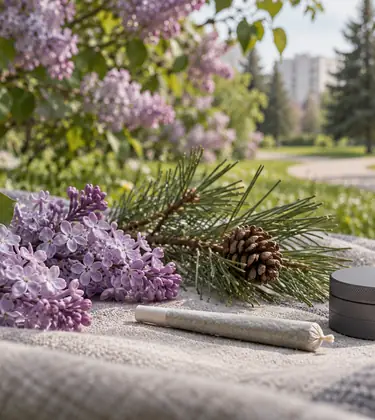
Myrcene, limonene and pinene get most of the attention on cannabis lab reports. Further down the list sit two terpene alcohols that rarely make a label but still shape how a strain smells.
Terpineol smells of lilac and is the main ingredient of pine oil. Fenchol is a basil compound with a chemical twin in borneol, and lately it has turned up in Alzheimer's research. In cannabis, the two tend to rise and fall together.
Key takeaways
- Fenchol is a monoterpene alcohol, an isomer of borneol, common in basil and used in perfumery.
- In 2021 lab work with human nerve cells, worms and mice, fenchol switched on a receptor called FFAR2 and reduced amyloid beta damage.
- Terpineol smells like lilac, and alpha-terpineol is the main ingredient of pine oil.
- Alpha-terpineol delayed seizures and eased pain in mice, but no human trial has tested it.
- Both compounds are on the FDA's list of synthetic flavorings that may be safely used in food.
- In cannabis, fenchol and alpha-terpineol often rise together with linalool, and studies disagree about which plant types carry the most.
- Both fade during drying, curing and storage, so a slow cure and cool, airtight storage keep more of them.
Fenchol, from basil to the brain lab
Basil owes part of its smell to a compound most cannabis smokers have never heard of, and that compound is fenchol. The terpene is a monoterpene alcohol, built from the same atoms as borneol but arranged differently. It forms a colorless or white solid that melts at 39 to 45°C (102 to 113°F) and boils at 201°C (394°F), and some aster species carry it at 15.9% of their volatile oils. Oxidize fenchol and it becomes fenchone, the camphor-scented compound in fennel oil.
Perfumers use the natural form widely, and the FDA lists fenchyl alcohol, another name for fenchol, among synthetic flavorings that may be safely used in food.
The best-known fenchol study came from Alzheimer's research. In 2021, a team led by Hariom Yadav screened more than 144,000 natural compounds by computer for ones that could switch on FFAR2, a receptor that senses compounds made by gut bacteria. They narrowed the list to 15 candidates, and fenchol came out on top. It reduced amyloid beta damage in human nerve cells grown in a dish and in worms, and in mice given 80 mg/kg a day for three months it raised proteasome activity, the system that clears worn-out proteins, in the cortex and in the hippocampus, a memory center. The authors concluded that stimulation of FFAR2 signaling by Fenchol as a natural compound can be a therapeutic approach to Alzheimer's pathology. No person took part in that research.
Older lab work points in other directions. In a 2007 screen of 21 related compounds, fenchol slowed a broad range of bacteria, though more weakly than penicillin. In a 2013 cell study, it blocked TRPA1, a receptor involved in pain and inflammation, about four times as strongly as camphor did.
Terpineol, the lilac note in pine oil
Lilac is the classic comparison for another alcohol, terpineol. This terpene comes in several forms, and the commercial product is usually a mix in which alpha-terpineol dominates. Terpineol has a pleasant odor similar to lilac and is a common ingredient in perfumes, cosmetics and flavors, and descriptions of alpha-terpineol also list pine, citrus, woody and floral notes. A 2018 review in the journal Open Chemistry counts five common forms and names alpha-terpineol and terpinen-4-ol as the most common in nature. Lilac flowers get their own scent mainly from lilac aldehydes, so terpineol is a stand-in for lilac, not its source.
Pine is the other half of the title. Both synthetic and natural pine oil consist mainly of alpha-terpineol, and pine oil was the original active ingredient in Pine-Sol before the brand switched in 2013. Terpineol is commonly made from alpha-pinene, the best-known pine terpene, treated with sulfuric acid. It also turns up in cardamom, cajuput and petitgrain oils, and in lapsang souchong tea, where it comes from the pine smoke used to dry the leaves.
The mix boils at 214 to 217°C (417 to 423°F), and the FDA lists alpha-terpineol as a synthetic flavoring that may be safely used in food.
Feeling lost on how to start? Try taking our quiz!
Start a QuizAlpha-terpineol in mice and lab dishes
Alpha-terpineol has a longer research record than fenchol, and the same review says it has a wide range of biological applications as an antioxidant, anticancer, anticonvulsant, antiulcer, antihypertensive and pain-relieving compound. The findings behind that list come from animals and lab dishes:
- In mice, it delayed chemically triggered seizures at 100 and 200 mg/kg and cut hind-limb extension in electroshock seizures at 200 and 400 mg/kg.
- It lengthened sleep in mice given a sedative, a sign of a calming effect.
- Injected doses of 25 to 100 mg/kg reduced pain sensitivity in mice.
- In lab tests, it acted against bacteria linked to gum disease and tooth decay.
- Its antioxidant activity was very low in a standard lab test, and the authors called for animal studies to confirm it.
The review describes no human trials, and we found none of alpha-terpineol on its own. Mouse doses of hundreds of milligrams per kilogram are also far beyond anything a few puffs deliver.
The unexamined day is a wasted opportunity. Reflect on what you did, what you learned, and how you can improve.
John Dewey
Cannabis studies that found both
Cannabis studies keep finding fenchol and terpineol together. A California study of 233 samples representing 30 cultivars from one medical dispensary found that a group of OG Kush types, plus Gelato, stood out for relatively higher levels of the monoterpenoid alcohols alpha-terpineol, fenchol and linalool. Gelato had the highest levels of all three.
Other studies agree on the pairing but not on which plants carry the most:
| Study | Samples | What it found |
|---|---|---|
| Netherlands, 2016 | 460 | Terpene alcohols such as these were more common in Indica-labeled samples |
| California, 2017 | 233 | OG Kush types and Gelato had relatively high levels of both |
| Canada, 2021 | 21 strains | Both were higher in THC-dominant strains |
| Germany, 2024 | 140 | Fenchol was among nine terpenes behind 86% of profile differences |
| US and Switzerland, 2025 | 91 | Both were higher in one cluster of CBD-dominant samples |
| Study | Netherlands, 2016 | California, 2017 | Canada, 2021 | Germany, 2024 | US and Switzerland, 2025 |
|---|---|---|---|---|---|
| Samples | 460 | 233 | 21 strains | 140 | 91 |
| What it found | Terpene alcohols such as these were more common in Indica-labeled samples | OG Kush types and Gelato had relatively high levels of both | Both were higher in THC-dominant strains | Fenchol was among nine terpenes behind 86% of profile differences | Both were higher in one cluster of CBD-dominant samples |
The German team found no link between terpene profiles and genetics, which fits the wider finding that Indica and Sativa labels say little about what is inside the plant. Seed banks cannot promise a terpene number, and neither page below lists fenchol or terpineol, but both strains come from families that stood out in California:
- Gelato 45, a Sunset Sherbet and Thin Mint Girl Scout Cookies cross with up to 30% THC, lists earthy pine among its flavors.
- Skywalker OG Auto, a Skywalker OG and BF Super Auto #1 cross at 24% THC, tastes earthy, piney and sweet and finishes 70 to 75 days from seed.
Keeping pine and lilac through the cure
Both compounds boil above 200°C, far hotter than any drying room, yet they still fade over weeks. A 2024 study in the journal Plants found fenchol and alpha-terpineol among the terpenes that dropped 13% to 34% during drying and curing in untreated buds, and among those that fell 19% to 51% over four months of storage in every group tested. Heavier sesquiterpenes held up better than monoterpenes such as these two, and the authors noted that many studies demonstrated a significant concentration decrease in these compounds during the drying, curing and storage steps.
In our experience, the cure decides how much of a harvest's pine and floral side survives:
- Dry whole branches slowly in a dark room at about 60°F and 60% humidity for 10 to 14 days.
- Trim once the small stems snap, handling the buds as little as possible.
- Cure in airtight containers, opening them briefly each day for the first two weeks.
- Store finished buds whole, cool and dark, and grind just before use.
Lilac, pine and the limits of the evidence
Fenchol is a basil compound and borneol's chemical twin, with Alzheimer's-related results in cells, worms and mice. Terpineol is the lilac-scented alcohol that dominates pine oil, and alpha-terpineol has delayed seizures and eased pain in mice. Neither has been tested in people. In cannabis they travel together with linalool, studies disagree about which plants carry the most, and both fade unless the cure is slow and the storage cool.
Cure slowly and the pine and lilac stay in the jar. Barney's Farm has been developing premium cannabis genetics since the 1980s, with over 40 Cannabis Cup wins. Explore our full seed catalog and find strains bred for every climate and skill level.