America's First City-Owned Dispensary
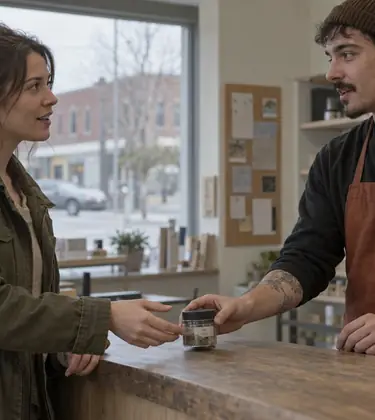
North Bonneville, Washington, population under 1,500, had already made history once. In October 1991 it became the first city in the state to declare bankruptcy. Twenty-four years later it made history again, by opening a city owned cannabis store.
How a town ends up running a weed shop
Washington voters legalized cannabis in 2012. North Bonneville decided that if a store was going to open in a town that size, the town should be the one operating it.
The vehicle was a public development authority, the same legal device that runs Pike Place Market in Seattle. Washington law lets cities create public corporations to carry out a lawful public purpose, and North Bonneville created one for a very specific purpose. The state auditor describes it plainly: a special purpose government created by the City of North Bonneville for the express purpose of administering sales of marijuana and related goods to the public.
The authority is legally separate from the city, which was the point. The structure was a firewall. If the store attracted federal attention or financial trouble, the corporation absorbed it rather than the municipality.
The Cannabis Corner opened on 7 March 2015, with a grand opening the weekend of 20 April. It was the first government run dispensary in the US, and by most accounts the first anywhere in the world.
Why a city would want a government run dispensary
The money was never the only argument, and the mayor at the time made the better one. A private operator who ran the store badly would have taken years to remove. A city-owned store could be fixed by the people who owned it.
That is a real argument, and it is the one worth remembering when this idea comes back around. The rest of the pitch was financial:
- Projected profit of roughly half a million dollars a year, against a municipal budget of about 1.2 million
- Revenue directed at public safety, health programs and substance abuse prevention instead of the general fund
- No federal income tax, because the store was owned by a government body
The last point is not a small one. Section 280E, the tax rule that guts ordinary cannabis retail, is a rule about income tax. A municipal corporation does not pay it.
What actually happened
The numbers were fine. The economics were not. The authority generated 1.24 million dollars of revenue in its first year, then 1.55 million and 1.43 million in the two years after. That is a functioning store.
The problem was how it got built. No bank would touch it, PDA status or not, because federal guidance treats money from a marijuana business as proceeds of illegal activity regardless of who owns the shop. So the store was financed by private lenders at rates the city later described in its own minutes: six loans at 15 percent, with 16 percent quoted as the going rate when they shopped around.
By February 2018 the council was doing the arithmetic out loud. On 1.4 million dollars of sales, roughly 410,000 went out in tax. Net income was around 104,000, and once loan payments cleared, the official profit was about 7,000 dollars. The city's own take for the year was nine thousand dollars.
Half a million projected. Nine thousand collected. Councilmembers spent that meeting openly discussing whether to sell the business or wind it down. Anyone selling you a story about cities getting rich on cannabis should be shown that minute book.
The structure that was supposed to protect the city also limited it. Because the authority was a separate corporation, profit could not simply be dropped into the general fund. It had to arrive through contracts and grants for the purposes written into the charter, which is legally correct and financially slow. A firewall works in both directions.
Feeling lost on how to start? Try taking our quiz!
Start a QuizWhat a city store sells
There is nothing exotic on the shelves of public cannabis retail. A municipal store buys from the same licensed producers as everyone else and stocks what sells, which in Washington in 2015 meant the same handful of names carrying every menu in the state. Blue Dream was the archetype, a haze crossed with blueberry that became the most widely grown variety in the legal market not because it was the strongest but because it was reliable, yielded well and pleased almost everyone.
That is worth noticing, because it explains the margins. A government store competing on the same catalog as private stores has no product advantage at all. Its only edge is the tax structure, and its disadvantage is that it borrows money at 15 percent.
The unexamined day is a wasted opportunity. Reflect on what you did, what you learned, and how you can improve.
John Dewey
Where the idea stands now
It did not die. It moved to Minnesota, where the legislature did the thing Washington never did and wrote it into statute: a city or county may establish, own and operate a municipal cannabis store.
Anoka opened its municipal dispensary on 5 February 2026, the first city-owned store in Minnesota. The build cost just under three million dollars, financed through an internal loan repaid from cannabis revenue, and the city projects between one and two million dollars a year, with profits going back into the general budget. It is one of the only city-operated cannabis stores to open in the US since North Bonneville. Thirteen Minnesota cities and counties applied for licenses.
Not all of them will follow through. Elk River voted unanimously in December 2025 to kill its own project after a public backlash, with one council member saying it was not about money but about the character of the city.
The number that puts municipal cannabis revenue in perspective
Washington's legislature audited what cannabis actually delivers to local government. Between 2015 and 2023, state and local agencies spent 3.3 billion dollars from the dedicated cannabis account, and 239 cities, towns and counties received money from it. The share that reached each of them averaged 0.27 percent of a local government's general fund revenue.
Just over a quarter of one percent. That is the honest scale of municipal cannabis revenue in the most established legal market in the country, and it is why the North Bonneville experiment looks less like a failure of that town and more like a fair sample of the whole idea.
Colorado went further in the other direction. From 1 July 2026 the local share of the state's retail marijuana sales tax was eliminated entirely.
What a seed company sees in a town-run shop
Forty years of this business gives you a particular sympathy for North Bonneville, because the trap it walked into is the one every small operator meets.
The store worked. The plants were fine, the customers came, the tills rang. What broke it was capital at 15 percent and a tax bill approaching half of gross, and neither of those has anything to do with cannabis as a plant. That gap between a working operation and a viable one is where most of this industry lives.
It is also the argument for growing your own, stated without romance. A few plants at home sidestep the entire structure that ate that town's margin. No lender, no excise, no landlord. Pineapple Express is a fair example of what that gets you, a Trainwreck and Hawaiian cross with a tropical nose and a genuinely daytime effect, bred to be forgiving enough that a first attempt produces something worth smoking.
The plant was never the expensive part. Everything built around it was.
What the experiment proved
A city can own a dispensary. North Bonneville proved that, and Anoka is proving it again with better legal footing and a state that wrote permission into law rather than improvising a public corporation.
What neither has proved is that it saves a budget. The revenue is real and small, the financing is punitive while banks stay out, and the tax advantage is the only structural edge on offer. Cities considering it should read the North Bonneville council minutes before the consultant's projection.
Barney's Farm has been developing premium cannabis genetics since the 1980s, with over 40 Cannabis Cup wins. Explore our full seed catalog and find strains bred for every climate and skill level.