Infused Dinners and Cannabis Chefs: America's Underground Dining Scene
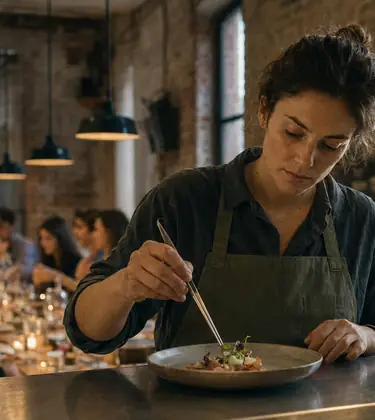
A chef sells forty tickets to a six-course dinner, doses each course at two or three milligrams, and runs the evening from a rented kitchen in a city where cannabis has been legal for a decade.
In Washington State that is a class C felony. In California it is unlicensed commercial cannabis activity carrying civil penalties and, on the face of the statute, criminal exposure as well. In Nevada, done in the right room, it is legal.
This guide covers why the law lands so differently, the one state that built a path, how chefs dose a meal, and what happens to a body four hours in.
The rule that makes almost all of it illegal
The obstacle is not cannabis. It is that infused food is a manufactured product, and manufacturing is a licensed activity everywhere.
California's position is unusually clear because the state did legalize consumption lounges, and then wrote the separation into the same section. A licensed lounge may prepare and sell food, but only on the condition that noncannabis food or beverage products are not contaminated by or commingled with any cannabis products sold or served on the premises where the consumption of cannabis or cannabis products is allowed.
Read that twice, because it is the sentence that governs the entire American scene. A lounge can serve you dinner. A lounge can let you consume cannabis. It cannot put the second thing inside the first.
Infused products in California must come from a licensed manufacturer, at a standardized concentration not exceeding 10 milligrams of THC per serving, under sanitation standards set by the state. A restaurant kitchen is not a licensed manufacturer, and a pop-up in a rented room certainly is not.
Washington goes considerably further. Its statute is titled conducting or maintaining a cannabis club, and it makes it unlawful to conduct or maintain a public place where cannabis is held or stored, except as provided for a licensee under this chapter, or consumption of cannabis is permitted, with violation a class C felony. The statute defines a public place to include anywhere admission is charged or pecuniary gain is realized.
That definition is the trap. A free dinner among friends is one thing. The moment a ticket is sold, the room becomes a public place under the statute.
The state that built a path
Nevada did the thing everyone assumes California did. Its lounge regulations contemplate food service directly. If a lounge serves food, including edible cannabis products, it must employ a Certified Food Protection Manager and keep one on site during every hour that food is prepared or served.
The same regulations do two more things worth noting. Every lounge must offer low dose options containing no more than 2 milligrams of THC, which is the regulatory floor matching what careful chefs already do. And alcohol, tobacco and nicotine are all prohibited on the premises, which quietly rules out the wine pairing that most fine dining assumes.
Colorado took a different route to a similar place. Its hospitality licensing lets a retail food business apply for a marijuana hospitality license in an isolated portion of its premises, so a restaurant can hold both. The statute then closes the same door California closed, stating that the provision does not authorize the business to add marijuana to foods produced or provided at the retail food business.
So the map is narrower than the coverage suggests. Nevada permits an infused meal in a licensed lounge with a certified food manager. Colorado permits a restaurant to host consumption while keeping the kitchen clean of cannabis. Most other states permit neither.
Why the scene exists anyway
Because the demand is real and the legal path is a lounge, which is not a dining room. California's event licensing illustrates the gap. Holding a cannabis event requires both an event organizer license and a temporary event license applied for at least sixty days ahead, and even then only licensed retailers may sell cannabis goods at the event. The one exemption the regulator offers is for informational or educational events where no sales and no consumption occur.
That exemption is useless to a chef. A ticketed dinner where people eat infused food satisfies neither condition.
What operators do instead is arrange the evening so that no sale of cannabis occurs: the ticket buys the meal, the cannabis is described as a gift, dosing is disclosed, and the guest list is invitation-only. Whether that survives contact with a prosecutor has, as far as we can establish, never been tested in a reported American case. It is not a settled legal strategy. It is an untested one.
Feeling lost on how to start? Try taking our quiz!
Start a QuizHow a chef doses a meal
The craft problem underneath the legal one is a problem of time. The standard retail serving is 10 milligrams, fixed in statute in California and Colorado alike. A six-course dinner cannot use that figure, because the courses arrive faster than the body processes them.
Colorado's health department describes the timing plainly, advising people to wait at least ninety minutes and up to four hours before consuming more, since edibles can require up to four hours to take full effect. A tasting menu runs about two and a half hours. Under those conditions a guest who feels nothing after the second course and is served a third and fourth at retail strength will meet all of it at once, somewhere around dessert.
Which is why the working practice across the field is 2 to 5 milligrams per course, front-loaded early in the meal and tapering, with a stated total for the evening and at least one uninfused course. Nevada's 2 milligram floor is the same number arrived at by regulation.
The pharmacology explains the caution. Oral THC passes through the liver first, where much of it becomes 11-hydroxy-THC, a different and comparably active compound, which is why an edible feels unlike the same quantity smoked. Fat matters too: THC is barely soluble in water, so it binds to butter, cream and oil and distributes unevenly through anything that separates.
The unexamined day is a wasted opportunity. Reflect on what you did, what you learned, and how you can improve.
John Dewey
What the emergency data says
The reason the profession is careful sits in hospital records. A study of a large Colorado hospital's emergency department covering 2012 to 2016 found that edible products accounted for 10.7% of cannabis-attributable visits between 2014 and 2016 but represented only 0.32% of total cannabis sales in Colorado measured in kilograms of THC.
That disproportion is the whole argument for low dosing. Edibles were a rounding error in the market and a third of a tenth of the harm, and the visits they produced were more likely to involve acute psychiatric symptoms and cardiovascular complaints than the inhaled cases.
None of which makes an infused dinner dangerous at 3 milligrams a course. It makes the difference between 3 and 10 the entire job.
What a seed company would put in the butter
Infusion is indiscriminate. Fat pulls out cannabinoids and terpenes together, and both end up in the dish, which is why butter made from a gassy diesel cultivar tastes like a gassy diesel cultivar no matter what you do to it afterward. Chefs who have worked with the material for a while stop choosing by THC percentage and start choosing by whether the plant tastes like the food.
Citrus and fruit profiles are the practical ones, because they read as an ingredient instead of an intrusion. Mimosa EVO, Purple Punch crossed with Clementine at 30% THC over 60 to 70 days, carries orange and tangerine that sit naturally in an early savory course, while Strawberry Lemonade at 25% over 65 to 70 days brings strawberry and lemon zest that behave in a dessert the way a fruit liqueur does. Neither is chosen for strength, which is the point.
Four decades of breeding has taught us that terpenes survive a gentle infusion and die in a hot one, which is the single most useful thing a grower can tell a cook.
The shape of the law, and of the meal
Infused food is a manufactured product in every legal state, so a restaurant or pop-up kitchen cannot lawfully produce it. California permits lounges to serve food and forbids commingling it with cannabis; Washington makes running a ticketed cannabis club a class C felony.
Nevada is the exception, permitting licensed lounges to serve edible cannabis products with a certified food protection manager on site, and requiring 2 milligram low-dose options. Colorado lets a restaurant hold a hospitality license while keeping cannabis out of the food.
Chefs dose at 2 to 5 milligrams a course because edibles take up to four hours to peak and a tasting menu runs two and a half. Emergency department data from Colorado found edibles produced ten times their market share of cannabis-related visits, which is the reason the number matters more than any recipe.
Barney's Farm has been developing premium cannabis genetics since the 1980s, with over 40 Cannabis Cup wins. Explore our full seed catalog and find strains bred for every climate and skill level.