
Cannabis Appellations: Why Weed May Soon Have Wine-Style Regions
Wine has Napa. Champagne has Champagne. Scotch has Speyside. For more than a century the bottles on the top shelf have carried the name of the place that made them, and that name is half the product. Cannabis has never had that. A jar of flower might say Skywalker OG or Runtz, but it rarely tells you where the plant actually stood in the dirt.
That is starting to change. California is building the first legal framework in the world to tie cannabis to a region the same way wine is tied to a valley. The word the industry borrowed for it is terroir, the idea that a region's soil, climate, and geography leave a fingerprint on whatever grows there. Growers in Northern California have argued for decades that their weed carries that same fingerprint. Now the state is close to writing it into law.
What is a cannabis appellation?
An appellation is a protected name tied to a place. In wine it runs through systems like France's AOC and America's Viticultural Areas. Champagne can only be called Champagne if it comes from the Champagne region. A cannabis appellation does the same job for weed. It marks where the plant was grown and blocks a farm three states away from slapping Humboldt on a bag it had nothing to do with.
California already guards county names. Under state rules, flower cannot be labeled with a county of origin unless every gram of it was grown in that county. An appellation goes tighter than a county line. It covers a specific stretch of land with its own soil, elevation, and growing tradition, and it sets standards for how cannabis from that zone has to be produced. Think of it as a legal signature for a piece of ground.
What does terroir mean for cannabis?
Terroir is the reason two bottles of Pinot from vineyards a mile apart can taste different. The plant reads its surroundings. Sunlight, temperature swings, living soil, elevation, and water all push it to build its chemistry a certain way. Stress the plant a little and it fights back by producing more of the compounds we actually want.
Cannabis behaves the same way, and there is now hard data behind it. A 2023 study out of Columbia University compared genetically identical cannabis grown indoors under lights against the same genetics grown outdoors in living soil and full sun. The two environments produced measurably different chemistry, with the outdoor plants carrying more sesquiterpenes and rarer cannabinoids while the indoor samples showed more oxidized, degraded compounds. Same seeds. Different place. Different plant.
Newer research is pointing the same direction. A 2025 metabolomics study built a chemical fingerprinting method that could sort cannabis samples by the environment they were grown in, not only by their genetics, which is exactly the kind of proof a terroir system needs to stand on. The cannabis science is younger than the wine version, but it keeps landing in the same place: where you grow the plant changes what comes out the other end.
Where is the Emerald Triangle and why does it matter?
The Emerald Triangle is three counties in Northern California: Humboldt, Mendocino, and Trinity. Growers have farmed cannabis in these hills since the 1960s, back when it was done quietly and far from the nearest road. Decades of that built a reputation. Ask anyone in Garberville or Laytonville and they will tell you their flower is different because of where it comes from, full stop.
The push to make that reputation official started here too. A grower-led effort in Mendocino spent years mapping out which ridgelines and valleys deserved their own names, arguing that a plant grown on a foggy coastal slope simply is not the same plant grown in a hot inland valley. The region became the obvious first test case for the whole idea.
Then it picked up an unlikely ally. California's wine industry, including the Napa Valley Vintners association, stepped in to help cannabis growers build the appellation framework, lending decades of hard-won experience with how place-based labeling actually holds up. Weed and wine, sitting on the same side of the table. Nobody had that on their bingo card twenty years ago.
Feeling lost on how to start? Try taking our quiz!
Start a QuizHow does California's cannabis appellations program work?
The legal groundwork started with Proposition 64, the 2016 measure that legalized adult-use cannabis. It ordered the state to build a process for growers to establish appellations of origin. The California Department of Food and Agriculture runs that program today, and licensed outdoor cultivators are the ones who petition to create an appellation for their region.
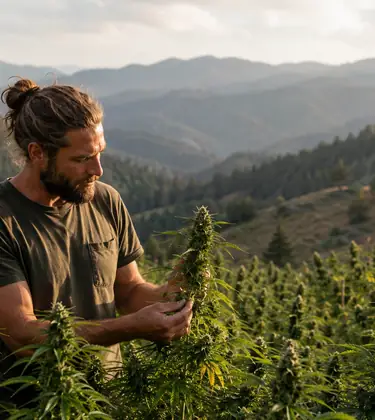
One rule sits at the center of it. To qualify, cannabis has to be grown in the ground, under full sun, with no artificial light and no structures over the flowering plants. That is a deliberate line in the sand. It ties the name to the land instead of to a warehouse, which is the entire point of terroir. Indoor operations, however clean their flower, are shut out of the appellation by design.
The framework is still being shaped in real time. Through 2026 the CDFA has been running public comment periods and hearings on revised appellation rules, including changes to how many cultivators it takes to file a petition and how a truthful statement of origin has to appear on the product. The program is real, funded, and moving. The first widely recognized cannabis appellation names are close enough to see.
The unexamined day is a wasted opportunity. Reflect on what you did, what you learned, and how you can improve.
John Dewey
Can you actually taste the difference?
Here is where it gets loud. Plenty of growers and smokers swear they can pick Mendocino sun-grown out of a lineup by nose alone, catching hints of salt air and forest that they say only come from the coast. Others push back hard. Some veteran cultivators argue that hot, flat, sunny farmland actually grows cannabis better than a rocky coastal ridge, and that the mystique of the region is doing a lot of the marketing work.
Both camps have a point. The lab data confirms that environment changes the chemistry, so the differences are real and measurable. Whether the average person can taste them across a crowded dispensary shelf is a separate question with a fuzzier answer. An appellation guarantees one thing: origin. It tells you where the plant grew and how it was raised, then leaves the tasting to you. That honesty is the product, and the flavor debate can rage on top of it.
What Barney's Farm knows about place and genetics
We have been obsessed with place since 1986. Barney's Farm grew up in Amsterdam, but our genetic library did not. Before there were seed packets, founder Derry was in the Himalayas, moving through Afghanistan, Pakistan, and Nepal with a notebook, hunting the most resinous landrace phenotypes in the mountains where those plants had adapted over centuries. He went to the source because the source is where the character lives. You cannot download that. You have to go stand in the soil it came from.
That is the flip side of the terroir story. A region shapes a plant, and over enough generations the plant starts carrying that region in its genetics wherever it travels next. Our whole catalog is built on landrace lines pulled from specific places and then stabilized, so a grower anywhere can plant that heritage in their own dirt and watch it express.
Two strains in our US catalog wear their origins right on the label. Acapulco Gold is named after the Mexican coast it descends from, a Central American sativa heritage line we rebuilt to hit 26 percent THC while keeping its golden, sun-baked character. It is a beast outdoors, stretching past six feet and finishing in October, exactly the sun-grown profile an appellation is designed to honor. Gorilla Z runs the other direction, a West Coast lineage crossing GG4 with the Original Z into a resin-drenched, terpene-loud plant that finishes outdoors in early October. One is old-world heritage. One is modern California muscle. Both make the same case: genetics set the range, and the place you grow finishes the job.
If you want the deeper story on how wild regional cannabis became the backbone of every modern strain, we broke it down in our piece on wild cannabis versus dispensary flower, and we traced one specific mountain line all the way home in our Hindu Kush deep dive.
Where cannabis appellations go from here
Appellations are coming to weed whether the skeptics like it or not. The wine world took a century to turn dirt into a brand. Cannabis is doing it in a decade, out in the open, with lab data the vintners never had when they started. Wherever you land on whether you can taste a zip code, the shift is worth watching, because it rewards the farmers who actually put in the work on real ground under real sun. The next time a jar tells you where its flower stood while it grew, you will know that name had to be earned.
Barney's Farm has been developing premium cannabis genetics since the 1980s, with over 40 Cannabis Cup wins. Explore our full cannabis seed catalog and find more Amsterdam classics, USA-bred hybrids, and award-winning strains.