Why Does Weed Smell Like Skunk? The Terpene Behind the Stink
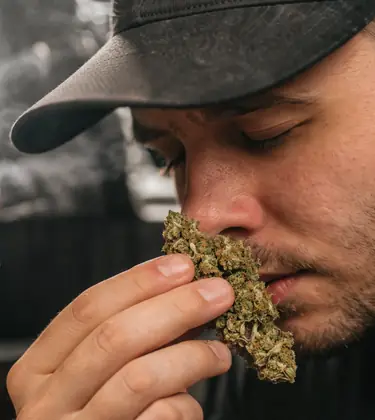
Walk past anyone smoking a joint and you already know. That loud, sticky, almost rotten-fruit-meets-burnt-rubber smell hits the nose before the smoke does. For decades, growers, smokers, and confused neighbors have all called it the same thing: skunk. But what actually causes that funk? And is it really a terpene at all?
The short answer surprised even the people who breed cannabis for a living.
What makes weed smell like a skunk in the first place?
Cannabis flowers produce more than 200 aroma molecules. Most of them are terpenes, the same family of compounds that give pine needles their crisp scent and lemons their zing. For years, growers and budtenders pointed to terpenes when anyone asked about the skunky smell. Myrcene took most of the blame, mostly because it shows up in big amounts in pungent strains and has an earthy, slightly musky character.
That answer turned out to be wrong, or at least incomplete.
In 2021, a team of chemists at Abstrax Tech ran 13 cannabis cultivars through a custom 2D gas chromatography rig and found a new family of prenylated volatile sulfur compounds hiding in the flower. These molecules, called VSCs, are the same chemical family that gives skunk spray its calling card. They show up at tiny concentrations, but the human nose can pick them up at parts per trillion.
So the skunk smell in your bag is, chemically speaking, a close cousin of what your dog rolled in last summer.
Wait, so it isn't the terpenes?
Terpenes still matter, just in a different way. They build out the personality of a strain. Limonene makes a flower smell like fresh-cut citrus. Pinene gives that sharp coniferous edge. Caryophyllene brings the pepper. Myrcene leans earthy and ripe. These are the notes you pick up when you crack open a jar and try to describe what you're smelling.
The skunk part sits underneath all of that. It's a base layer, and it comes from sulfur, not from terpenes. Researchers tested this directly by adding the suspected sulfur compound to a cocktail of common cannabis terpenes. The blend went from generic floral and herbal to unmistakably skunky in seconds.
That doesn't mean budtenders were lying. They were working with the best information available at the time. The science just caught up.
What is VSC3 and why is it so loud?
The compound doing most of the heavy lifting is called 3-methyl-2-butene-1-thiol, or VSC3 for short. Some researchers call it 321MBT. Either way, it's the same molecule that ruins beer left in the sun, the cause of what brewers call "skunked" beer.
A peer-reviewed analysis traced the discovery timeline and confirmed that VSC3 is the primary source of the classic skunky cannabis odor. The molecule has a thiol group, which is sulfur bonded to hydrogen. Thiols are some of the most pungent compounds in nature. Garlic, onions, durian, and yes, skunk spray all owe their kick to thiols of one kind or another.
What makes VSC3 special in cannabis is how potent it is at low concentrations. You don't need much. A few molecules drifting off a freshly opened jar are enough for the human nose to catch the signal from across the room. That's why one ounce of really loud flower can fill a whole apartment in seconds.
Feeling lost on how to start? Try taking our quiz!
Start a QuizWhy does some weed reek while other weed barely whispers?
Genetics is the first answer. Some lineages produce more sulfur compounds than others. Skunk #1, Cheese, Sour Diesel, GMO, and most of the Gelato family carry the genes for serious VSC output. Strains bred for fruity or floral profiles tend to produce less.
Curing is the second answer. The Abstrax study found that VSC concentrations climb as the plant finishes flowering and peak during the cure. After about a week of storage, those same compounds start to drop fast. That's why a bag of fresh, well-cured flower hits like a sledgehammer when you crack the lid, and why old weed smells like dry grass clippings instead.
Storage is the third. Light, heat, and oxygen all degrade the volatile compounds in flower. A jar left open on a sunny windowsill loses its punch in days. A sealed glass jar kept somewhere cool and dark holds the funk for months.
The unexamined day is a wasted opportunity. Reflect on what you did, what you learned, and how you can improve.
John Dewey
Does skunky weed mean stronger weed?
This is one of the oldest debates in cannabis. The honest answer is: sometimes.
A loud-smelling jar usually signals fresh, well-grown, well-cured flower. The terpene and sulfur compounds that produce strong aromas are also the ones that fade fastest with age and bad handling, so a strong smell is a decent proxy for freshness. Fresh flower tends to hit harder and taste better than stale flower of the same THC percentage.
But pungency itself doesn't predict potency. THC is odorless. Some of the loudest-smelling strains test at moderate THC levels, and some of the least pungent ones test high. Nose-checking your weed will tell you if it's fresh and well-grown. It won't tell you the cannabinoid numbers.
How did Skunk #1 turn into a global blueprint?
The skunk story has a clear starting point in cannabis history. In the late 1970s, a Northern California breeder named David Watson, known in the scene as Sam the Skunkman, crossed Afghani indica with Mexican Acapulco Gold and Colombian Gold sativa. The result was Skunk #1, the first commercial hybrid built around an aroma profile rather than just yield or potency.
Watson eventually brought the genetics to Holland in the 1980s, and Skunk #1 became the foundation for a huge chunk of the modern seed market. Almost every gassy, pungent, sulfurous strain you can buy today traces some part of its lineage back to that one breeding project.
Barney's Farm came up in that same Amsterdam scene during the 1980s and worked with skunk-heritage genetics from the start. Decades of breeding later, that influence still runs through a lot of the seed bank's catalog. Strains like Critical Kush and LSD carry obvious skunk lineage in both aroma and structure, even when they've been pushed in other directions through generations of selection.
What does this mean for the way you pick flower?
Knowing the actual chemistry behind the skunk smell changes how you can shop and store. A few practical things to keep in mind:
Smell is freshness data, not potency data. If a jar punches you in the face when it opens, the cure was probably done right and the flower hasn't been sitting around for months. That matters more than the number on the label for the actual smoking experience.
Skunk fades fast. VSC3 is volatile, which is the whole reason you can smell it. Once it's gone, it's gone. Glass jars, low humidity, no sunlight, and minimal opening will keep your flower loud for longer.
Not all funk is skunk. Diesel notes, gas notes, cheese notes, garlic notes, and full-on roadkill notes are all variations on the same sulfur theme. Different VSCs produce different shades of pungent. The Abstrax team identified at least seven distinct sulfur compounds in their 13 test cultivars, and follow-up work has found more.
The skunky strains aren't going anywhere. Even with all the new fruity, dessert, and tropical strains flooding shelves, classic skunk-forward genetics still sell. There's a reason. That smell is wired to a specific kind of cannabis experience that a lot of long-time smokers grew up on, and the chemistry that creates it has turned out to be one of the most distinctive things about the plant.
So the next time someone asks why your stash smells like a skunk crashed through the wall, you've got an answer that's better than "uhh, terpenes." It's a tiny sulfur molecule called VSC3, sitting at parts per trillion in the air, doing the same chemical job in your jar that it does at the back end of an angry mammal in the woods.
That's the funk. That's the science. Enjoy the smell.
Barney's Farm has been developing premium cannabis genetics since the 1980s, with over 40 Cannabis Cup wins. Explore our full cannabis seed catalog and find strains bred for every climate and skill level.