
 Autoflower Seeds
 Feminized Seeds
 New Releases
 USA Cannabis Seeds
 High THC Strains
 High Yield Cannabis Strains
 Precision F1 Hybrids
 Washing Strains
 Cup Winning Cannabis Seeds
 Chill Out Cannabis Strains
 Amsterdam Cannabis Seeds Classics
 Best Taste & Aroma Cannabis Seeds
 Regular Seeds
 Merchandise
 Merchandise
 Blog
Blog Contact Us
 Wholesale Login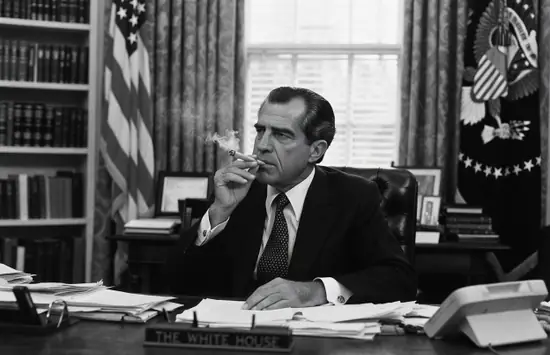
The Shafer Commission: How Nixon's Own Panel Recommended Legalization in 1972 (And He Buried It)
The President of the United States wants to crush weed. So he builds a federal commission, stacks most of the seats with his own people, and tells them to come back with ammunition. Two years and a small fortune in taxpayer money later, his hand-picked panel hands him a report north of a thousand pages that says the exact opposite of what he ordered. Stop arresting people for personal use. The plant is not the menace you keep telling everyone it is.
That happened in 1972. Then Nixon dropped the whole thing in the trash and acted like it never existed. This is the story of the Shafer Commission, the most inconvenient document in the history of American cannabis policy, and the reason "why did Nixon ignore Shafer" is still a question worth asking five decades later.
Who built the Nixon marijuana commission
The official name was the National Commission on Marihuana and Drug Abuse. Congress created it in 1970 inside the same law that built the modern drug scheduling system, the Controlled Substances Act. Marijuana got parked in Schedule I as a placeholder, sitting next to heroin, while the country waited for the commission to figure out whether that label actually made sense. Nixon got to fill most of the seats, and he did not stock the room with longhairs. According to the record of the commission, he appointed nine of its thirteen members.
To run it he picked Raymond P. Shafer, a Republican former governor of Pennsylvania and a former prosecutor with a hard law-and-order reputation. On paper this was a rigged jury. Nixon expected a rubber stamp with his name on the handle.
The commission refused to play along. Its staff of 76 worked for two years, commissioned more than 50 separate studies, held public hearings across the country, and even sent people abroad to see how other nations dealt with cannabis. They treated the assignment like real research instead of a press release. That was Nixon's first miscalculation.
What the 1972 cannabis report actually said
On March 22, 1972, Shafer walked the finished report into Congress. The title was Marihuana: A Signal of Misunderstanding. The central finding was blunt enough to make the White House choke. The panel concluded that neither the user nor the plant posed a genuine danger to public safety, and it recommended that simple possession for personal use stop being a crime under state or federal law. It went one step further and said that passing a small amount to a friend for little or no money should not be an offense either.
This was not some activist with a clipboard. This was a federal commission, assembled by a drug-war president, putting it in writing that criminalizing pot smokers did more harm than the pot itself. The report also told lawmakers to stop lumping marijuana in with narcotics like heroin, because the false association was poisoning public understanding of the whole subject.
To this day it remains the only federal blue-ribbon panel ever convened on marijuana policy, and the only one to formally recommend pulling criminal penalties off personal possession. The members had spent two solid years reaching that conclusion. Nixon needed about two days to wave it off in public, rejecting decriminalization outright and leaving the recommendation to gather dust while the arrests kept piling up.
Nixon already knew the verdict he wanted
Here is where the story turns ugly. Nixon never wanted findings. He wanted a club. The Oval Office tapes declassified in 2002 caught him handing down the orders while the commission was barely off the ground. He told chief of staff Bob Haldeman he wanted "a goddamn strong statement on marijuana." He sat Shafer down in person and pressured him to produce something that blurred the line between weed and hard drugs, and to keep his commission in line with what the administration was planning to do.
The tapes also caught Nixon ranting that drinking made nations strong while marijuana would rot the country, alongside a stream of racist and antisemitic comments about who was supposedly behind legalization. This was the mind shaping federal drug law. Shafer listened to all of it and published the honest findings anyway.
Why did Nixon ignore Shafer
So why did Nixon ignore Shafer, when the work was thorough and the conclusion was clear? Because the science was never the point. His own domestic policy chief said so out loud years later. In a 1994 interview published by Harper's, John Ehrlichman explained that the administration had two enemies, "the antiwar left and black people," and that tying those groups to drugs gave the White House a legal way to go after them. Arrest the leaders, raid the homes, run the footage every night on the news. The drug war was a political weapon wearing a public-health costume.
Read through that lens, the Shafer report never stood a chance. A commission declaring marijuana basically harmless blew up the entire pretext. So Nixon kept the plant locked in Schedule I, where it still sits today, and pretended his own experts had said nothing at all.
The 2024 tapes made it worse
For a long time people gave Nixon the small mercy of assuming he believed his own propaganda. In 2024 even that crumbled. A cannabis lobbyist combing through old White House recordings surfaced tapes that the New York Times then reported on, and in them Nixon privately admits marijuana is "not particularly dangerous". He knew. He even called some of the prison sentences ridiculous and said punishment should fit the crime. He kept the prohibition cranking anyway, because backing off looked weak to him. As recently as 2020, more than 300,000 Americans were still getting arrested on cannabis charges every year, the long tail of a policy he privately knew was built on a lie.
The genetics Nixon could not arrest
Here is the part the textbooks skip. While Washington was busy lying about the plant, somebody had to keep it alive. Prohibition did not kill cannabis. It pushed the genetics underground and dropped them into the hands of growers who flat refused to let good cultivars vanish.
That is the lineage Barney's Farm comes out of. The operation started in Amsterdam in 1986, and its founder, Derry, spent the early years hunting down landrace seeds across the Himalayas and Asia, in places like Afghanistan, Nepal, and Thailand, then back-crossing them to lock in stable, reliable plants. Every strain in the catalog traces back to that slow work of preservation, the patient business of protecting genetics that governments were trying to erase.
The plants the Shafer Commission called harmless in 1972 are the same plants that grew into award-winning genetics once the world finally caught up. Critical Kush is a heavy indica built from Critical Mass and OG Kush, flowering in roughly eight weeks into a knockout body stone, the kind of late-night relief a patient riding out pain or insomnia actually reaches for. Pineapple Chunk took Best Indica at the 2009 High Times Cannabis Cup, a compact, mould-resistant cross of Pineapple, Cheese, and Skunk #1 that forgives a beginner's mistakes and still turns in a dense, resinous harvest. Neither one exists if the underground breeders had listened to Nixon instead of trusting the plant.
That is the quiet revenge buried in the Shafer report. The commission was right, the President was wrong, and the genetics he tried to criminalize outlived his entire war.
Preservation work is also why a named, stabilized strain matters when you actually put a seed in soil. A reliable cultivar means you know roughly what the plant will become, how it will grow, how it will finish, and what the high will feel like, because the lineage has been protected and bred toward consistency rather than left to drift. The growers who kept that knowledge alive during the prohibition years are the reason a modern catalog can promise that at all. Nixon's policy treated every one of those plants as contraband. The people who ignored him turned them into a living archive.
Fifty years later, the report reads like common sense
Most of the country has now caught up to what thirteen people told Nixon in 1972. Medical programs run in the majority of states. Adult use is legal across dozens of them. The argument Shafer's panel made, that responsible adults should not be caged over a plant, reads today like plain common sense rather than some radical fringe position.
Nixon buried the report. He could not bury what was inside it. And the seeds, quite literally, survived him.
Barney's Farm has been developing premium cannabis genetics since the 1980s, with over 40 Cannabis Cup wins. Explore our full cannabis seed catalog and find more Amsterdam classics, USA-bred hybrids, and award-winning strains.