
 Autoflower Seeds
 Feminized Seeds
 New Releases
 USA Cannabis Seeds
 High THC Strains
 High Yield Cannabis Strains
 Precision F1 Hybrids
 Washing Strains
 Cup Winning Cannabis Seeds
 Chill Out Cannabis Strains
 Amsterdam Cannabis Seeds Classics
 Best Taste & Aroma Cannabis Seeds
 Regular Seeds
 Merchandise
 Merchandise
 Blog
Blog Contact Us
 Wholesale Login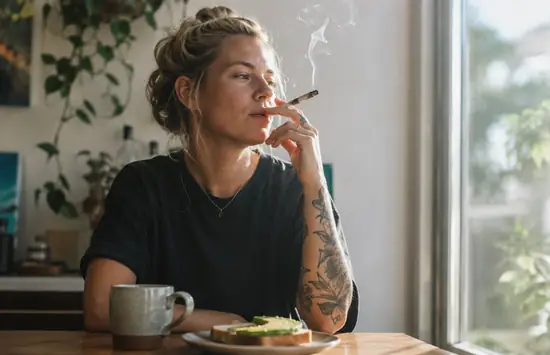
Wake and Bake: The Culture and Chemistry of Morning Cannabis
Some people open their eyes and reach for the coffee. Some people open their eyes and reach for the grinder. Across the United States, roughly one in five cannabis consumers picks the second option. The ritual has a name everyone in the culture already knows, a science most people don't, and a few traps that can flip your day sideways if you don't see them coming. Here is what is actually happening when you wake and bake, and how to do it without paying for it later.
What Does Wake and Bake Actually Mean?
Wake and bake is the practice of consuming cannabis right after getting out of bed. Most working definitions land somewhere inside the first hour of waking, before breakfast, before the inbox, before anything resembling adult responsibility. Some purists insist on the first thirty minutes. Some include anyone who lights up before noon. The spirit of the thing matters more than the stopwatch.
The phrase itself is younger than the practice. Merriam-Webster traces the first documented use of "wake and bake" to 1987, lifted from the rhythm of "Shake and Bake" and stitched onto "baked," cannabis slang for being high. The behavior, of course, is older. Deadheads in the sixties and seventies built morning sessions into the touring culture long before any dictionary noticed. By the late eighties and nineties the rhyme had cemented itself in stoner vocabulary and never left.
Why Does Smoking Weed in the Morning Hit Harder?
Anyone who has wake and baked once and then smoked the same flower at four in the afternoon knows the morning version feels different. The buzz is louder. The legs are softer. The whole experience runs longer. Three things are happening at once.
First, your stomach is empty. THC is fat-soluble, so the fewer competing nutrients it has to bounce off, the faster it reaches the bloodstream and the brain. Second, your endocannabinoid system runs on a circadian rhythm. Receptor sensitivity is not flat across twenty-four hours, and morning tilts the curve toward more effect per puff. Third, you are already in a slightly altered state when you spark up. Sleep inertia, that groggy underwater feeling, stacks with THC instead of canceling it out.
Researchers at the University of Washington tracked this experimentally. Participants who lit up within thirty minutes of waking stayed high for noticeably more hours than on their other cannabis-use days. Same person, same plant, different time of day, different ride. None of that explains why morning sessions feel almost cinematic, the way colors and music seem to land a little harder before noon. That part lives in subjective territory the science has not yet caught up to.
How Many People Actually Wake and Bake?
A lot more than the average non-smoker would guess. Looking at responses from the 2017 Global Drug Survey, researchers found that the United States leads the world in morning cannabis use, with around 22 percent of American consumers smoking within an hour of waking up. Roughly one in five. The same dataset found American respondents averaged 250 cannabis-use days per year, which covers most of them.
Academic samples push the number higher. The Washington researchers found that 35.4 percent of young-adult cannabis users in their tracking window had wake-and-baked at least once, and weekend frequency was more than double the weekday rate. The ritual is real, it is widespread, and the language around it is encoded deep enough in the culture that anybody who has been around weed for more than a year already knows what you mean when you say it.
What Are the Best Strains for a Morning Session?
This is where the conversation usually drifts into vague sativa-versus-indica clichés. The honest answer: those category labels are mostly marketing scaffolding at this point. What actually decides whether a morning session feels like sunshine or quicksand is the terpene profile, the THC level, and how stable the genetics are.
For a morning, the terpenes you want leading the chart are limonene, pinene, and terpinolene. Limonene reads bright and citrusy and tends to lift mood. Pinene leans sharper, more focused, easier on memory. Both pull the experience in an alert direction. Myrcene does the opposite, which is why an indica nug with a fat myrcene profile turns morning ambitions into a long stare at the ceiling.
Amnesia Haze is the textbook morning strain. Eighty percent sativa, citrus and earth on the nose, classic Haze lineage tracing back through Amsterdam coffeeshop history. It is the kind of weed bred specifically for getting moving and staying moving. Barney's Farm has been refining that daytime profile for more than three decades, going back to Derry's original landrace-collecting trips through Afghanistan, India, and Nepal. Forty-plus Cannabis Cup wins later, the genetics still hold up where a lot of modern crosses fall apart.
The trick a real breeder cares about is keeping that terpene chart stable from one batch to the next, so a strain that wakes you up in March still wakes you up in October. Genetic drift is what kills a morning strain. When a cultivar's limonene content slips from one percent down to half a percent across a few generations of careless breeding, the same buds that used to power a productive Saturday start sliding toward the couch. Consistency is the entire difference between a wake and bake that works and a wake and bake that ambushes you. It is also why people who have been smoking for twenty years keep coming back to a small handful of seedbanks instead of chasing whatever has the loudest label this month.
Is Wake and Bake Bad for You?
Wake and bake feels great. The research on what happens when it becomes daily is more complicated. A 2024 Washington study followed young adults across two and a half years and found that months in which participants reported morning cannabis use were linked to higher overall consumption and more negative consequences compared to months without it. The earlier wake-and-bake paper from the same lab also flagged a meaningful jump in driving-under-the-influence risk on morning-use days.
None of that means an occasional Sunday-morning session is going to break anyone. It means the pattern matters. Morning use is one of the cleaner signals researchers have found that someone is sliding from casual into habitual, similar to how a morning drink is a recognized signal for alcohol. Tolerance creeps. Sessions drift earlier. The point where the ritual starts running you instead of the other way around is genuinely easy to miss until you are six months past it. The cultural framing of wake and bake as a harmless quirk does most of the gaslighting on this. The honest version is that for most people it is fine occasionally and a problem if it becomes the alarm clock.
How to Wake and Bake the Right Way
Most of the bad wake and bake stories come from the same three mistakes. Too much, too potent, on an empty stomach. Fixing those three solves about ninety percent of the problem.
Eat something first. Not a full plate of pancakes. A piece of toast, some fruit, a yogurt. Anything that gives your system something to metabolize besides THC running at full speed.
Take less than you think you need. A single puff of well-grown flower in the morning is doing what three puffs do at night. Pack a smaller bowl. Start with one hit, set it down, and wait fifteen minutes before deciding whether you actually want another.
Pick the right cultivar. Sour Diesel is a reliable pick when you actually need to function and finish things. Seventy percent sativa, sharp diesel and citrus, the kind of cerebral high that pushes toward action instead of the couch. Same daytime logic as Amnesia Haze, slightly more aggressive in the head.
Hydrate before you light up. Cottonmouth is worse on a brain that is already running on six hours of dehydration.
Do not get behind the wheel. The research on morning use and DUI risk is consistent, and the legal exposure is real even in fully legal states.
Pick your day. A Saturday morning before a hike is not a Tuesday morning before a deposition. Reading the room is half the skill.
The Bottom Line on Morning Cannabis
The wake and bake is one of the oldest rituals in modern cannabis culture, predating the phrase by decades and still going strong almost forty years after Merriam-Webster first wrote it down. The chemistry behind why it hits different is real. The risks worth paying attention to are real too. Honor both, pick the right flower, and the practice stays what it was always supposed to be: a slow, intentional way to start the day with the plant doing the work that coffee only pretends to.
Barney's Farm has been developing premium cannabis genetics since the 1980s, with over 40 Cannabis Cup wins. Explore our full cannabis seed catalog and find strains bred for every climate and skill level.