
Is Indica an Upper or a Downer? What Actually Determines Your High
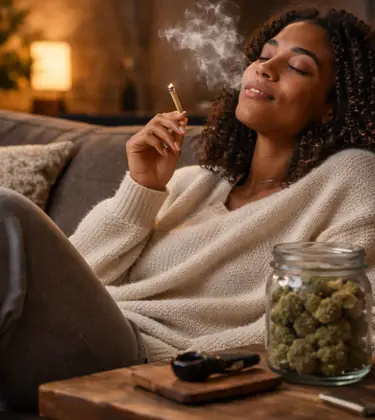
Ask any budtender whether indica is an upper or a downer and you'll get the same rehearsed answer: indica equals relaxation, sativa equals energy. That shorthand has been floating around dispensaries and dorm rooms for decades. And while it does capture something real about how these plants tend to behave, the full picture is a lot more interesting.
Indica strains are generally considered downers. They tend to produce heavy, full-body relaxation, slower thoughts, and the kind of deep calm that makes your couch feel like a cloud. But calling indica a blanket "downer" ignores the chemistry actually driving those effects. The label on the jar tells you what the plant looked like while it grew. The terpene and cannabinoid profile tells you what it's going to do once you smoke it.
Does Indica Make You Sleepy?
Short answer: usually, yes. Most indica-dominant strains lean hard toward sedation. That classic heavy-eyelid, melting-into-the-mattress feeling is one of the main reasons people reach for indica in the first place. But the reason it happens has less to do with the indica label and more to do with a specific molecule called myrcene.
Myrcene is the most abundant terpene in modern commercial cannabis. It carries an earthy, musky, slightly spicy scent, and it shows up in high concentrations across many indica-dominant strains. A peer-reviewed analysis in the International Journal of Molecular Sciences confirmed that myrcene possesses anti-inflammatory, analgesic, and sedative properties, and that it may work synergistically with cannabinoids like THC and CBD to amplify the overall calming effect. In animal studies, myrcene at sufficient doses more than doubled resting sleep time in lab mice. The popular threshold among cannabis researchers is around 0.5% myrcene content. Strains testing above that tend to produce noticeably more sedation.
So when people say indica makes them sleepy, they're not wrong. They're just attributing the effect to the wrong thing. The sleepiness comes from the terpene profile, not the taxonomic classification.
What Makes Indica a Downer?
The word "downer" gets thrown around loosely, but in cannabis terms it refers to strains that slow you down physically and mentally. Indica strains fit that description more often than not. The typical experience includes full-body relaxation, reduced anxiety, muscle tension relief, and a general sense of being pleasantly weighted down. Longtime users know this as couch-lock.
Cannabinoid ratios play a role here. Indica strains historically carry higher CBD-to-THC ratios than sativa varieties, though the gap has narrowed as breeders have pushed THC levels higher across the board. CBD doesn't get you high, but it does modulate how THC interacts with your endocannabinoid system, often smoothing out the experience and reducing the jittery, cerebral intensity that high-THC sativas can bring.
Terpenes run the show. Beyond myrcene, indica-dominant strains often carry significant amounts of linalool (the terpene responsible for lavender's calming scent) and caryophyllene (a spicy, peppery compound that binds directly to CB2 receptors and can reduce anxiety). These compounds stack on top of each other. The combined effect of myrcene, linalool, and caryophyllene in a single strain creates a chemical cocktail that practically begs your body to power down.
At Barney's Farm, we've been selecting and stabilizing indica genetics for over 30 years. When we breed a strain like Purple Punch, we're not just chasing flavor or bag appeal. We're engineering specific terpene and cannabinoid ratios that deliver consistent, predictable effects. That level of precision is what separates a well-bred indica from a roll of the dice at the dispensary.
Why Does the Same Strain Hit Different People Differently?
You and your friend can smoke the exact same bowl and walk away with completely different experiences. One person is melted into the sofa. The other is reorganizing the kitchen. This isn't a glitch. It's biology.
Your endocannabinoid system is unique. Everyone's body has a network of CB1 and CB2 receptors that interact with cannabinoids and terpenes. The density, distribution, and sensitivity of those receptors varies from person to person based on genetics, tolerance, overall health, and even what you ate that day. Two identical doses of the same indica can produce wildly different results depending on the individual.
Dosage matters more than people think. A small hit of a myrcene-heavy indica might produce gentle relaxation without much sedation. Take three times that amount and the same strain pins you to the couch for the evening. The line between "relaxed" and "comatose" is often just a puff or two.Dosage matters more than people think
Tolerance shifts the equation. Daily consumers build tolerance not only to THC but also to specific terpene profiles. Someone who smokes myrcene-dominant strains every night may find that the sedative effect dulls over time, while a new consumer might find the same strain overwhelming. Rotating strains with different terpene profiles can help maintain sensitivity.
Feeling lost on how to start? Try taking our quiz!
Start a QuizThe Entourage Effect: Why Labels Don't Tell the Whole Story
The idea that cannabis compounds work better together than in isolation has a name: the entourage effect. First proposed in 1998 and later expanded by neurologist Dr. Ethan Russo in a widely cited 2021 study published in Scientific Reports, research has found that cannabis terpenes can selectively enhance cannabinoid activity, providing support for the hypothesis that these compounds work together rather than independently.
This is exactly why the indica/sativa binary falls short. Two strains can both be labeled "indica" and produce very different highs depending on their terpene content, THC-to-CBD ratio, and growing conditions. A high-myrcene, moderate-THC indica will knock you out. A low-myrcene, high-THC indica might leave you physically relaxed but mentally sharp. The label is a starting point, not a destination.
As Scientific American has reported, some researchers remain skeptical about the full scope of the entourage effect, noting that rigorous human clinical trials are still limited. But the basic observation holds: whole-plant cannabis with diverse terpene and cannabinoid content tends to produce different effects than isolated THC alone. That's why dispensaries are starting to list terpene profiles alongside THC percentages, and why experienced consumers are paying attention.
The unexamined day is a wasted opportunity. Reflect on what you did, what you learned, and how you can improve.
John Dewey
Where Did the Indica and Sativa Categories Come From?
The distinction dates back to the 18th century. Carl Linnaeus classified all cannabis as a single species, Cannabis sativa, in 1753. Then in 1785, French biologist Jean-Baptiste Lamarck identified a second species from plant specimens collected in India, which he named Cannabis indica. The two types looked noticeably different: sativa plants grew tall and narrow with thin leaves, while indica plants were shorter, bushier, and adapted to the harsh, cold climate of the Hindu Kush mountain range.
These are real botanical distinctions. Indica and sativa differ in growth structure, leaf shape, flowering time, and climate tolerance. Where the labels break down is in predicting psychoactive effects. After decades of crossbreeding, virtually every commercial strain available today is a hybrid. Pure landrace indicas and sativas are exceedingly rare. So when a dispensary labels something as "indica," they're usually describing a plant that leans indica-dominant in its genetics and growth pattern, not a pure botanical specimen.
The indica/sativa framework still has value as a rough guide. Indica-dominant strains do tend to carry terpene profiles associated with sedation. But the smart move is to look at actual lab results rather than relying on a label that was first applied nearly 250 years ago.
How to Choose the Right Indica for Your Goals
If you want an indica that actually delivers the effects you're after, stop shopping by name alone and start looking at the chemistry.
For deep sleep and full-body sedation, look for strains with myrcene as the dominant terpene at 0.5% or higher. Pair that with moderate-to-high THC (18%+) and some CBD presence. Strains bred specifically for nighttime use, like classic Kush genetics, tend to hit this profile naturally. Barney's Farm strains like Critical Kush combine heavy indica lineage with resin-rich trichome production that preserves terpene content through harvest and cure.
For relaxation without total sedation, seek out indica-dominant hybrids with balanced terpene profiles. Strains that feature caryophyllene or limonene alongside myrcene can deliver calm without gluing you to the furniture. These work well for social evenings or creative downtime when you want to unwind but stay present.
For anxiety and stress relief, prioritize strains with higher CBD content and significant linalool presence. Linalool carries calming properties on its own, and paired with CBD's ability to modulate THC, this combination can take the edge off without the heavy sedation that pure myrcene-dominant indicas deliver.
With over 40 Cannabis Cup wins and three decades of genetic refinement, Barney's Farm approaches indica breeding with the precision of a lab and the instincts of growers who've been doing this since the Amsterdam scene was still underground. Every strain in the catalog comes with detailed genetic lineage and expected terpene profiles, so you know what you're getting before you grow it or smoke it.
The Bottom Line on Indica: Upper or Downer?
Indica is a downer. Broadly, reliably, and by most users' direct experience, indica-dominant cannabis produces relaxing, sedating, body-focused effects. That reputation exists for good reason.
But the reason it's a downer has almost nothing to do with the word "indica" on the label and everything to do with the specific terpenes and cannabinoids inside the flower. Myrcene content, CBD-to-THC ratio, linalool presence, your personal biology, and even your dose all contribute to the final experience. Two indicas can feel like two entirely different substances if their chemical profiles differ enough.
The indica/sativa system is a useful shorthand. It points you in the right direction. But if you really want to dial in your high, read the lab report. Check the terpene breakdown. Ask your budtender or your seed bank what the dominant compounds are. That's where the real answer lives.
Barney's Farm has been developing premium cannabis genetics since the 1980s, with over 40 Cannabis Cup wins. Explore our full cannabis seed catalog and find strains bred for every climate and skill level.