How to Smoke Weed the Right Way (Without Coughing Your Lungs Out)

Smoking weed looks simple enough. Light it, breathe in, breathe out. But if you've ever watched a first-timer hack up a lung after one hit off a joint, you know there's a gap between theory and practice. Proper technique matters. It affects how high you get, how smooth the experience feels, and how your lungs hold up over time.
Whether you're brand new to cannabis or you've been smoking casually for years and still coughing like it's day one, this guide covers the fundamentals. How to inhale weed properly, which methods work best for beginners, and what's actually happening inside your body when you light up.
How Do You Actually Smoke Weed Correctly?
Start with what you're smoking. The quality of your flower has a direct impact on how smooth or harsh the experience is. Well-grown, properly cured cannabis burns evenly and produces cleaner smoke. Rushed or poorly dried flower tends to be harsher on the throat and can taste like lawn clippings.
At Barney's Farm, we've spent over 30 years breeding strains with complex terpene profiles that directly influence the flavor and smoothness of each hit. A strain rich in linalool or myrcene, for instance, tends to produce a noticeably smoother smoke compared to one with sharp, piney terpenes. The genetics of what you're smoking set the ceiling for how good the experience can be.
Next: grind your flower. A grinder breaks buds into uniform pieces so they burn evenly and consistently. Unground cannabis burns in patches, which means uneven heat, wasted material, and harsher smoke. If you don't have a grinder, tear the bud apart by hand into small, roughly equal pieces. Skip the stems entirely.
The process of lighting cannabis triggers decarboxylation, a chemical reaction that converts THCA (the non-psychoactive acid in raw cannabis) into THC. Without heat, cannabis won't get you high. That's why eating raw flower does nothing. When flame hits ground bud, the heat strips a carboxyl group from the THCA molecule, releasing CO2 and activating the compound your brain actually responds to.
How to Inhale Weed Properly
This is where most beginners go wrong. They either hold the smoke in their mouth without pulling it into their lungs, or they inhale so aggressively they trigger an immediate coughing fit. Neither approach works well.
Use the two-step method. First, draw smoke gently into your mouth, like sipping through a straw. Then, take a short breath of fresh air on top of it. That secondary inhale pushes the smoke down into your lungs, where the cannabinoids are absorbed through the alveoli, tiny air sacs with a massive combined surface area designed for gas exchange.
Keep it brief. A one-to-two-second inhale is plenty. There is zero benefit to holding smoke in your lungs for 10 or 15 seconds. Researchers tested breath-hold durations of 0, 10, and 20 seconds in regular cannabis smokers and found no meaningful difference in the subjective high. THC passes into the bloodstream within seconds of reaching your lungs. Holding longer just increases your exposure to tar and combustion byproducts.
Exhale slowly and naturally. Forcing the smoke out in a hard blast irritates your throat more than a gentle release. Think controlled, not rushed.
What's the Best Way to Smoke Weed for Beginners?
There are several common methods. Each has trade-offs in terms of ease of use, smoothness, and portability.
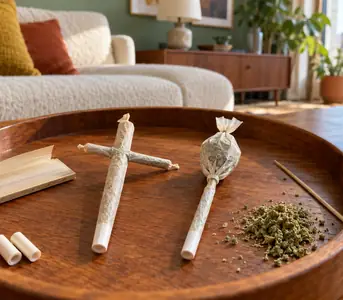
Joints and pre-rolls. The most iconic way to smoke. Rolling a joint takes practice, but pre-rolls solve that problem entirely. They're portable, disposable, and require nothing beyond a lighter. Downside: the smoke is unfiltered (unless you add a crutch or filter tip), so it can be harsh on new smokers.
Glass pipes. Probably the easiest entry point. Pack the bowl with ground flower, cover the carb hole with your thumb, light, inhale gently, release the carb to clear the chamber. Pipes are cheap, compact, and reusable. The hits can be hot, though, since there's no water filtration.
Bongs and water pipes. Water cools the smoke before it reaches your lungs, making each hit significantly smoother. The trade-off is that bongs aren't portable, they need regular cleaning, and it's easy to take a bigger hit than intended. For a beginner, small bongs with a modest chamber are the move.
Dry herb vaporizers. Vapes heat cannabis below the point of combustion, releasing cannabinoids and terpenes as vapor rather than smoke. The result is less throat irritation, more flavor detail, and reduced exposure to combustion byproducts. The upfront cost is higher, but many experienced smokers consider vaporizers the cleanest way to consume flower.
If you're brand new, start with a pipe or a pre-roll. Both are forgiving, accessible, and let you control your intake puff by puff. The best method is whichever one lets you take small, comfortable hits without overwhelming your lungs.
Feeling lost on how to start? Try taking our quiz!
Start a QuizWhy Does Weed Make You Cough?
Coughing is your respiratory system doing its job. When hot smoke enters your airways, it irritates the tissue lining your throat and bronchial passages. Sensory nerves along your airways detect the irritant and trigger a cough reflex to expel it. Smoking cannabis causes minor injuries to the large airways (bronchi), which is why regular heavy smoking can lead to symptoms of chronic bronchitis, though those symptoms typically resolve after you stop.
Several factors make coughing worse. Dry, poorly cured flower produces harsher smoke. Taking huge rips forces a large volume of hot air into your lungs at once. Dirty glassware coated in resin adds an extra layer of harsh residue to every hit. And high-THC strains can sometimes provoke a stronger cough response because certain cannabinoids activate TRPA1 ion channels in the airways, which are directly involved in the cough reflex.
This is one area where the quality of your genetics really shows. Cannabis bred for a full-spectrum terpene profile, not just maximum THC percentage, tends to produce a more balanced and less irritating smoke. Barney's Farm strains like Mimosa EVO and Runtz Muffin were developed with this kind of smoking experience in mind: complex flavor that doesn't shred your throat on the way down.
The unexamined day is a wasted opportunity. Reflect on what you did, what you learned, and how you can improve.
John Dewey
How to Smoke Weed Without Coughing
Take smaller hits. This is the single most effective change you can make. Smaller puffs mean less smoke, less heat, and less irritation. There's no trophy for taking the biggest rip.
Stay hydrated. Drink water before, during, and after your session. Cannabis smoke dries out the mucous membranes in your throat, which makes them more vulnerable to irritation. Cold water works best.
Grind your flower properly. Evenly ground cannabis burns at a consistent temperature, which means fewer surprise hot spots that torch your throat. A quality grinder is one of the cheapest upgrades that makes the biggest difference.
Clean your equipment. Resin buildup in pipes and bongs doesn't just taste bad. It adds extra particulate to every hit. A clean piece means cleaner smoke. For bongs, swap the water before every session. For pipes, a quick soak in isopropyl alcohol and salt does the trick.
Don't hold the smoke. We covered this already, but it bears repeating. Holding smoke in your lungs past a couple of seconds doesn't increase your high. It just exposes your airways to more tar. Inhale, pause briefly, exhale.
Try water filtration or vaporizing. If you consistently cough with joints or pipes, switch to a bong or a dry herb vaporizer. Both reduce the temperature of what's entering your lungs, which is the primary driver of throat irritation.
Does Smoking Cannabis Damage Your Lungs?
This question comes up constantly, and the research paints a more nuanced picture than most people expect. A 20-year study tracking over 5,000 adults found that moderate cannabis use showed no adverse effects on lung function, even at a rate of one joint per day for seven years. In some cases, occasional smokers actually showed slightly improved air flow rates compared to non-smokers, likely because the deep inhalation technique stretches lung tissue over time.
That said, heavy, prolonged use is a different story. The same study noted that very heavy exposure started to show a decline in lung function measures, though the researchers had difficulty quantifying this precisely because very heavy smokers were relatively rare in their sample. And regular smoking of any plant material can cause symptoms associated with bronchitis: coughing, phlegm, and airway irritation.
The takeaway is straightforward: moderation matters. Occasional and moderate cannabis smoking hasn't been shown to cause long-term lung damage in the way tobacco does, but your lungs still prefer clean air over smoke. If lung health is a top priority, vaporizers and edibles are the cleanest options available.
Set, Setting, and the Stuff Most Guides Skip
Technique is only half the equation. Your mental state and physical environment shape the experience just as much as your inhalation form.
Smoke somewhere comfortable. Your couch, your backyard, somewhere you feel relaxed. Cannabis amplifies your current emotional state, so if you're anxious or stressed, THC can magnify those feelings rather than melt them away. A familiar, calm setting goes a long way.
Have snacks and water within arm's reach before you light up. You probably won't want to assemble a meal once the effects kick in. Dry mouth is almost universal, so the water isn't optional.
If it's your first time, smoke with someone experienced. They can help you gauge your dose, talk you through any unexpected sensations, and remind you that everything is fine if you start to feel overwhelmed. Cannabis affects everyone differently depending on body chemistry, tolerance, and the specific cannabinoid and terpene profile of the strain. What hits your friend like a mild buzz might knock you sideways.
Start low. One or two small puffs, then wait 10 to 15 minutes. The effects from smoking peak around the 10-minute mark, so give it time before deciding you need more. You can always smoke more. You can't un-smoke what you've already inhaled.
Barney's Farm has been developing premium cannabis genetics since the 1980s, with over 40 Cannabis Cup wins. Explore our full cannabis seed catalog and find strains bred for every climate and skill level.