Does CBD Get You High? What It Actually Does to Your Body
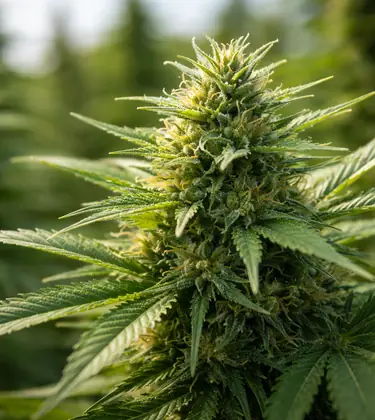
The question "does CBD get you high?" has been bouncing around the internet for years. And the answer is dead simple: no. CBD will not get you stoned, baked, or anything close to it. But that flat "no" sells the compound short, because CBD does plenty of interesting things once it enters your system. It just does them without messing with your head.
At Barney's Farm, we've been breeding cannabis genetics since 1980s. Over three decades watching these plants evolve under our care, we've learned that the cannabis plant is far more complex than a single compound. CBD is proof of that. So let's break down what CBD actually does, how it feels, and why it behaves so differently from THC.
What Is CBD and Why Doesn't It Get You High?
CBD (cannabidiol) is one of over 113 cannabinoids identified in the cannabis plant. It was first isolated way back in 1940, decades before anyone figured out THC's structure. According to Wikipedia's cannabidiol entry, CBD can account for up to 40% of the plant's extract, making it one of the most abundant compounds in cannabis.
Here's the critical bit. THC gets you high because it locks directly onto CB1 receptors in your brain. CBD doesn't do that. It has very low affinity for both CB1 and CB2 receptors, which means it physically cannot produce the euphoric, psychoactive buzz that THC delivers. Same plant, completely different mechanisms.
The World Health Organization's Expert Committee on Drug Dependence put it plainly in their 2017 review: in its pure state, CBD does not appear to have abuse potential or cause harm. No dependence. No intoxication. No withdrawal effects in animal or human studies.
That's not some PR spin. That's the WHO, after reviewing the global scientific literature, essentially saying: this compound is not a drug of abuse.
What Does CBD Feel Like?
If THC is a loud speaker, CBD is more like noise-cancelling headphones. Most people who take CBD describe the experience as subtle. You don't feel a rush or a shift in perception. What you notice is the absence of things: less tension in your shoulders, a quieter internal monologue, a general sense that your body has dialled down whatever was bugging it.
Common reports from CBD users include mild relaxation, reduced physical tension, and an easier time winding down at night. Some people notice sharper focus at lower doses and sleepiness at higher ones. The experience varies by individual, dosage, and method of consumption. Smoking or vaping CBD flower delivers effects within minutes. Edibles and oils can take 30 to 45 minutes to kick in.
This is where breeding matters. At Barney's Farm, we've spent years developing genetics that produce diverse cannabinoid profiles. Our breeders understand that CBD content, terpene ratios, and minor cannabinoids all shape the final experience. A well-bred, CBD-rich plant gives a different quality of calm than a crude isolate dumped into a gummy bear. The entourage effect (the synergy between cannabinoids, terpenes, and flavonoids) is real, and it starts with the seed.
How Does CBD Work in Your Body?
Every mammal on earth has an endocannabinoid system (ECS). Your body produces its own cannabis-like molecules called endocannabinoids. The ECS helps regulate mood, sleep, pain perception, appetite, immune response, and memory. As Wikipedia's endocannabinoid system page details, this system was only discovered in the early 1990s by researchers who were trying to understand how THC works.
Your ECS has two primary receptor types. CB1 receptors are concentrated in the brain and nervous system. CB2 receptors are found mostly in immune tissues and peripheral organs. THC barges in and binds directly to CB1 receptors, which produces the high. CBD takes a back-door approach. Rather than binding to these receptors head-on, it appears to influence the ECS indirectly by slowing the breakdown of your body's own endocannabinoids, particularly anandamide (named after the Sanskrit word for "bliss").
CBD also interacts with serotonin receptors (specifically 5-HT1A), which may explain the calming effects many users report. And it modulates certain ion channels involved in pain signalling. CBD has also shown antimicrobial properties against certain bacteria, and ongoing research is investigating its potential role in managing inflammation, neuroprotection, and even addiction recovery. The research is still young, but the picture is becoming clearer: CBD works with your body's existing systems rather than hijacking them.
Feeling lost on how to start? Try taking our quiz!
Start a QuizCBD vs THC: What's the Real Difference?
Both CBD and THC are cannabinoids. Both come from the same plant. That's where the similarity ends.
THC activates CB1 receptors in the brain, producing euphoria, altered time perception, increased appetite, and sometimes anxiety or paranoia. CBD does none of these things. It can actually counteract some of THC's less pleasant effects. Research suggests that CBD may reduce THC-induced anxiety and cognitive impairment when both compounds are present together.
Here's a quick breakdown of the key differences:
THC: Psychoactive. Binds directly to CB1 receptors. Produces euphoria and altered perception. Can trigger anxiety in some users. Federally restricted in many countries.
CBD: Non-intoxicating. Low affinity for CB1 and CB2 receptors. Produces subtle relaxation without cognitive impairment. Generally well-tolerated. Legal in many jurisdictions when derived from hemp (below 0.3% THC).
One thing that confuses people: full-spectrum CBD products contain small amounts of THC (under 0.3%). That trace THC contributes to the entourage effect but falls far below the threshold needed to produce a high. You'd need to consume absurd quantities to feel anything psychoactive from that sliver of THC.
The unexamined day is a wasted opportunity. Reflect on what you did, what you learned, and how you can improve.
John Dewey
Can CBD Show Up on a Drug Test?
Pure CBD isolate should not trigger a positive drug test. Standard tests screen for THC metabolites, not CBD. But there's a catch worth knowing about.
Full-spectrum CBD products contain trace amounts of THC (legally up to 0.3% in hemp-derived products). If you consume large quantities of full-spectrum CBD daily, those trace amounts can theoretically accumulate enough to trigger a positive result. Broad-spectrum products and CBD isolates have the THC removed, which makes them the safer bet if drug testing is a concern.
Quality control matters here. As Harvard Health has reported, the CBD market has a labelling accuracy problem. Many products don't contain what the label claims. Some contain more THC than advertised. If drug testing is part of your life, buy from brands that publish third-party lab results for every batch.
Is CBD Legal?
The legal landscape around CBD varies by country and sometimes by state or province. In the United States, the 2018 Farm Bill removed hemp (defined as cannabis with less than 0.3% THC) from the Controlled Substances Act. That effectively legalized hemp-derived CBD at the federal level, though the FDA still restricts how CBD can be marketed in food and supplements.
In Europe, regulations differ by nation. The UK, Germany, and France have been progressively clarifying frameworks for CBD products. Switzerland, Australia, and Canada have each carved out their own approaches.
The trend line is clear, though. Global acceptance of CBD is growing as research accumulates and regulatory bodies become more comfortable with the compound. The FDA's 2018 approval of Epidiolex, a pharmaceutical-grade CBD medication for severe childhood epilepsy, marked a turning point. It was the first time a cannabis-derived drug received FDA approval, and it demonstrated that CBD could pass the most rigorous clinical trial standards.
Should You Try CBD?
That depends entirely on what you're looking for. CBD won't replace a Friday night session. It won't alter your consciousness or make music sound different. What it can do, based on the current body of research and a mountain of user reports, is take the edge off. Help you sleep. Quiet the noise.
If you're curious, start low and go slow. Try a quality full-spectrum product so you get the benefit of the entourage effect. Pay attention to how your body responds over a week or two rather than judging it after a single dose. CBD tends to build on itself with consistent use.
The conversation around CBD is shifting fast. What was fringe a decade ago is now mainstream. Pharmacies stock it. Athletes swear by it. Your nan might be putting it in her tea. But the fundamentals haven't changed. CBD is a tool, not a miracle. Use it with intention, source it with care, and respect what the plant has built over millennia of evolution.
The plant has more to teach us. CBD is just one chapter.
Barney's Farm has been developing premium cannabis genetics since the 1980s, with over 40 Cannabis Cup wins. Explore our full seed catalog and find strains bred for every climate and skill level.