
 Autoflower Seeds
 Feminized Seeds
 New Releases
 USA Cannabis Seeds
 High THC Strains
 High Yield Cannabis Strains
 Precision F1 Hybrids
 Washing Strains
 Cup Winning Cannabis Seeds
 Chill Out Cannabis Strains
 Amsterdam Cannabis Seeds Classics
 Best Taste & Aroma Cannabis Seeds
 Regular Seeds
 Merchandise
 Merchandise
 Blog
Blog Contact Us
 Wholesale Login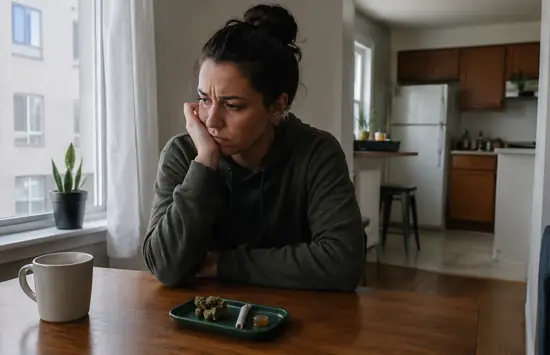
Cannabis and Public Housing: Why HUD Rules Still Ban Weed in Federally Funded Apartments
Cannabis is now legal in some form across 39 states and DC. You can walk into a dispensary in New Jersey, Michigan, or California and walk out with top-shelf flower. You can pick up gummies at a corner shop in Minneapolis. But if you happen to live in federally subsidized housing, none of that matters. The U.S. Department of Housing and Urban Development still treats every joint, every gummy, and every dab pen exactly the way it treated them in 1998: as a controlled substance that can get you tossed out of your apartment.
Roughly two million Americans live in HUD-funded units. For them, the states say cannabis is fine and the feds say cannabis gets you evicted. Both are true at the same time. Here is how that contradiction got baked into federal law, why nobody has been able to fix it, and what cannabis fans living anywhere near the federal housing system actually need to know.
The federal rule that keeps weed out of public housing
The whole mess traces back to one law: the Quality Housing and Work Responsibility Act of 1998, usually shortened to QHWRA. Buried inside it is a section that requires every Public Housing Agency (PHA) in the country to deny admission to anyone using a controlled substance. The Controlled Substances Act lists marijuana as Schedule I, alongside heroin and LSD. The 2026 DEA order that moved some FDA-approved and state-licensed medical products to Schedule III did not touch the underlying treatment of recreational marijuana, which remains Schedule I.
HUD's hands are tied. The agency has stated that absent a change in federal law, it does not have the discretion to admit users of marijuana, including medical marijuana, into HUD-assisted programs. That applies to two big categories of housing:
Traditional public housing, where the local PHA is the landlord and runs the building directly.
Section 8 / Housing Choice Vouchers, where you rent from a private landlord and the PHA pays part of the rent on your behalf.
Both flow through HUD. Both are bound by QHWRA. Both treat a state-legal dispensary purchase like contraband the moment it crosses the threshold of the unit.
Section 8 vs. public housing: how HUD's marijuana policy works in both
Public housing and Section 8 sound interchangeable, but they operate differently in practice.
Traditional public housing buildings are owned and managed by the PHA itself. The PHA writes the lease, the PHA fields the complaints, and the PHA can move directly to eviction. With Housing Choice Vouchers, which is the modern name for what most people still call Section 8, you pick the apartment, your private landlord signs a contract with the PHA, and federal subsidy money flows to that landlord. Roughly 2,300 public housing authorities administer the Section 8 voucher program nationwide.
The HUD ban still binds you on the voucher side, because the voucher itself comes with strings. Get caught using cannabis and your landlord can move to evict, and your PHA can terminate the voucher. The practical kicker: a private landlord renting to a Section 8 tenant often does not care if their unsubsidized tenants smoke. Two units, same building, two completely different sets of rules.
What counts as using marijuana under HUD's rule
Here is where it gets dumb. HUD's ban is not specific to smoking. It covers controlled substance use, full stop.
A gummy is the same as a joint. A vape pen is the same as a joint. A jar of edibles in the fridge counts as possession. Topical CBD cream is fine because hemp-derived CBD with under 0.3% THC sits outside Schedule I, but any product crossing that threshold lands you back in federal contraband territory.
In theory, a tenant in Denver eating a state-legal infused cookie at home is breaking the same federal rule as a tenant smoking out their bedroom window. In practice, gummies do not smell and edibles do not generate neighbor complaints, so enforcement skews hard toward whatever the people next door can detect. Smoking is the lightning rod. That is what brings the maintenance guy with a clipboard and the eviction notice in the mailbox.
Can you smoke weed in public housing if it's legal in your state?
Short answer: no, and there is a second federal rule that makes the smoking question especially messy. In July 2018, HUD's nationwide smoke-free rule banned cigarettes, cigars, and pipes inside more than 940,000 public housing units and within 25 feet of any housing or administrative building.
That 2018 rule was about tobacco. It said nothing about marijuana, because as far as the federal government was concerned, marijuana was already banned through the controlled substance language baked into every HUD lease. The result: a tenant in HUD housing who lights a cigarette is breaking one federal rule. A tenant who lights a joint is breaking two.
The 2018 rule does not extend to Section 8 voucher properties, since those are privately owned. On the voucher side, your landlord sets the smoking policy. Cigarettes might be fine. Cannabis still is not, because the controlled substance ban rides with the voucher wherever you take it.
Why Congress hasn't fixed the federal housing cannabis ban
There has been a bill sitting in Congress in some form since 2019. In December 2025, Senator Cory Booker and Representative Eleanor Holmes Norton reintroduced the Marijuana in Federally Assisted Housing Parity Act, which would block HUD from denying admission or evicting tenants who use cannabis in compliance with their state's laws.
This is the fourth or fifth time Norton has put the bill forward. Every version has stalled. The hangup is not really partisan in the usual way. Republican leadership has not moved it, Democratic leadership has not prioritized it, and it always ends up competing for floor time against banking reform, rescheduling, and broader legalization efforts.
The April 2026 DEA action cracked the door open for FDA-approved and state-licensed medical cannabis by moving those products to Schedule III. Recreational cannabis remains Schedule I, which means HUD's rule still applies to everyone using state-legal adult-use weed. Even if the DEA's June 2026 hearing eventually leads to broader rescheduling, the housing fix still has to come from Congress, and Congress has not moved.
What cannabis fans renting outside HUD housing can actually do
If you do not live in federally funded housing, the rules above do not apply to you, but the principles will. Most private landlords write some version of a smoke clause into their leases, and even in legal states, a no-smoking-of-any-substance clause is enforceable. The good news is you have more options than the people stuck under the federal rule.
For tenants in legal states whose leases allow home cultivation, growing means controlling everything: genetics, quality, dryback, cure. Forty years of breeding at Barney's Farm has gone into strains that finish fast, stay short, and produce serious flower in tight spaces. Autoflowers are the obvious play for apartment growers. No light schedule changes, no separate veg and flower tents, no twelve-week timelines.
Runtz Auto is the kind of strain built for exactly this use case. It brings the fruity candy terps that dominate the modern market, packed into an autoflower short enough for any indoor space. Compact, fast, no light-cycle gymnastics, no twelve-week timeline. The high is the balanced hybrid territory Runtz fans already know, with the same sticky, trichome-loaded buds the photoperiod version is famous for, just on a much friendlier grow schedule. For a renter with one tent and limited room to mess around, it is one of the easiest ways to grow your own dispensary-grade flower at home.
Odor management is the other piece worth thinking about. A carbon filter on an inline fan handles most of the smell coming out of a tent. Cure your flower properly in glass jars with hygrometers and burping cycles, and dispensary-grade quality comes out the other end. The whole point of growing at home is owning the process. If you can grow, you can choose.
The bottom line
Until Congress moves on the Norton-Booker bill or the DEA's broader rescheduling track lands somewhere fundamental, HUD's cannabis ban is staying exactly where it is. Two million Americans living in federally funded units are stuck under a 1998 law written before half the country's legal-weed states even had medical programs. State-federal contradictions are everywhere in cannabis policy, but few are as sharp as this one. Your apartment in a legal state, the dispensary down the block, and a HUD rule that pretends neither of those things exists.
Barney's Farm has been developing premium cannabis genetics since the 1980s, with over 40 Cannabis Cup wins. Explore our full cannabis seed catalog and find strains bred for every climate and skill level.