
 Autoflower Seeds
 Feminized Seeds
 New Releases
 USA Cannabis Seeds
 High THC Strains
 High Yield Cannabis Strains
 Precision F1 Hybrids
 Washing Strains
 Cup Winning Cannabis Seeds
 Chill Out Cannabis Strains
 Amsterdam Cannabis Seeds Classics
 Best Taste & Aroma Cannabis Seeds
 Regular Seeds
 Merchandise
 Merchandise
 Blog
Blog Contact Us
 Wholesale Login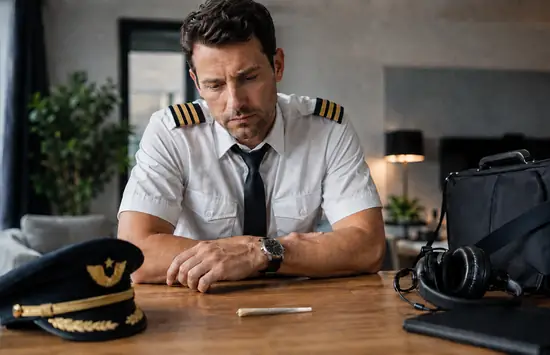
Cannabis and Pilots: Why FAA Drug Rules Override Every State Law
Weed and the cockpit do not mix, and the reason has almost nothing to do with whether your home state thinks cannabis is cool. The sky belongs to the federal government, and on this subject the feds have not budged an inch in decades.
So let us break down how the rules actually work, why a federal agency gets to overrule your perfectly legal state, and what the whole mess means for anyone who flies and happens to love the plant.
Can pilots smoke cannabis if their state legalized it?
Short version: no. Slightly longer version: it does not matter even a little bit that recreational weed is legal where you live.
A pilot certificate and the medical certificate that backs it are federal documents. They answer to federal law, and under federal law cannabis is still a controlled substance no matter what your local dispensary’s neon sign says. The FAA has put this in the plainest language it owns. If you fail a federal drug test for marijuana, the agency will not cancel the result just because your state legalized recreational use, and a verified positive leaves you unqualified to hold the medical certificate you need to fly.
Read that twice, because it is the whole ballgame. No valid medical certificate means no flying. Not for a major airline, not for a regional charter, not for a Sunday loop around the patch in your own four-seater. The penalties stack up from there, including suspension or revocation of your certificates, and they apply whether you are flying for a paycheck or purely for fun. State legalization is a green light on the ground and a brick wall the instant your job touches an aircraft.
It reaches past what is in your bloodstream, too. Simply carrying cannabis aboard an aircraft, including edibles you bought legally at a licensed shop, can put both your certificate and the airplane itself on the chopping block. Pilots have lost their tickets over a handful of THC chocolate bars purchased in a state where owning them was perfectly fine. Cross a state line in the air with that stash and you have handed the federal government a clean shot at everything you have worked for.
How does aviation drug testing work for pilots?
If you hold a safety-sensitive aviation job, you live inside a testing program whether you think about it daily or not. That net is wide. It covers airline and charter pilots, flight attendants, aircraft mechanics, dispatchers, and the crews refueling jets out on the ramp.
The screen itself is the standard federal five-panel test, and marijuana sits right there on the list next to cocaine, amphetamines, opioids, and PCP. Testing is not a one-time hurdle at hiring, either. It shows up in several flavors:
Pre-employment, before you ever touch the controls
Random, scattered across the calendar so you can never plan around it
Post-accident, triggered automatically after certain incidents
Reasonable suspicion, any time a supervisor thinks you might be impaired
What the lab hunts for is THC and its metabolites, the chemical breadcrumbs your body keeps producing for days or even weeks after the high itself has faded. Heavy and frequent users hold onto those traces the longest, so a single relaxed weekend can quietly outlast the buzz by many days. Every result runs past a Medical Review Officer, and here is the trap that snares well-meaning people: that officer cannot erase a positive just because you explain you used legally while on holiday. Secondhand smoke at a festival is no defense either. In this system a positive is a positive, and the explanation rarely changes the outcome.
Does the 2025 cannabis rescheduling change the rules for pilots?
This is the part worth watching, because federal cannabis law genuinely moved. In December 2025, an executive order put cannabis on the road from Schedule I to Schedule III, the most significant federal shift on the plant in decades. That is huge news for researchers, for cannabis businesses, and for the banks that have kept the industry at arm’s length.
For pilots, it changed nothing at all. The Department of Transportation moved quickly to kill any confusion, confirming that until the rescheduling process is fully finished, the drug testing rules for safety-sensitive transportation workers remain exactly as they were. Rescheduling is not legalization. Schedule III substances still require a prescription, and no doctor is writing you one for a bag of flower. If you fly, file the 2025 headlines under interesting trivia. Your testing program did not so much as blink.
What are the CBD rules for pilots?
You would assume the non-intoxicating cousin gets a pass. It does not, and this is where careers quietly unravel.
CBD is federally legal when it comes from hemp and stays under 0.3% THC. The trouble lives in the gap between the label and what is actually in the bottle. The CBD market is loosely regulated, and a steady stream of products carry more THC than the packaging admits. A drug test has no way of knowing whether the THC in your sample came from a fat joint or from a mislabeled tincture you rubbed on a sore knee. The number on the report comes out the same.
For a working aviator, that is a coin flip with an entire career riding on it. An over-the-counter CBD purchase is not a shield. If the sample reads positive, it gets handled as a positive, clean intentions and all. Plenty of pilots have looked at those odds and decided to keep CBD out of their routine completely, and it is hard to fault the logic.
Is weed actually that risky in a cockpit?
The zero-tolerance line can feel like overkill until you sit with the research. In one well-known study, pilots who flew a simulator a full 24 hours after smoking still showed measurable impairment, and most of them had no clue their performance had slipped. They felt sharp. The data said otherwise. In a machine ripping through the air at hundreds of miles an hour, “felt sharp” does not cut it.
The danger does not stop with the person holding the yoke. Crews treat any exposure as a live threat too. On one flight out of San Francisco, a captain refused to take off after a passenger sparked up in the lavatory, unwilling to gamble a random drug test on somebody else’s secondhand smoke. The entire plane was emptied and a fresh crew called in. That is how radioactive a positive result is in aviation. A pilot will burn a whole flight schedule before risking a certificate over fumes they never chose to breathe.
With alcohol, pilots at least get a tidy rule to lean on, the old eight hours from bottle to throttle. Cannabis hands them no such clean countdown. THC lingers on a timeline that swings wildly from one body to the next, which is exactly why the only safe assumption for anyone climbing into a cockpit is none at all.
So what does this mean if you love weed but don’t fly?
Here is the cheerful news for the overwhelming majority of the cannabis world: you are not flying a 737. You are on your couch, out in the garden, or parked on the balcony, gloriously and permanently grounded. The federal rulebook that haunts pilots has zero claim on your Friday night.
That freedom comes with a detail the FAA quietly underlines. Today’s cannabis plays in a completely different league from the weed those 1970s lawmakers had in mind. Back then a strong joint barely limped into double-digit THC. A modern Barney’s Farm flagship like Bruce Banner runs past 30%, the product of four decades of obsessive breeding work that started in Amsterdam and never let up. That climbing potency is a big reason the people in the cockpit are held to such an unforgiving standard, and a big reason the rest of us get to enjoy something the previous generation never came close to tasting.
So if tonight’s flight plan is nothing more ambitious than the walk from the kitchen to the sofa, this is your airspace. A heavy, indica-leaning classic like Critical Kush was practically built for the slow, sink-into-the-cushions evening a working pilot can only fantasize about. Grow it, savor it, and let the pros keep their feet, and their certificates, planted firmly on the ground.
One last thing to keep straight. The weed is legal in your state. The cockpit answers to Washington. Keep those two worlds in separate rooms and everybody lands safe.
Barney's Farm has been developing premium cannabis genetics since the 1980s, with over 40 Cannabis Cup wins. Explore our full cannabis seed catalog and find more Amsterdam classics, USA-bred hybrids, and award-winning strains.