
 Autoflower Seeds
 Feminized Seeds
 New Releases
 USA Cannabis Seeds
 High THC Strains
 High Yield Cannabis Strains
 Precision F1 Hybrids
 Washing Strains
 Cup Winning Cannabis Seeds
 Chill Out Cannabis Strains
 Amsterdam Cannabis Seeds Classics
 Best Taste & Aroma Cannabis Seeds
 Regular Seeds
 Merchandise
 Merchandise
 Blog
Blog Contact Us
 Wholesale Login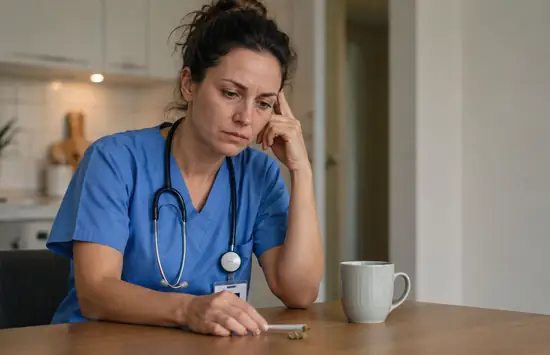
Cannabis and Nurses: The Career Risk Healthcare Workers Take
Nurses run on caffeine, adrenaline, and not enough sleep. When a twelve hour shift finally ends, plenty of them want to come down the same way millions of other Americans do, with a little weed. And there are a lot of those Americans now. Cannabis is more popular than at any point in modern history, with past-month use climbing from 13.2% of people in 2021 to 15.4% in 2024. Nurses are folded into that number like everyone else. The difference is that the career they bled for treats one positive drug test very differently than a regular nine to five does. Nobody hands you that memo in nursing school, so here it is.
Can nurses smoke weed?
Short version, it depends on where you live, where you work, and whether anyone tests you. Recreational cannabis is now legal in 24 states, and on paper a nurse in those states is doing nothing wrong on a Saturday night. The license, though, answers to a stricter boss than the state legislature.
For decades cannabis sat in Schedule I under federal law, the same bucket as heroin. That finally cracked in April 2026, when the Justice Department moved FDA-approved cannabis medicines and state-licensed medical marijuana into Schedule III while leaving recreational weed in Schedule I, with a wider hearing scheduled for June 2026. For most working nurses that change means less than the headlines suggest. Hospitals that accept federal funding, which is nearly all of them, still run drug-free workplace policies, and those policies do not care what your state voted for.
Three separate powers can end a nursing career over the same joint, and they act independently. Federal law still classifies most cannabis as illegal. The state board controls the license. The employer writes the workplace policy. Clearing one of those hurdles does nothing for the other two, and that stacked structure is what makes cannabis riskier for nurses than for almost any other worker holding the same plant.
Are healthcare workers treated more harshly than other jobs?
Generally, yes. Nursing sits in the category employers label safety-sensitive, alongside pilots and truck drivers, because a mistake can kill someone. Nurses also handle controlled medications all shift, so any whiff of impairment gets read against the chance of diversion or a dosing error. That combination pushes hospitals and licensing boards toward zero tolerance far more aggressively than an office that just wants its spreadsheets on time. An accountant who tests positive might get a warning. A nurse can get reported to the board the same afternoon. Same plant, very different stakes, purely because of what the job touches.
Why does a positive drug test put a nursing license at risk?
Here is the uncomfortable truth about a urine screen. It cannot prove you were impaired at work. It only proves THC moved through your body at some point in the recent past. State boards of nursing still treat a positive result as a red flag for impaired practice, and impaired practice counts as unprofessional conduct under most nurse practice acts.
The National Council of State Boards of Nursing went as far as publishing national guidelines on nursing and marijuana that include model standards for judging whether a licensee who uses cannabis is fit to practice. Boards reach for exactly that kind of language. A single positive screen can open an investigation, force a fitness-for-duty evaluation, push you into a monitoring program, or in the worst cases cost you the license outright. Even when a nurse is eventually cleared, the investigation itself can freeze a career for months and trail you onto future job applications.
What happens after a nurse fails a drug test?
The process usually starts with the employer, not the police. Most facilities are required to report a positive result, or a termination tied to drugs, to the state board. From there the board decides whether to dig in. Many states route nurses into confidential monitoring or recovery programs that let them keep working under strict conditions, things like random testing, counseling, and supervised shifts, sometimes stretching on for years.
Those programs exist to protect patients and salvage careers at the same time, which is a fair goal. But signing into one is a serious commitment that can shape your work life for a long stretch, and it sits permanently in your professional record. The dread of that whole machine is exactly why so many nurses quietly abstain even in states where weed is perfectly legal.
How long does weed stay in your system before a nurse drug test?
Long enough to wreck a routine you thought was private. THC is fat-soluble, which means it tucks into body fat and seeps back out for days. One controlled NIH study kept chronic users on a locked research unit, cut off any chance of new use, and still detected THC and its metabolites in their urine for at least 24 days. Occasional users tend to clear within a few days. Daily users can stay positive for weeks without touching the plant again. Hair tests reach back furthest of all, long after the smoke has cleared.
Potency drags that window out even further, and today's genetics are a different animal from the weed people smoked in the nineties. Barney's Farm has spent decades breeding for strength, and the numbers are blunt. Our Purple Punch tests around 30% THC. Wedding Cake lands near 28%. More THC going in means more metabolites stockpiled in fat, which means a longer trail for any lab to find. A nurse who unwinds every night with heavy flower is carrying a far longer detection window than a casual weekend user, even smoking the same amount. The plant got stronger over the years. The drug test did not get any kinder.
When do nurses actually get drug tested for cannabis?
Testing tends to show up at a handful of predictable moments, plus a few you cannot plan for:
Pre-employment, before a new hospital or staffing agency will clear you to start.
Random screening partway through a contract, which travel nurses see constantly.
Post-incident, after a medication error, a patient complaint, or an on-the-job injury.
For cause, when a manager believes someone is impaired on the floor.
Travel nurses carry the heaviest exposure of all. You can hold a license in a state where cannabis is fully legal, accept an assignment in a state where it is not, and find out the drug test traveled with you. Legal back home counts for nothing on a new facility's onboarding screen.
Does a medical marijuana card protect a nurse?
Barely. A card shields you from state criminal charges. It does not force a hospital to accept a positive test, and it does not tie a nursing board's hands. Employers have generally stayed free to enforce zero-tolerance policies even in legal states, and a medical card has not reliably saved workers who test positive. CBD muddies the water further, since plenty of unregulated products contain more THC than the label admits and can trip a screen on their own. If your paycheck rides on a clean test, a card is thin armor.
So what can a nurse actually do about it?
We are a seed company, not your attorney, so read this as straight talk from people who have respected this plant since 1986. If your license keeps the lights on, the smartest thing you can do is know exactly what you put in your body and when. A few honest principles:
Know your potency. A 30% THC flower and a gentle one do not behave the same way in a lab. Stronger product hangs around longer.
Respect the window. When a test can land with zero warning, the only defense that actually works is time since last use, and that gap is longer than most people guess.
Read the contract before you sign it, not after you fail. The drug policy language tells you everything about the risk you are accepting.
Never trust mystery CBD. An unregulated bottle is a gamble with your career stapled to it.
That is not legal advice. It is the same respect for the plant we have practiced for nearly forty years. Cannabis takes care of the people who understand it and embarrasses the ones who wing it, and a nursing license is far too expensive to wing.
The law is loosening, slowly. Rescheduling is inching forward, state protections are spreading, and the cultural panic fades a little every year. For right now though, a nurse who uses cannabis is placing a calculated bet, and the house still writes most of the rules. Know the odds cold before you decide to play.
Barney's Farm has been developing premium cannabis genetics since the 1980s, with over 40 Cannabis Cup wins. Explore our full cannabis seed catalog and find more Amsterdam classics, USA-bred hybrids, and award-winning strains.