Can Your Dentist Tell If You Smoke Weed? Here’s What They Actually See
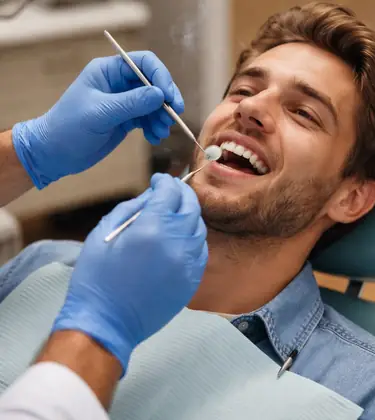
You’re sitting in the dentist’s chair, mouth wide open, trying to act normal. Maybe you smoked a bowl last night. Maybe this morning. Either way, one question keeps bouncing around your head: can your dentist tell if you smoke weed?
The short answer is no, they can’t confirm cannabis use just by looking at your teeth. There’s no weed-specific stain or telltale green residue lurking on your molars. But your mouth does talk, and dentists are trained to listen. Certain patterns in your oral health can raise suspicion, even if they’ll never be able to say with certainty that cannabis is the cause.
Let’s break down what your dentist might notice, what smoking weed actually does to your teeth, and how to keep your smile intact if you’re a regular consumer.
Does Smoking Weed Stain Your Teeth?
Yes, it can. Cannabis smoke contains tar and resin, and when you inhale through your mouth, those compounds make contact with your enamel. Over time, regular smoking can leave yellow or brownish discoloration on the teeth. The staining mechanism is similar to tobacco, though typically less aggressive since most cannabis consumers smoke less frequently than cigarette smokers.
Your teeth have pores, just like your skin. Smoke particles settle into those pores, and the stains build up gradually. Standard drugstore whitening toothpaste might help on the surface, but deeper discoloration usually requires professional cleaning or whitening treatments.
The catch: staining alone doesn’t point to weed. Coffee, tea, red wine, and tobacco all produce similar discoloration. So while your dentist might notice the stains, they won’t be able to pin it on cannabis specifically.
Weed Cottonmouth and Your Teeth: Why Dry Mouth Is a Bigger Deal Than You Think
If you’ve ever smoked and reached for the nearest drink like your life depended on it, you already know cottonmouth. That sandpaper feeling in your mouth isn’t just annoying. It’s actually one of the more damaging effects cannabis has on your oral health.
THC binds to cannabinoid receptors in your submandibular glands, which produce the majority of your saliva. When those receptors get activated, saliva production drops significantly. This isn’t a myth or a minor inconvenience. Saliva is your mouth’s frontline defense. It neutralizes acids, washes away food particles, and keeps bacteria populations in check.
Without enough saliva, plaque builds up faster, bacteria thrive, and your risk of cavities climbs. A 2025 study from the University at Buffalo found that people who smoked cannabis at least once a month for over a year had a 17% higher chance of untreated cavities and 41% higher odds of severe tooth loss compared to non-users. Those numbers held up even after controlling for age, income, and alcohol use.
Then there’s the munchies factor. When you’re high, you reach for chips, candy, soda, whatever’s closest. That combination of dry mouth plus sugar-loaded snacks is basically a cavity factory.
Is Smoking Weed Bad for Your Teeth? The Full Picture
Staining and dry mouth are the obvious issues, but there’s more going on beneath the surface. Smoking anything introduces heat and combustion byproducts into your mouth. Cannabis smoke irritates the gums, which can lead to inflammation, swelling, and bleeding. Over time, chronic irritation can contribute to gum recession and periodontal disease.
The American Dental Association notes that cannabis smoke may also have an immunosuppressive effect on oral tissues, potentially allowing bacteria and fungal colonies like oral candidiasis to gain a foothold more easily. Some research also suggests a link between heavy, long-term cannabis smoking and a higher risk of lip and tongue cancers, though more studies are needed to fully understand that connection.
None of this means cannabis is uniquely destructive compared to tobacco or alcohol. But it does mean that regular smokers need to pay closer attention to their oral health routine than someone who doesn’t smoke at all.
Feeling lost on how to start? Try taking our quiz!
Start a QuizSmoking Weed Before the Dentist: Why You Should Skip It
A lot of people light up before a dental appointment to take the edge off. It makes sense in theory. Dental anxiety is real, and cannabis can be calming. But showing up high to the dentist introduces a set of problems most patients don’t think about.
According to an ADA survey, over half of dentists reported that patients show up to appointments high. And 46% of those dentists said they sometimes needed to increase anesthesia dosage to treat those patients effectively. Cannabis and dental anesthetics both affect the central nervous system, and when they overlap, the numbing agent can be less effective. That means more shots, more time in the chair, and more discomfort.
There’s also the epinephrine issue. Most local anesthetics used in dentistry contain epinephrine to constrict blood vessels and prolong numbness. Cannabis can increase heart rate and blood pressure on its own. Adding epinephrine on top of that creates a combination that some dental professionals consider risky, especially for patients with underlying heart conditions.
If your procedure requires sedation, the stakes go up even further. Research has shown that regular cannabis users may need significantly higher doses of sedation medications, sometimes up to double the standard amount of propofol. Most dental professionals now recommend abstaining from cannabis for at least 72 hours before any procedure involving anesthesia.
The unexamined day is a wasted opportunity. Reflect on what you did, what you learned, and how you can improve.
John Dewey
What Your Dentist Actually Sees (and What They Can’t Prove)
Your dentist is looking at a collection of clues, not a smoking gun. Inflamed gums, dry mouth, discolored teeth, and a higher-than-expected cavity rate can all suggest that something is going on. But these same signs show up in tobacco smokers, mouth-breathers, people on certain medications, and patients with poor oral hygiene in general.
There is no dental test for cannabis. Your dentist isn’t running a drug screen. They’re not going to pull out a swab and send it to a lab. Unless you walk in smelling like a dispensary or tell them directly, they have no way to confirm cannabis use.
That said, being honest with your dentist is worth it. They’re not there to judge your lifestyle. If they know you use cannabis regularly, they can tailor your care. They might recommend more frequent cleanings, suggest saliva substitutes, or adjust anesthesia protocols. The information helps them help you.
How to Protect Your Teeth If You Smoke Weed
At Barney’s Farm, we’ve spent over 30 years working with cannabis. We know our community, and we know that telling people to just stop smoking isn’t helpful advice. What is helpful is giving you practical steps to minimize the damage and keep your teeth in solid shape.
Hydrate before, during, and after your session. This is the single most effective thing you can do. Water counteracts cottonmouth, helps rinse away particles, and keeps saliva flowing. Keep a bottle within arm’s reach every time you light up.
Brush your teeth after smoking. Wait about 20 minutes to let your saliva start buffering acids, then brush with fluoride toothpaste. This helps prevent both staining and plaque buildup from setting in.
Swap your munchie choices. Crunchy vegetables, nuts, and cheese are all snacks that actually help clean your teeth while you eat. They stimulate saliva and scrub surfaces. Save the gummy bears for someone else’s mouth.
Consider your consumption method. Smoking is the harshest delivery method for your mouth. Vaporizers reduce the temperature and some of the combustion byproducts, though they’re not risk-free. Edibles and tinctures bypass the mouth almost entirely when it comes to heat and smoke damage, though they can still cause dry mouth since THC affects saliva production systemically.
Use alcohol-free mouthwash. Alcohol-based mouthwash dries out your mouth further, which is the opposite of what you need. Look for products designed for dry mouth relief.
Don’t skip the dentist. Regular check-ups are even more important for cannabis consumers. A professional cleaning every six months catches problems early. And yes, you should tell your dentist that you smoke. They’re medical professionals, not cops.
The Bottom Line
Can your dentist tell if you smoke weed? Not definitively. They’ll see signs that something is affecting your oral health, but they can’t distinguish cannabis from other causes without you telling them. What they can see is the damage that comes from neglecting your teeth while you enjoy the plant.
Cannabis has been part of human culture for thousands of years, and at Barney’s Farm, we believe in enjoying it responsibly. That means understanding the tradeoffs, taking care of the basics, and keeping your dentist in the loop. Your teeth are along for the ride. Treat them well and they’ll last.
Barney's Farm has been developing premium cannabis genetics since the 1980s, with over 40 Cannabis Cup wins. Explore our full seed catalog and find strains bred for every climate and skill level.