Can Firefighters Smoke Weed? What the Rules Actually Say in 2026
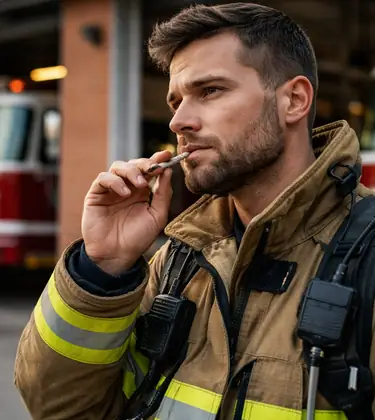
Cannabis is legal for recreational use in 24 states and Washington, D.C. Medical programs exist in 40 states. You'd think the question of whether firefighters can smoke weed would have a simple answer by now. It doesn't. The short version: most firefighters still can't, even if they live in a fully legal state. The long version involves a tangle of federal law, department-level drug testing policies, union contracts, and a scheduling system that hasn't kept up with reality.
If you're a firefighter, aspiring firefighter, or just curious about how cannabis laws play out in one of America's most physically demanding professions, here's what you need to know right now.
Is Weed Still Illegal at the Federal Level?
Yes. Despite everything happening at the state level, marijuana remains a Schedule I controlled substance under the federal Controlled Substances Act. That puts it in the same legal category as heroin and LSD, at least on paper.
In December 2025, President Trump signed an executive order directing the Attorney General to expedite rescheduling marijuana to Schedule III. That would be a historic shift, but it hasn't happened yet. The DEA still needs to finalize the rulemaking process, and the agency has been dragging its feet. As of early 2026, marijuana's federal status hasn't changed.
This matters for firefighters because many fire departments receive federal funding through FEMA grants, Staffing for Adequate Fire and Emergency Response (SAFER) grants, and other programs. Those grants require compliance with the federal Drug-Free Workplace Act (DFWA). That's the main lever keeping zero-tolerance drug policies in place at departments across the country, even in states where weed is fully legal.
Do Firefighters Get Drug Tested?
Almost always. Drug testing in the fire service typically happens at four points: pre-employment screening, random testing during employment, post-accident testing after on-duty incidents, and reasonable suspicion (or "for cause") testing when a supervisor suspects impairment. The standard panel screens for marijuana, cocaine, opiates, amphetamines, and PCP.
The tricky part is that THC, the psychoactive compound in cannabis, sticks around in your system far longer than the actual high. A first-time user might test positive for about three days. Someone who smokes a few times a week could show up positive for five to seven days. Heavy, regular use can trigger a positive result weeks later. So even if a firefighter only uses cannabis on a long weekend off, there's a real chance it shows up on a Monday morning random test.
There's also no THC equivalent to the alcohol breathalyzer. According to Fire Engineering, the American Bar Association has confirmed there's no reliable THC impairment concentration standard comparable to blood alcohol levels. That makes it nearly impossible for departments to distinguish between someone who smoked yesterday and someone who smoked two weeks ago. It's a blunt instrument for a nuanced problem.
Which Fire Departments Have Changed Their Marijuana Policies?
A few major departments have started loosening up. The most notable shift came from the FDNY. In 2022, New York City's Law Department issued guidance that prohibited adverse employment actions based on off-hours marijuana use. The FDNY complied, ending pre-employment, random, and scheduled marijuana testing. They kept testing only for cause, meaning if a member appears impaired on the job.
In Texas, where cannabis is still illegal recreationally, Austin's Fire Department went a different route. An arbitration contract in 2023 eliminated random and post-accident drug testing and added exemptions from discipline for prescribed cannabis use. Meanwhile, San Antonio's firefighters union pushed to remove THC metabolites from random testing entirely but ultimately withdrew the proposal during 2024 contract negotiations. The two sides settled on a compromise: firefighters who test positive won't be disciplined if they can prove their use falls under Texas' limited compassionate use program.
In Virginia, a court ruling affirmed that firefighters and other public employees certified for medical marijuana cannot be punished for off-duty use that complies with state law. In Utah, an Ogden firefighter who was suspended for having a medical cannabis card fought back and won his job through a settlement.
These are real cracks in the wall. But they're still exceptions. Most fire departments in the U.S. continue to run zero-tolerance policies.
Feeling lost on how to start? Try taking our quiz!
Start a QuizCan Firefighters Use CBD?
Legally, yes. CBD (cannabidiol) derived from hemp is federally legal as long as it contains less than 0.3% delta-9 THC. But that legal distinction hasn't stopped it from becoming a career risk for firefighters.
The problem is quality control. The CBD market is still poorly regulated, and independent lab tests have repeatedly shown that products on store shelves don't always match their labels. Some CBD oils, topicals, and gummies contain enough THC or THCA to trigger a positive drug test. For firefighters subject to random testing, using an over-the-counter CBD product for back pain or inflammation could mean a 30-day unpaid suspension or worse.
San Antonio's firefighter union president put it plainly during contract negotiations: the degradation the body takes in the fire profession is substantial, and most firefighters deal with chronic pain. Many of them want to use CBD for recovery but won't touch it because they can't risk testing positive. At Barney's Farm, we've been in the cannabis genetics game for over three decades, and we've watched this same frustration play out across the industry. The gap between what CBD products promise on the label and what they actually contain is one of the biggest unresolved issues in legal cannabis. Understanding the difference between hemp-derived CBD, full-spectrum products, and isolates isn't a nice-to-have for firefighters. It's potentially career-saving knowledge.
The unexamined day is a wasted opportunity. Reflect on what you did, what you learned, and how you can improve.
John Dewey
What Happens If a Firefighter Tests Positive for Weed?
Consequences vary by department, but the standard playbook goes something like this: a first positive on a random drug test typically results in an unpaid suspension (often up to 30 days) and mandatory participation in a rehabilitation or substance abuse program. Some departments use a "last chance" agreement, where the firefighter keeps their job but signs away certain protections and agrees to be tested at any time going forward. A second positive test usually leads to termination.
Post-accident testing can be especially punishing. If a firefighter is involved in a workplace incident and tests positive for THC, even if they used cannabis days earlier and were completely sober on the job, the department may treat it as if they were impaired during the incident. Without a reliable impairment standard for THC, the mere presence of the metabolite is enough to trigger discipline.
In states where medical or recreational cannabis is legal, firefighters have started fighting back through union grievances and lawsuits. The legal landscape is shifting, but slowly. And the outcome depends heavily on whether a state's cannabis law includes specific employment protections for workers in safety-sensitive positions.
Can First Responders Smoke Weed? The Bigger Picture
Firefighters aren't the only first responders navigating this. Police officers, EMTs, and paramedics face many of the same restrictions. The common thread is the "safety-sensitive" designation. Because these jobs involve split-second decisions, physical risk, and responsibility for other people's lives, lawmakers and department administrators have been cautious about loosening drug policies.
That caution isn't unreasonable. Nobody wants an impaired firefighter running into a burning building. But the current system doesn't test for impairment. It tests for the presence of a metabolite that can linger in your body long after any psychoactive effect has worn off. Alcohol gets a breathalyzer and a clearly defined legal limit. Cannabis gets a urine test that can't tell the difference between a joint at a barbecue last Saturday and a bong rip in the locker room ten minutes ago.
The federal rescheduling effort, if it ever crosses the finish line, could change the calculus significantly. Moving marijuana to Schedule III would mean the federal ADA could protect medical cannabis patients in all 50 states, including firefighters with valid prescriptions. It wouldn't legalize recreational use, and it wouldn't stop departments from prohibiting on-duty impairment. But it would remove the biggest federal roadblock to common-sense off-duty use policies.
What Should Firefighters Know Right Now?
Know your state's law. Twenty-four states plus D.C. allow recreational use; 40 have medical programs. But legal status alone doesn't determine your department's policy. Check whether your state includes employment protections for cannabis users, and whether those protections cover safety-sensitive positions.
Know your department's policy. Drug testing rules are often governed by union contracts and can change during negotiations. If your union is pushing for policy changes, pay attention to the details.
Be cautious with CBD. If your department still tests for THC, any CBD product is a potential risk. Look for products with published third-party lab results (certificates of analysis) and verify that they test for THC content, not just CBD potency.
Watch the federal rescheduling process. If marijuana moves to Schedule III, the legal framework around workplace drug testing for cannabis will face serious disruption. Departments and unions should be preparing for that possibility now.
The rules around firefighters and cannabis are messy, inconsistent, and evolving fast. What's true in New York City isn't true in San Antonio, and what applies at a federally funded department doesn't necessarily apply at a locally funded volunteer station. The best move for any firefighter is to stay informed, understand the specific policies that govern their employment, and keep an eye on how both state and federal law continue to shift.
Barney's Farm has been developing premium cannabis genetics since the 1980s, with over 40 Cannabis Cup wins. Explore our full seed catalog and find strains bred for every climate and skill level.